
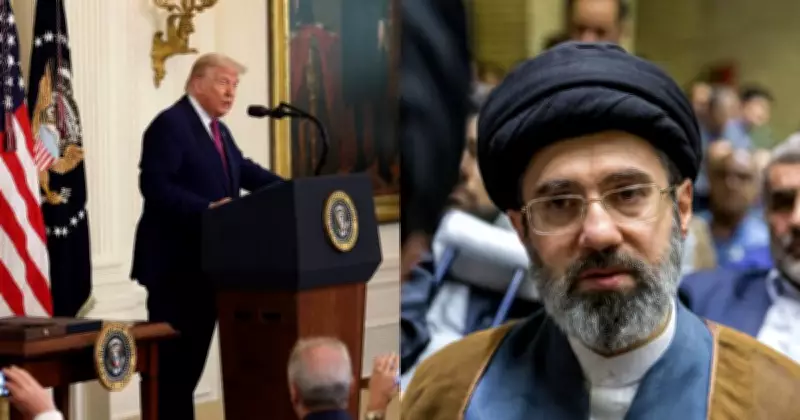
Trump Halts Iran Airstrikes for Five Days as Diplomatic Talks Intensify
Former United States President Donald Trump has announced a significant five-day suspension of planned airstrikes targeting Iranian power plants and energy facilities. This strategic pause, revealed through a post on Trump's Truth Social platform, is directly tied to ongoing diplomatic discussions between Washington and Tehran aimed at achieving a comprehensive resolution to the escalating Middle East conflict.
Diplomatic Maneuvers Amid Rising Tensions
According to Trump, recent days have seen "very good and productive conversations" between the two nations, focusing on finding a "complete and total resolution" to hostilities. The former president emphasized that the continuation of this military pause depends entirely on the success of these critical meetings. This development comes amidst heightened tensions over Iran's blockade of the strategically vital Strait of Hormuz, a crucial maritime passage responsible for transporting approximately one-fifth of global oil and liquefied natural gas supplies.
The Strait of Hormuz Ultimatum
Trump had previously issued a stern 48-hour ultimatum to Iran, demanding the immediate reopening of the Strait of Hormuz to ensure safe passage for international shipping vessels. The deadline was set to expire just before midnight GMT on Monday. In his characteristically direct communication style, Trump warned on Truth Social, "If Iran doesn't FULLY OPEN, WITHOUT THREAT, the Strait of Hormuz, within 48 HOURS from this exact point in time, the United States of America will hit and obliterate their various POWER PLANTS, STARTING WITH THE BIGGEST ONE FIRST."
Iran's Forceful Response and Regional Implications
Tehran responded to the American threat with equally strong language, warning that any US attack on Iranian power plants would result in the "irreversible destruction" of essential infrastructure throughout the Middle East, including crucial water systems. Iranian officials specifically threatened to target power plants supplying electricity to American military bases, along with economic, industrial, and energy infrastructure where American interests are present. They further cautioned that such actions would lead to the immediate and complete closure of the Strait of Hormuz.
Regional Conflict Dynamics and Human Cost
The broader Middle East conflict, which began with US and Israeli military operations on February 28th, has already claimed more than 2,000 lives and significantly disrupted the global economy. The fighting has driven oil prices sharply higher and endangered some of the world's busiest air routes. In a related development, Iranian-backed Hezbollah claimed responsibility for an airstrike that killed a man in northern Israel, while Lebanese President Joseph Aoun warned that Israel's targeting of bridges in southern Lebanon suggests an impending ground invasion.
Israeli Perspectives and Military Preparedness
Israeli Prime Minister Benjamin Netanyahu visited communities near a secretive nuclear research facility that was struck by Iranian missiles late Saturday, describing it as a "miracle" that no fatalities occurred despite dozens of injuries. Netanyahu asserted that Israel and the US are making substantial progress toward military objectives, including weakening Iran's nuclear and missile capabilities and reducing support for armed proxies. Meanwhile, Israeli military spokesperson Brigadier General Effie Defrin indicated that the country should prepare for "more weeks of fighting against Iran and Hezbollah."
Despite these military assessments, there remains no visible sign of an internal uprising within Iran or any immediate indication that the conflict will conclude soon. The diplomatic window created by Trump's five-day pause represents a critical opportunity for de-escalation in a region where tensions have reached dangerous levels, with global economic stability hanging in the balance.




