Trump Asserts Authority Over Iran's Leadership Succession
US President Donald Trump has issued a stark warning, stating that Iran's next supreme leader will face significant challenges in maintaining power without his approval. This declaration comes as Tehran is on the verge of announcing a successor to the late Ayatollah Ali Khamenei, who was killed in US-Israeli strikes nine days ago, plunging the Middle East into a broader conflict.
Selection Process and Internal Dynamics
Iran's Assembly of Experts convened privately and selected a new leader, according to members of the body, though the name has not been disclosed publicly. Insiders speculate that Mojtaba Khamenei, the 56-year-old son of the late ayatollah, could be the chosen successor. Trump has previously dismissed Mojtaba as an unacceptable "lightweight" and emphasized that any new leader must secure US approval to endure.
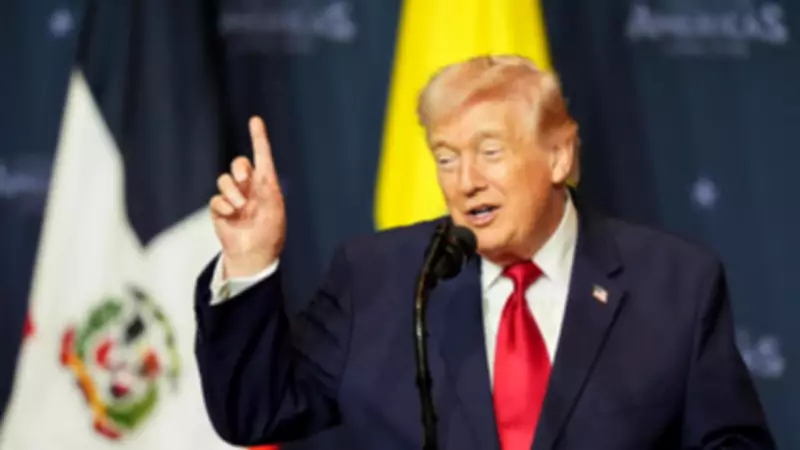
In an interview with ABC News, Trump asserted, "He's going to have to get approval from us. If he doesn't get approval from us, he's not going to last long." However, Iran's Foreign Minister Abbas Araghchi countered this by insisting that the selection of a supreme leader is an internal matter for Iran, warning against foreign interference and calling on Trump to apologize for the escalating regional conflict.
Escalating Military Actions and Regional Impact
The conflict has intensified with Israel conducting new operations, including air strikes on fuel storage facilities in and around Tehran and an attack on a hotel in central Beirut believed to host Iranian commanders. These strikes resulted in at least four fatalities and disrupted fuel distribution in Tehran, with residents reporting toxic fumes and a dark haze over the city.
Iran's Revolutionary Guards have declared that the country possesses sufficient supplies to sustain drone and missile attacks across the region for up to six months. Meanwhile, Israel has warned that any successor to Khamenei could become a target if hostilities continue. In Tel Aviv, new waves of Iranian missiles caused explosions, injuring at least six people.
International Diplomacy and Future Prospects
Trump has not ruled out deploying US ground troops in Iran, maintaining that the war is nearing a conclusion despite ongoing attacks. He recently discussed military cooperation with British Prime Minister Keir Starmer, with Britain permitting the use of its bases for collective self-defence operations in the region.
An Iranian military spokesman indicated that only first- and second-generation missiles have been deployed so far, with threats of more advanced long-range weapons being used in the coming days. As the conflict enters its ninth day, the situation remains volatile, with both sides preparing for potential escalations.