
Trump Leaks Private Texts from French President and NATO Secretary General as European Relations Deteriorate
Former US President Donald Trump has significantly escalated diplomatic tensions with European nations by publicly sharing private text messages from NATO Secretary General Mark Rutte and French President Emmanuel Macron. This move deepens an ongoing rift centered on Trump's persistent efforts to assert control over Greenland, a territory that has become a flashpoint in transatlantic relations.
Leaked Messages and AI-Generated Imagery Fuel Controversy
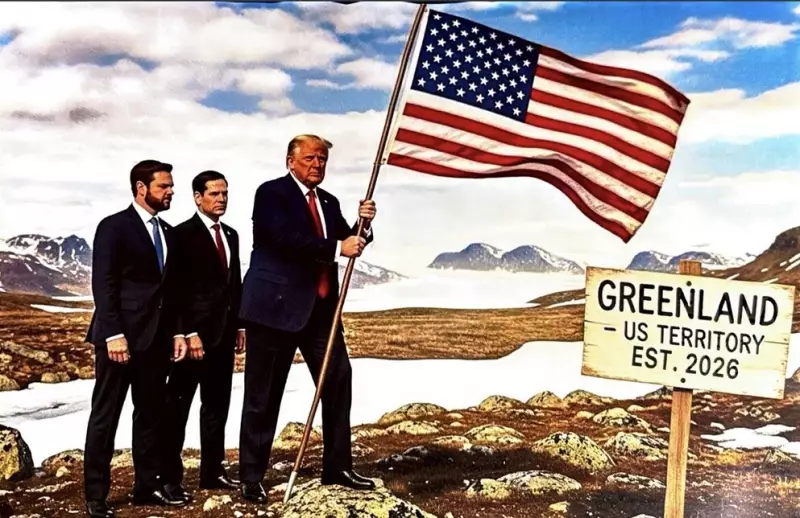
The private communications were posted on Trump's Truth Social platform, coming just one day after leaked correspondence with Norway's prime minister had already sparked controversy across Europe. In a provocative addition, Trump also shared an AI-generated image that depicted him in conversation with European leaders inside the White House, with a US flag superimposed over Greenland's map, symbolizing his territorial ambitions.
One of the leaked messages, attributed to NATO chief Mark Rutte, praised Trump's foreign policy actions and expressed a willingness to help promote his efforts on global platforms. Rutte specifically mentioned highlighting Trump's work in Gaza, Ukraine, and Syria at the World Economic Forum, while also stating he was "committed to finding a way forward on Greenland."
Trump further shared a message from French President Emmanuel Macron, who requested a meeting and dinner in Paris while expressing confusion and concern over Trump's threats regarding Greenland. Macron suggested convening a G7-linked meeting involving leaders from Ukraine, Denmark, Syria, and Russia, alongside bilateral talks with Trump to address the escalating situation.
White House Silence and Escalating Tariff Threats
The White House has not commented on the release of these private messages, and Trump did not share any replies he may have sent to the European leaders. These disclosures occur amid Trump's renewed threats to impose sweeping tariffs on European nations, including France, Denmark, Germany, and others, unless the United States is allowed to acquire Greenland.
Trump has linked this dispute to his frustration over not receiving the Nobel Peace Prize and has suggested he is no longer focused "purely on peace," indicating a shift in his diplomatic approach that prioritizes territorial and economic gains over international harmony.
Military Movements and European Responses
Tensions have continued to rise as Denmark confirmed the deployment of soldiers to western Greenland as part of a NATO military exercise. Trump dismissed this move as insignificant, repeating claims that NATO has long failed to adequately address threats from Russia and China in the Arctic region, thereby justifying his aggressive stance.
European leaders have warned that Trump's actions could destabilize the NATO alliance and reignite a transatlantic trade war. The European Union is now weighing retaliatory measures, including tariffs on billions of euros worth of US goods and the possible activation of its Anti-Coercion Instrument, which could restrict US access to European markets and services.
Firm Stances from European Governments
Despite growing pressure, European governments have maintained their firm positions. Norway stated it would not alter its stance on Greenland, Germany warned it was prepared to respond to unjustified tariffs, and Greenland's prime minister emphasized the territory's right to self-determination, rejecting any form of coercion from external powers.
This unfolding diplomatic crisis highlights the fragile state of US-European relations, with Trump's unconventional tactics creating uncertainty and potential long-term damage to international alliances and trade frameworks.




