
Trump Discloses New Information About Iran's Supreme Leader Status
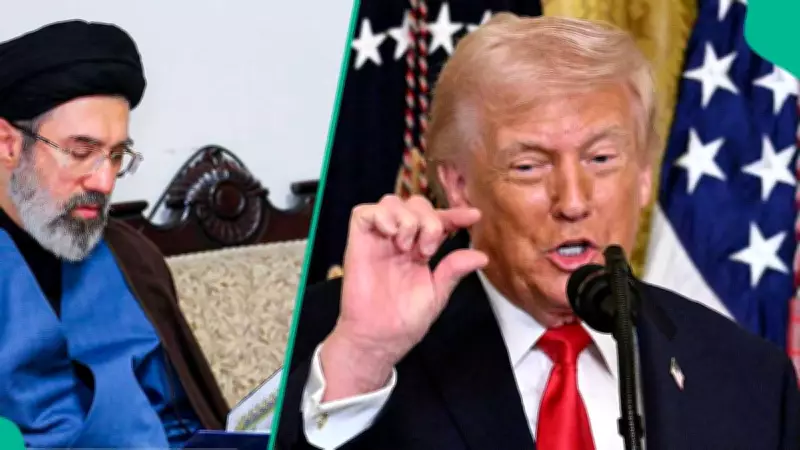
Former United States President Donald Trump has revealed new information suggesting Iran's newly appointed Supreme Leader, Mojtaba Khamenei, is likely alive but possibly injured following the outbreak of the ongoing Middle East conflict. Trump made these remarks during an interview on Fox News' The Brian Kilmeade Show, which was published on Thursday, March 12, 2026.
Trump's Assessment of Khamenei's Condition
Speaking from Washington, Trump provided his assessment of the Iranian leader's status, stating, "I think he probably is alive. I think he is damaged, but I think he's probably alive in some form, you know." This statement comes as the war approaches its second week, with coordinated strikes by the United States and Israel against Iranian targets beginning on February 28.
An Iranian official previously told Reuters that the newly appointed leader had sustained minor injuries but was continuing to carry out his duties. Iranian state television had also described him as having been wounded during the conflict. Mojtaba Khamenei, the son of Iran's former supreme leader who was reportedly killed on the first day of the war, has not been seen in public since his selection by a clerical assembly on Sunday.
Khamenei's Warning to Neighboring Countries
In his initial comments following his appointment, which were read out by a television presenter rather than delivered directly, Khamenei reportedly issued stern warnings to regional nations. He stated that Iran would maintain its blockade of the Strait of Hormuz, a critical global shipping route for oil transportation.
More significantly, Khamenei urged neighboring countries hosting American military installations to shut them down immediately, warning that failure to do so could make them potential targets for Iranian retaliation. This threat escalates regional tensions beyond the direct conflict between Iran, the United States, and Israel.
Conflict Escalation and Casualties
The war has reportedly resulted in thousands of casualties since its inception, with fighting triggering volatility in global financial markets. Despite growing international concern about the humanitarian impact, leaders from all three primary combatant nations have signaled determination to continue pursuing their military objectives.
Iran has responded to the initial US-Israeli strikes with attacks directed at Israel and Gulf states that host American military bases, expanding the geographical scope of the conflict beyond its original parameters.
Trump's Declaration on Conflict Duration
In a separate interview with Axios on Wednesday, March 10, Trump claimed that the conflict would end whenever he decided, stating there was little left for United States forces to strike in Iran. He argued the bombing campaign was nearing its objectives and progressing faster than expected.
The former president framed the military action as a response to what he described as decades of regional violence perpetrated by Iran, characterizing the Islamic Republic as a broader threat extending beyond Israel to the entire Middle East region.
As the conflict enters its second week, the situation remains fluid with:
- Continued fighting between US-Israeli forces and Iranian military targets
- Iran's blockade of the Strait of Hormuz affecting global shipping
- Threats against neighboring countries hosting US bases
- Uncertainty about the exact condition of Iran's new supreme leader
- Thousands of reported casualties with no immediate diplomatic resolution in sight




