
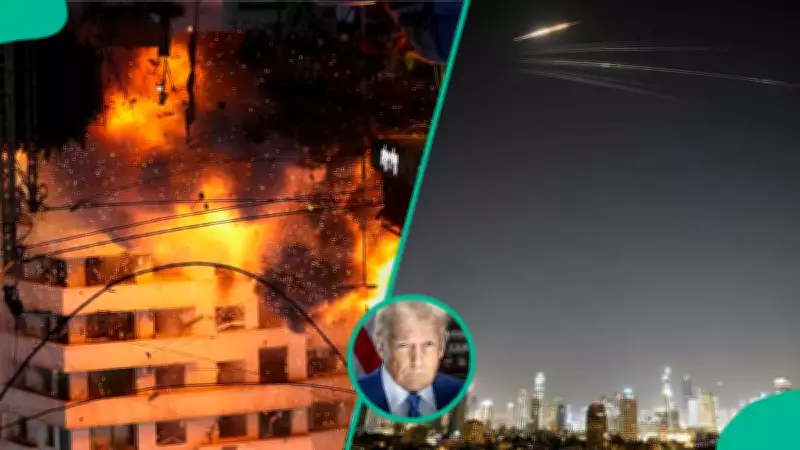
Fresh Tensions as Trump Threatens to Strike World's Largest Gas Field
In a dramatic escalation of hostilities, United States President Donald Trump has issued a stark threat to massively retaliate against Iran by targeting the world's largest natural gas field. This warning comes directly in response to Iranian missile strikes that hit Qatar's critical energy infrastructure earlier this week.
Conflict Intensifies in the Persian Gulf
The US-Israeli war with Iran has now entered its twentieth day, with tensions reaching a dangerous new peak. President Trump made his threat via social media on Wednesday night, March 18, specifically naming Iran's South Pars natural gas field as a potential target if Iran attacks Qatar again.
This development follows Iranian missile strikes on Qatar that were themselves retaliation for an Israeli attack on the same South Pars field earlier that same day. The Iranian assault caused what Qatari authorities described as extensive damage to their key natural gas site, sparking a significant fire and prompting Qatar to order the expulsion of some Iranian Embassy officials.
Global Energy Markets in Turmoil
The escalating conflict has sent shockwaves through global energy markets, with immediate and severe consequences:
- International oil prices have surged dramatically due to fears of supply disruptions
- The cost of gasoline and other petroleum-based products has increased worldwide
- Global economic pressures have intensified as energy costs rise
Iran has been systematically targeting Persian Gulf neighbors' energy facilities since the conflict began on February 28. These attacks have made the Strait of Hormuz shipping channel nearly impassable, threatening the vital route through which approximately one-fifth of the world's oil travels.
Conflicting Accounts and Denials
In his social media post, President Trump claimed the United States knew nothing about Israel's initial strike on the South Pars field. However, sources familiar with the matter have contradicted this statement, indicating that US officials were informed about Israel's plans to attack the gas field, though they did not participate directly in the operation.
The conflict has expanded beyond energy infrastructure, with Iran and Hezbollah continuing to fire drones and missiles at Israel, while Israel has conducted retaliatory strikes against Iranian targets.
Broader Regional Implications
The situation represents a significant escalation in what has become a multi-front conflict with far-reaching implications:
- The threat to the world's largest gas field raises the stakes considerably
- Energy security for Gulf nations has been severely compromised
- Global economic stability faces new pressures from energy market volatility
- Diplomatic relations between regional powers have deteriorated further
As the conflict enters its third week, the international community watches with growing concern about potential further escalation and the broader implications for global energy security and economic stability. The specific targeting of critical energy infrastructure represents a dangerous new phase in the ongoing hostilities between the United States, Israel, and Iran.




