
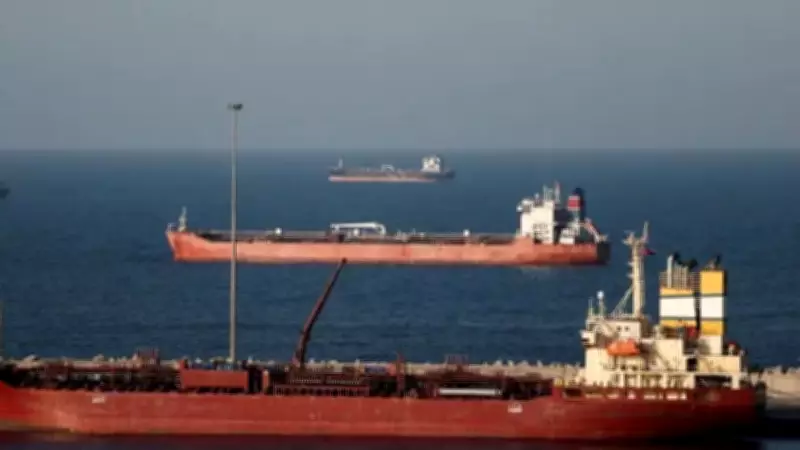
Trump Issues 48-Hour Ultimatum to Iran Over Strait of Hormuz Blockade
US President Donald Trump has delivered a stark 48-hour ultimatum to Iran, demanding the immediate reopening of the Strait of Hormuz or facing sweeping strikes on its energy infrastructure. This warning, posted on Truth Social on Saturday, represents a sharp escalation in tensions, coming just hours after Iran launched its most devastating missile attack yet on Israel.
Trump's Threat and Iran's Response
In his social media statement, Trump explicitly warned that the United States would "hit and obliterate" Iranian power plants, starting with the largest facilities, if the critical shipping lane is not fully reopened within the deadline. This marks a significant shift from his earlier suggestion that Washington might scale back military operations after three weeks of hostilities.
Iranian Foreign Minister Abbas Araghchi responded by insisting that Tehran's restrictions target only vessels linked to countries involved in attacks on Iran, asserting that neutral nations would be allowed safe passage. However, Iran's military struck a defiant tone, warning it would retaliate against any escalation by targeting US and allied energy and desalination facilities across the region.
Iran's Missile Attack on Israel
The ultimatum followed a severe Iranian missile strike on southern Israel, which injured more than 100 people in the deadliest attack since the conflict began. The missiles hit the cities of Arad and Dimona, causing extensive damage to residential buildings and leaving scenes of widespread destruction. Emergency officials reported numerous casualties, including several in critical condition.
Notably, Dimona is home to a sensitive nuclear facility widely believed to underpin Israel's undeclared arsenal. The Israeli military confirmed a direct hit on a building in the area, with casualties recorded at multiple sites, including a child seriously wounded by shrapnel. Prime Minister Benjamin Netanyahu vowed a forceful response "on all fronts."
Regional and Global Implications
Iran stated that the strikes were retaliation for attacks on its nuclear infrastructure, including the Natanz nuclear facility, a central hub of its disputed nuclear programme. Amid growing fears of a wider catastrophe, Rafael Grossi, head of the International Atomic Energy Agency, renewed calls for "maximum restraint" to avert the risk of a nuclear accident.
The conflict is rapidly spilling across the region, with Iran reportedly attempting a long-range strike on a US-UK base in Diego Garcia. The United Arab Emirates also reported facing aerial threats after Tehran warned against allowing its territory to be used for attacks.
Strait of Hormuz Crisis
At the heart of the crisis is the Strait of Hormuz, a vital artery for global energy flows. Iran's effective shutdown of the waterway, through which about one-fifth of the world's oil supply passes, has sent shockwaves through global markets. Brent crude has surged above $105 per barrel, heightening fears of a prolonged energy shock and broader economic fallout.
In a joint statement, leaders from the UK, France, Germany, Italy, South Korea, Australia, the UAE, and Bahrain condemned what they described as Iran's "de facto closure" of the strait, pledging support for coordinated efforts to safeguard maritime security.




