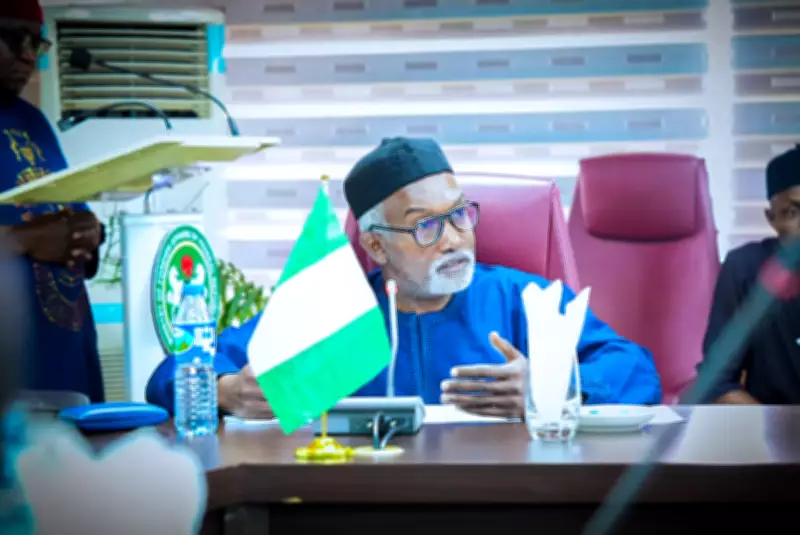
Tuggar, NIIA, and Akinterinwa Advocate New Strategy for Nigeria's Foreign Policy
Nigeria's Minister of Foreign Affairs, Ambassador Yusuf Maitama Tuggar, has emphasized the urgent need for stronger intellectual engagement to shape the country's foreign policy, describing critical debate and scholarship as essential for Nigeria's global positioning. Speaking virtually at the public presentation of the book 'Strategic Autonomy as a Foreign Policy Grand Strategy for Nigeria: The Doctrine of 4-Ds as Definienda', written by former Director General of the Nigerian Institute of International Affairs (NIIA), Professor Bola Akinterinwa, Tuggar highlighted the importance of subjecting Nigeria's diplomatic strategy to rigorous scrutiny.
The minister expressed encouragement at seeing Nigeria's diplomatic approach undergo forceful examination and serious intellectual engagement, noting that such discourse had been lacking for some time. He praised the book for significantly contributing to deepening understanding of Nigeria's evolving role in the international system and enriching the growing body of knowledge on the country's foreign policy.
Historical Context and Modern Challenges
Tuggar explained that Nigeria's diplomacy has historically been shaped by its large population and longstanding responsibilities within Africa. However, he pointed out that the changing global order, characterized by a multipolar and complex international system, requires Nigeria to adopt a strategy that protects national sovereignty while expanding international partnerships. This shift necessitates a more nuanced and intellectually grounded approach to foreign policy formulation.
In a related development, Tuggar has also urged ECOWAS member states to fully implement resolutions from the 94th Council of Ministers meeting in Abuja, stressing the importance of unity, economic integration, and regional cooperation. This call underscores Nigeria's continued commitment to regional leadership while adapting to broader global dynamics.
NIIA Leadership Weighs In
The Director General of the Nigerian Institute of International Affairs (NIIA), Professor Eghosa Osaghae, emphasized that Nigeria must strengthen its economic, technological, and diplomatic capacity to act independently in an increasingly complex global order. He described Professor Akinterinwa's publication as a work of "encyclopaedic proportions," suggesting that its scale and scope could easily have produced several volumes rather than a single book.
Professor Osaghae's comments highlight the comprehensive nature of the strategic analysis presented in the book, which addresses the multifaceted challenges facing Nigeria's foreign policy in the contemporary international landscape.
Intellectual Foundation for Policy
The Chairman of the Governing Council of NIIA, Professor Bolaji Akinyemi, noted that the event marked the introduction of the intellectual encapsulation of ideas that have formed Nigeria's foreign policy. He lauded Professor Akinterinwa for writing a book that Nigerians will need for the intellectualization of the nation's foreign policy, emphasizing the critical role of scholarly work in informing practical diplomatic strategies.
This collective advocacy from Tuggar and NIIA leaders signals a push towards a more deliberate and intellectually robust foreign policy framework for Nigeria, one that balances historical responsibilities with the demands of a rapidly changing global environment. The emphasis on strategic autonomy suggests a move towards greater self-reliance in diplomatic decision-making while maintaining collaborative international relationships.