UK and Allies Develop Plan to Reopen Strait of Hormuz, Excluding NATO Mission
Prime Minister Keir Starmer has confirmed that Britain is actively collaborating with international partners to formulate a viable strategy aimed at reopening the strategically vital Strait of Hormuz. However, he explicitly stated that this critical effort will not involve the North Atlantic Treaty Organization (NATO) military alliance.
International Collaboration for Maritime Security
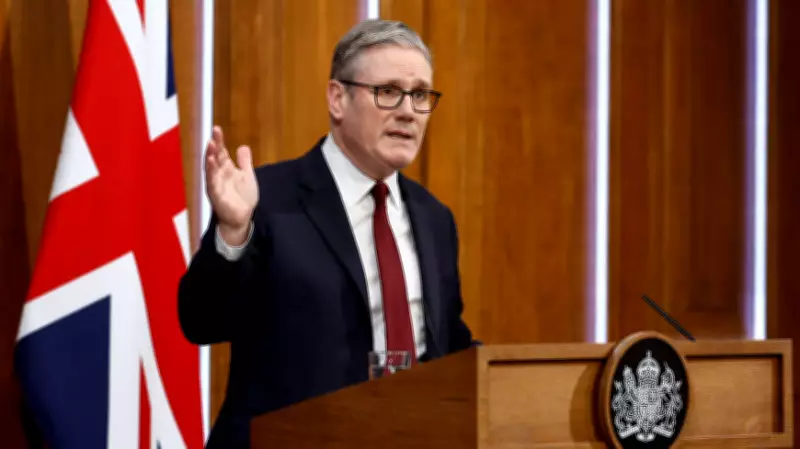
During a press conference held at 10 Downing Street, Starmer revealed that the precarious situation in this crucial oil transport corridor has been a topic of discussion with former U.S. President Donald Trump. The Strait of Hormuz, which facilitates a significant portion of global oil shipments, has been effectively closed by Iran amidst the ongoing Middle East conflict. Starmer emphasized that the United Kingdom and its partners are diligently working to restore safe and unimpeded passage through this narrow waterway.
"We are working with all of our allies, including our European partners, to assemble a viable collective plan that can restore freedom of navigation in the region as swiftly as possible and mitigate the economic impacts," Starmer declared. He underscored the urgency of the situation, highlighting the global economic repercussions of the strait's closure.
Exclusion of NATO from the Mission
The British Prime Minister was unequivocal in clarifying that the mission to secure the Strait of Hormuz would not be conducted under NATO command. "Let me be clear, that will not be, and it has never been envisioned to be, a NATO mission," Starmer asserted. Instead, he outlined that the initiative would involve a coalition of willing nations, forming a bespoke alliance tailored to address this specific maritime security challenge.
"This will have to be an alliance of partners, which is precisely why we are engaging with partners across Europe, in the Gulf region, and with the United States," he elaborated. This approach signifies a strategic shift towards a more flexible, ad-hoc coalition rather than relying on established military frameworks like NATO.
Context and Broader Implications
Starmer's remarks followed a warning from Donald Trump, who cautioned that NATO could face serious consequences if U.S. allies fail to contribute to securing this vital shipping route. Trump remarked, "It is only appropriate that nations benefiting from the Strait will assist in ensuring that no adverse events occur there." This statement underscores the geopolitical pressures and expectations surrounding the strait's security.
Furthermore, Prime Minister Starmer emphasized Britain's intention to avoid deeper entanglement in the broader Middle East conflict. He stated that the UK is "taking the necessary actions to defend ourselves and our allies" but stressed that Britain "will not be drawn into the wider war." This position reflects a cautious foreign policy stance aimed at balancing security commitments with strategic restraint.
The closure of the Strait of Hormuz by Iran has significant implications for global energy markets and maritime trade. The UK-led coalition effort represents a critical response to this challenge, focusing on diplomatic and security coordination without escalating military involvement through NATO. As international partners continue their discussions, the development of a concrete plan will be closely monitored by global observers concerned with regional stability and economic security.