
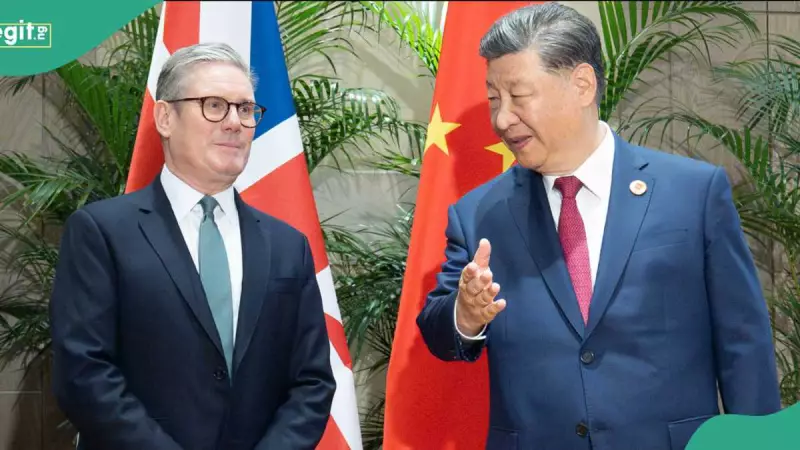
UK Prime Minister Keir Starmer Arrives in China for First Official Visit Since 2018
Prime Minister Keir Starmer of the United Kingdom has landed in Beijing, commencing his inaugural official visit to China. This significant diplomatic journey marks the first such trip by a British leader since 2018, signaling a deliberate effort to recalibrate and strengthen bilateral relations between the two nations. The visit unfolds against a backdrop of evolving Western alliances and increasing global geopolitical uncertainties.
Strategic Engagement Amid Global Shifts
The timing of Prime Minister Starmer's visit is particularly noteworthy, as it occurs during a period of mounting strain within traditional Western partnerships and growing unpredictability in United States foreign policy. Accompanied by a substantial delegation comprising business executives and cultural figures, Starmer aims to balance economic engagement with longstanding security and human rights concerns. He emphasized that disengagement from China is not a viable option for a major trading nation like Britain, which must remain vigilant to risks while pursuing pragmatic cooperation.
Speaking to reporters en route to Beijing, Starmer articulated that engagement with China is firmly in Britain's national interest. "It doesn't make sense to stick our head in the ground and bury it in the sand when it comes to China, it's in our interests to engage," he stated. The Prime Minister anticipates practical outcomes from the visit, including potential advancements in visa-free travel arrangements between the two countries.
High-Level Meetings and Business Delegation
During his stay, Prime Minister Starmer is scheduled to hold crucial meetings with Chinese President Xi Jinping and Premier Li Qiang in Beijing. Following these high-level political dialogues, he will travel to Shanghai for discussions with prominent business leaders. The delegation includes more than fifty executives from diverse sectors such as:
- Finance and banking
- Pharmaceuticals and healthcare
- Manufacturing and industry
- Arts and cultural enterprises
This broad representation underscores London's commitment to fostering multifaceted economic ties with Beijing, despite years of diplomatic tensions shaped by issues including China's actions in Hong Kong, its relations with Russia amid the Ukraine conflict, and repeated warnings from British security agencies about alleged espionage activities.
Navigating Complex International Dynamics
The visit has drawn considerable attention due to ongoing friction between European capitals and Washington. Several Western governments have intensified their diplomacy with China, partly driven by concerns over unpredictability under US President Donald Trump. Starmer himself has faced recent tensions with Trump over matters such as Greenland, the Chagos Islands agreement, and remarks about NATO allies' roles in Afghanistan.
Nevertheless, Starmer firmly rejected suggestions that closer economic ties with China would undermine Britain's relationship with the United States. "The relationship we have with the U.S. is one of the closest relationships we hold, on defence, security, intelligence and also on trade and lots of areas," he affirmed. He declined to specify whether he would raise sensitive issues like the imprisonment of Hong Kong media figure Jimmy Lai or press Beijing to influence Moscow regarding Ukraine, indicating that discussions would cover areas of disagreement where British values diverge from Chinese positions.
Domestic and International Reactions
Downing Street has defended the visit as a necessary step after years of what it described as inconsistent policy towards China. Ahead of the trip, Starmer remarked, "For years, our approach to China has been dogged by inconsistency… but like it or not, China matters for the UK." The government argues that Britain risks becoming an outlier among major Western economies if it avoids engagement, noting that Canada, France, Germany, and other nations have maintained or recently resumed high-level contacts with Beijing.
However, critics at home remain unconvinced. Conservative figures have warned that China poses a serious national security threat and accused the government of conceding too much ground, particularly following the approval of plans for a large new Chinese embassy in London. These domestic debates highlight the delicate balance Starmer must strike between economic pragmatism and security imperatives.
After completing his engagements in Beijing and Shanghai, Prime Minister Starmer is expected to travel to Tokyo for talks with Japan's new Prime Minister, Sanae Takaichi. This continuation of his tour reflects the broader context of shifting global alliances and the UK's strategic efforts to navigate an increasingly multipolar world order.




