US and Venezuela Agree to Reestablish Diplomatic Relations in Major Policy Shift
The United States and Venezuela have formally agreed to restore diplomatic relations, marking a significant transformation in a long-standing adversarial relationship. The State Department announced this major policy reversal on Thursday, following the ouster of former President Nicolás Maduro through a U.S. military operation earlier this year.
Background of the Diplomatic Rupture
Diplomatic ties between the two nations were severed in 2019 during the first Trump administration. This occurred after Maduro terminated relations when the United States expressed support for Venezuelan opposition leader Juan Guaidó, who at that time claimed the interim presidency. That decision forced U.S. diplomatic staff to relocate their operations to neighboring Colombia, where they have been based for several years.
Recent High-Level Engagement
The decision to restore relations follows multiple visits by Trump administration officials to Venezuela since Maduro's removal from power in January. Washington has increased pressure on the current governing authorities to adopt the administration's approach for the oil-rich South American nation.
In a detailed statement, the State Department explained that talks have been "focused on helping the Venezuelan people move forward through a phased process that creates the conditions for a peaceful transition to a democratically elected government."
Sector-Focused Diplomatic Missions
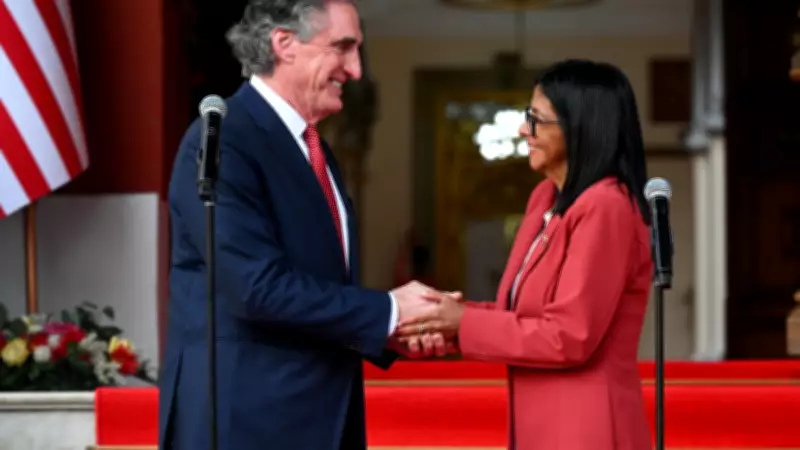
The announcement came after a two-day visit by U.S. Secretary of the Interior Doug Burgum, which primarily centered on Venezuela's mining sector. This followed a February visit by Energy Secretary Chris Wright that focused on Venezuela's substantial oil potential. Both officials emphasized attracting foreign investment as part of the administration's staged plan to support recovery in the crisis-hit nation.
Venezuelan Government Response
Acting President Delcy Rodríguez, who previously served as Maduro's vice president, appeared on state television to welcome the development. She stated that these steps "will strengthen relations between our two countries."
Her government later issued an official statement expressing confidence that restoring diplomatic ties "will contribute to strengthening understanding and opening opportunities for a positive and mutually beneficial relationship." Rodríguez added that "these relations ought to result in the social and economic happiness of the Venezuelan people."
Post-Intervention Changes
In the weeks since the unprecedented U.S. offensive in Venezuela, the Trump administration has encouraged broad changes, including opening the country's oil sector to foreign firms. Rodríguez's government has also approved an amnesty law leading to the release of politicians, activists, lawyers, and others detained on politically motivated charges.
Political Surprises and Opposition Response
Trump's decision to work with Rodríguez rather than the political opposition has caught many observers by surprise. On Sunday, top opposition leader and 2025 Nobel Peace Prize winner María Corina Machado announced she plans to return to Venezuela in the coming weeks and indicated that national elections are expected to be scheduled.
Historical Context and Significance
Such sweeping changes in U.S.-Venezuela relations would have been unthinkable only months ago, given Venezuela's deeply rooted political divisions and history of resisting international pressures ranging from sanctions to economic crisis management. The restoration of diplomatic ties represents one of the most significant foreign policy developments in the Western Hemisphere this year.
The phased approach outlined by U.S. officials suggests a carefully calibrated strategy aimed at stabilizing Venezuela while creating conditions for democratic transition. How this relationship evolves will have substantial implications for regional politics, global oil markets, and the future of Venezuelan governance.