
US Government Denies Seeking to Oust Cuba's President, Rubio Calls Report 'Fake'
In a significant development in US-Cuba relations, US Secretary of State Marco Rubio has categorically denied reports that the United States government is actively seeking the removal of Cuban President Miguel Díaz-Canel. The denial came in response to a controversial report published by The New York Times, which Rubio dismissed as completely fabricated and based on unreliable sources.
Rubio's Strong Rejection on Social Media
Marco Rubio took to the social media platform X late at night to issue his forceful denial. In his post, he explicitly labeled The New York Times report as "fake" and accused the newspaper of relying on what he called "charlatans and liars claiming to be in the know" as their primary sources for the story. Rubio did not provide specific clarification about whether he was rejecting the entire report or only certain portions of it, leaving some ambiguity about the scope of his denial.
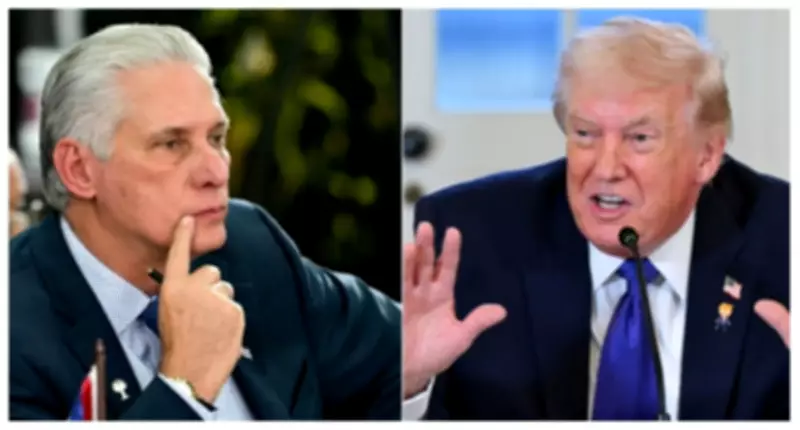
The original New York Times report had suggested that officials within the administration of former President Donald Trump had urged Cuba to consider removing President Díaz-Canel from power. However, the report carefully noted that these officials stopped short of advocating for the complete overthrow of Cuba's long-standing communist government system. This distinction proved crucial in the subsequent controversy surrounding the report's accuracy and intentions.
Background of the Controversial Report
According to the disputed New York Times article, US officials reportedly view President Miguel Díaz-Canel as a political hardliner who is unlikely to implement meaningful economic or political reforms that Washington would consider acceptable. The report indicated that while American officials expressed this viewpoint, they had not issued any formal ultimatum demanding Díaz-Canel's removal from office.
Marco Rubio, a Cuban-American former senator from Miami with deep connections to Cuban exile communities, has consistently advocated for ending Cuba's communist system. This system was established following the Cuban Revolution led by Fidel Castro and has remained in place for decades despite various international pressures and internal challenges.
Broader Context of US-Cuba Relations
Rubio has previously stated that Cuba must take more "dramatic" steps beyond recent measures that allow overseas Cubans to invest in and own businesses on the island. This statement comes as Cuba faces a profound economic crisis characterized by widespread power outages, food shortages, and general economic hardship affecting the daily lives of ordinary citizens.
The Trump administration significantly intensified pressure on Cuba through various measures, including restricting oil supplies to the island nation. These restrictions have worsened Cuba's existing energy shortages and contributed to the country's ongoing economic difficulties. Former President Donald Trump has occasionally hinted at the possibility of negotiating a "deal" with Cuba while simultaneously boasting about the United States' ability to take control of what he described as a weak island nation.
Analyst Perspectives on US Strategy
Despite the increased pressure from Washington, political analysts suggest that the United States' approach toward Cuba appears more focused on forcing compliance with American demands rather than pursuing outright regime change. This strategy mirrors similar approaches the US has taken toward other countries like Venezuela and Iran, where economic and diplomatic pressure aims to influence government behavior without necessarily seeking complete governmental overthrow.
The controversy surrounding this report highlights the ongoing tensions in US-Cuba relations and the challenges of accurate reporting on sensitive diplomatic matters. As both countries navigate complex political landscapes, such reports and their subsequent denials will likely continue to shape public perception and diplomatic discourse between the two nations.




