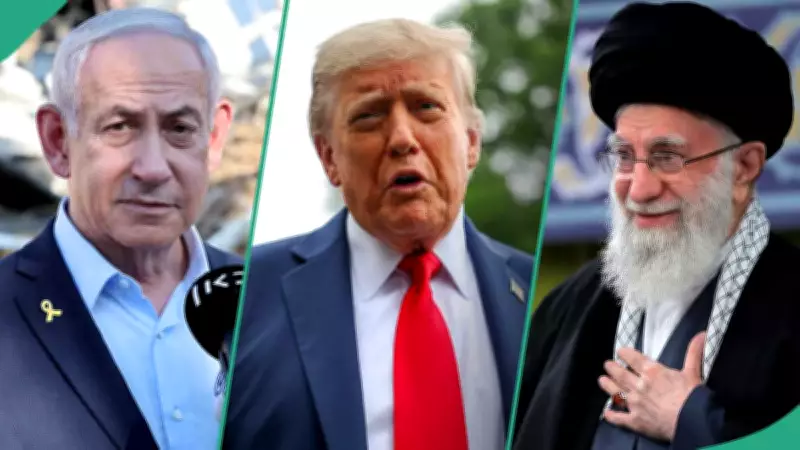
Escalating US-Iran Conflict: Why It Matters to Nigeria
Published 2 Mar 2026 at 3:52 PM by Ololade Olatimehin. Editor’s note: In this piece, Lekan Olayiwola, a peace and conflict policy analyst, examines the worsening US-Iran conflict and explains why Nigerians abroad and Gulf remittances could face severe risks if tensions intensify further.
When missiles fly in the Middle East, the shockwaves travel far beyond the Gulf States. The renewed February 2026 confrontation between the United States, Israel, and Iran is not distant geopolitics; it is an immediate consular, economic, and strategic test for Nigeria.
Nigerian Diaspora in the Gulf Faces Real Danger
Lekan Olayiwola warns that the Nigerian diaspora in the Gulf faces real danger as the US-Iran conflict escalates. Thousands of Nigerians reside in and around potential flashpoints, while millions more depend on remittances from the wider Middle East. Abuja’s safety advisory was prudent, but prudence alone does not equal preparedness. The real issue is whether Nigeria is anticipating escalation or, once again, responding after events have already outpaced its diplomacy and crisis planning.
Beyond the "Few Students" Myth
Publicly available data shows that Nigerians in Iran constitute a small but specialized community, with estimates between 500 and 1,500 people. This group includes theological students concentrated in Qom and Mashhad, some traders, and a few technical and academic exchange participants. Crucially, Iran has never been a major labor destination for Nigerians. Unlike other Gulf States, there is no mass migration corridor into the Iranian economy. This means the immediate consular burden inside Iran, while serious, is manageable. However, focusing only on Tehran risks missing the larger strategic picture.
The Real Exposure: Nigeria’s Gulf Diaspora
Nigeria’s true vulnerability lies across the Gulf. Conservative public estimates suggest millions of Nigerians live and work across the wider Middle East, with the largest concentrations in the United Arab Emirates, Saudi Arabia, Qatar, Kuwait, and Oman. These populations include professionals, aviation workers, traders, pilgrims, and service-sector laborers. They also underpin significant remittance flows back to Nigerian households.
As Iranian retaliatory strikes widen across US-aligned Gulf states, particularly targeting energy infrastructure, ports, or desalination facilities, Nigerians in these countries risk airspace closures, sudden labor disruptions, emergency evacuations, or secondary economic shocks. In other words, Nigeria’s exposure is regional, not merely Iranian.
A Conflict Already Crossing Borders
Credible international reporting indicates that Iranian retaliatory missile activity has already affected parts of the Gulf region hosting United States military assets. Air defense systems in several states have been activated, and precautionary airspace disruptions have been reported.
For Nigerian policymakers, this is no longer a hypothetical escalation scenario. It is a live regional risk environment. Even where missiles are intercepted, the secondary effects, such as flight cancellations, security lockdowns, workplace disruptions, and public panic, can quickly affect foreign workers, including Nigerians. This development significantly raises the stakes of Nigeria’s consular preparedness. The question is no longer whether the conflict could spread; it is whether Abuja is planning for the reality that elements of it already have.
Adequate Warning or Reactive Reflex?
The Nigerian advisory urges citizens to remain vigilant, avoid military and government sites, and maintain contact with the embassy; a standard first-line precaution. Yet compared with other countries, Nigeria’s response remains largely reactive. The United States authorized departures for non-essential personnel, European governments issued tiered travel warnings, and several Asian states launched diaspora registration and evacuation planning.
Nigeria still relies heavily on citizens initiating contact with often under-resourced missions. There is no publicly detailed evacuation threshold, large-scale registration push, or visible Gulf-focused task force. In crisis diplomacy, public signaling matters: diaspora confidence depends on demonstrable readiness and proactive messaging. Even if senior Iranian leadership is decimated, succession uncertainty and retaliatory pressures may heighten rather than quickly reduce regional volatility.
What Best-Practice Embassies Are Prioritizing
Across Tehran, embassies from Europe and parts of Asia have quietly shifted into crisis mode. Common measures include 24-hour consular hotlines, rolling security advisories, voluntary departure guidance, coordination with neighboring transit countries, and staff streamlining to essential personnel. Nigeria’s mission in Tehran has reportedly increased monitoring and coordination. Yet, best practice would require additional visible measures.
- First, an emergency registration drive for Nigerians in Iran and across the Gulf. Without accurate real-time numbers, evacuation planning becomes guesswork.
- Second, clear contingency mapping for exit routes. With Iranian airspace restricted, land corridors through Turkey, Armenia, or Azerbaijan typically become critical in worst-case scenarios.
- Third, a regional consular coordination hub, most logically anchored in Dubai, where Nigeria maintains a significant diplomatic presence and where diaspora density is highest.
Gulf Instability Could Impact Nigeria’s Economy and Families
Lekan Olayiwola notes that Gulf instability could impact Nigeria’s economy and families. Nigeria has strong reasons to avoid taking sides. Its security partnership with the United States remains central to counterterrorism efforts in the North-East and North-West. Intelligence cooperation, training programs, and equipment flows from Washington continue to support operations against extremist groups.
At the same time, Nigeria maintains diplomatic and limited economic engagement with Iran, including discussions in energy and technical cooperation spaces. While bilateral trade volumes remain modest, Abuja has little incentive to provoke unnecessary friction. Neutrality, therefore, is not indecision; it is interest-balancing.
Minding the Sahel Shadow
Yet the geopolitical stakes extend beyond immediate consular concerns. Iran’s expanding security footprint in parts of Africa, particularly through drone transfers and military cooperation in Sudan, has drawn increasing scrutiny from Western analysts. In the event of Tehran’s leadership decimation, these "drone pipelines" to Sudan and the Sahel may now be up for grabs.
The strategic question is whether such systems could slip into the hands of more radical local factions. In the wider Sahel, where external actors already compete amid a weakening Western security presence, Nigeria must navigate a volatile landscape in which regional adversaries may be losing central patrons but gaining dangerous operational desperation.
The Economic Catch-22
Rising Middle East tensions escalate global oil prices, offering short-term fiscal relief for Nigeria’s crude-dependent revenues, but gains are often offset by volatility in shipping, insurance, and refined fuel markets. Any major disruption in Gulf economies directly affects Nigerian workers and remittances.
For a mother in Kano, a $5 rise in oil prices is meaningless if her son in Dubai loses his job or cannot send money home due to banking freezes. For millions of households, Gulf remittances are far more economically significant than marginal oil gains, meaning instability can hurt families even as the treasury benefits.
What Nigeria Should Do Next
If the current crisis deepens, three policy moves would strengthen Nigeria’s posture:
- Activate a diaspora visibility push. Embassies across Iran and the Gulf should urgently update citizen databases through digital registration drives. Accurate numbers are the foundation of credible evacuation planning.
- Establish a Gulf-focused consular task force. Given where the largest Nigerian populations reside, Abuja’s crisis planning must be regionally anchored, not Tehran-centric.
- Communicate preparedness, not panic. Regular public briefings from the foreign ministry would reassure Nigerians abroad and signal institutional readiness without fuelling alarm.
A Test of Anticipatory Governance
This is not yet a humanitarian emergency for Nigerians abroad, but it is a clear stress test of anticipatory governance. Abuja has sharpened its consular reflexes since Libya and Ukraine. The unresolved question is whether those lessons have matured into durable crisis architecture or whether policy still moves at the speed of events.
In foreign affairs, preparedness is measured before the sirens sound. Nigeria’s balanced diplomacy is prudent; its advice was necessary. But if the US–Iran confrontation widens, credibility will rest on one hard metric: the state’s ability to swiftly account for, protect, and, if required, evacuate its citizens from danger.
Lekan Olayiwola is a public-facing peace and conflict researcher and policy analyst focused on leadership, ethics, governance, and political legitimacy in fragile states. Disclaimer: The views and opinions expressed here are those of the author and do not necessarily reflect the official policy or position of Legit.ng. Source: Legit.ng. Authors: Ololade Olatimehin (Editorial Assistant). Olatimehin Ololade is a seasoned communications expert with over 7 years of experience, skilled in content creation, team leadership, and strategic communications, with a proven track record of success in driving engagement and growth.