
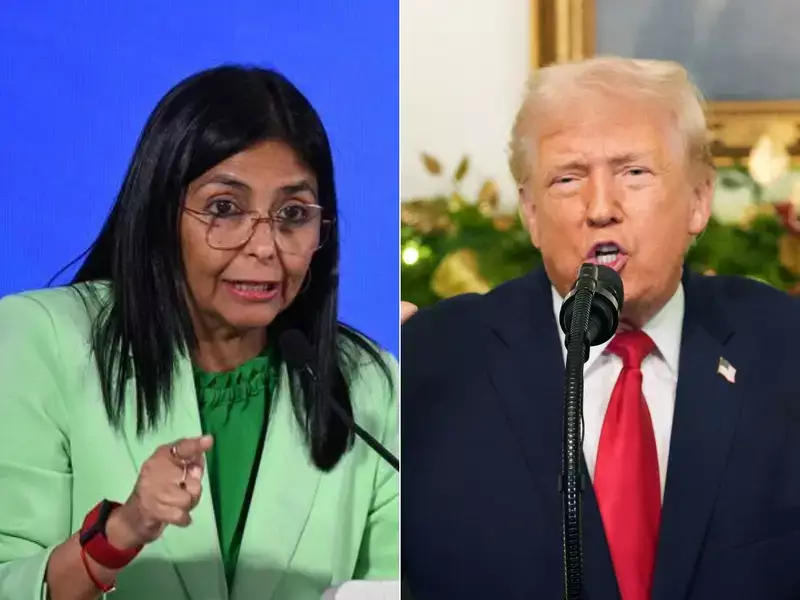
Venezuela's Interim Leader Asserts Independence from Washington's Directives
Venezuela's acting president, Delcy Rodríguez, has publicly declared she has had "enough" of what she describes as Washington's orders, marking a significant shift in her approach to balancing domestic politics with international pressure. This statement comes nearly a month after she assumed the interim leadership role with backing from the United States, following the capture of former leader Nicolás Maduro.
Navigating a Precarious Political Landscape
Since taking office, Rodríguez has been walking a diplomatic tightrope, attempting to maintain support from Maduro loyalists within Venezuela while simultaneously addressing demands from the White House. Her recent remarks, delivered to oil workers in Puerto La Cruz and broadcast on state-run Venezolana de Televisión, represent her most direct pushback against American influence to date.
"Enough already of Washington's orders over politicians in Venezuela," Rodríguez asserted during her address. "Let Venezuelan politics resolve our differences and our internal conflicts. This Republic has paid a very high price for having to confront the consequences of fascism and extremism in our country."
Historical Context of US-Venezuela Relations
The relationship between oil-rich socialist Venezuela and the United States has been characterized by constant confrontation for the past quarter-century. The White House has maintained steady pressure on Caracas since early January, when Maduro and his wife, Cilia Flores, were seized in a raid and transported to the United States to face charges.
Despite initially claiming the US would "run" Venezuela following Maduro's capture, President Donald Trump later endorsed Rodríguez as the country's interim leader. Washington now appears focused on establishing stable authority in Caracas while advancing its strategic interests.
Specific Demands and Economic Implications
Days after the January strikes on Caracas, the Trump administration outlined a series of specific requirements for Venezuela, including:
- Severing diplomatic and economic ties with China, Iran, Russia, and Cuba
- Partnering exclusively with the United States on oil production
- Prioritizing the Trump administration and US oil companies for future oil sales
These demands carry significant economic weight, as Venezuela's primary economic driver remains its petroleum industry. The country possesses the world's largest reserves of extra-heavy crude oil, a variety that requires complex refining but remains compatible with US refinery infrastructure.
Internal Political Divisions Complicate Governance
Rodríguez faces substantial challenges in unifying Venezuela's fractured political landscape. The country remains divided among several factions:
- Maduro loyalists who continue to support the former leader
- Left-wing opposition groups seeking political change
- "Chavistas No-Maduristas" – supporters of the late Hugo Chávez who reject Maduro for what they perceive as betraying 21st-century socialist ideals
As Maduro's former deputy, Rodríguez has consistently maintained that the United States does not govern Venezuela, yet she has generally avoided direct confrontation with Washington until her recent statements. Her evolving stance suggests she may be attempting to consolidate domestic support while asserting greater independence in foreign policy decisions.
The coming weeks will likely reveal whether Rodríguez can successfully navigate these competing pressures while addressing Venezuela's profound economic challenges and political divisions.




