
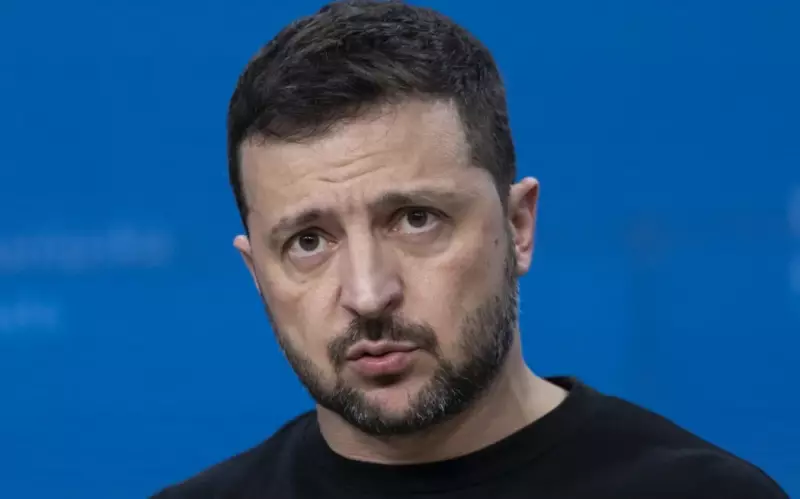
Ukrainian President Volodymyr Zelenskyy unleashed a sharp rebuke against European leaders during his address at the World Economic Forum in Davos, expressing growing frustration over what he described as inadequate support for Ukraine as diplomatic efforts to end the war with Russia remain stalled.
Europe's Failure to Act Decisively
Speaking just one day after US President Donald Trump criticized Europe regarding mass migration issues, Zelenskyy focused his speech on Europe's perceived shortcomings in assisting Ukraine's resistance against Russia's invasion and strengthening continental defense capabilities. His remarks highlighted the concerning lack of tangible progress in peace negotiations, despite renewed engagement from the United States.
Questioning Political Will and Frozen Assets
Zelenskyy specifically questioned the European Union's hesitation in deploying frozen Russian assets to support Ukraine's war effort, suggesting this reflected a fundamental lack of political determination. "Putin managed to stop Europe, unfortunately," he stated bluntly. "What's missing? Time? Or political will? Too often in Europe, something else is considered more urgent."
The Ukrainian leader elaborated that Europe frequently engages in debates about future scenarios while avoiding decisive action in the present moment. He expressed particular frustration regarding advice from European partners about engaging with Washington, revealing he had been cautioned against requesting long-range weapons systems such as US-made Tomahawk missiles or Germany's Taurus missiles.
Criticism of European Decision-Making
Zelenskyy further criticized what he described as the European Union's slow and fragmented decision-making processes, arguing that internal divisions significantly weaken the continent's ability to respond effectively to Russian aggression. "Too often, European leaders turn against each other instead of standing together to stop Russia," he asserted. "Europe needs to learn how to defend itself."
While acknowledging some European leaders including European Commission President Ursula von der Leyen, Zelenskyy's overall tone remained scathing and left many attendees visibly unsettled. Most audience members had anticipated updates on US-backed peace negotiations or details from his earlier meeting with President Trump, but these topics received only brief mentions.
Peace Talks and Trump Meeting
Regarding ongoing negotiations, Zelenskyy confirmed that talks continue but described them as complex, noting that draft documents aimed at ending the conflict were "nearly ready." He characterized his meeting with President Trump as positive, thanking the American leader for making time in his schedule.
Although Zelenskyy has previously criticized European leaders at international forums, his Davos remarks represented a particularly sharp escalation. He questioned recent European troop deployment decisions, such as sending small military contingents abroad, asking what message such actions send to Russia, China, and even Europe's own allies.
Contrasting Perspectives on Negotiations
Meanwhile, US officials have expressed optimism about potential peace agreement prospects. President Trump stated during his own Davos address that negotiations were approaching productive results, while his special envoy to Ukraine, Steve Witkoff, discussed a potential prosperity agreement that could grant post-war Ukraine tariff-free access to American markets.
Despite this optimistic rhetoric from Washington, observers note there has been minimal visible progress on core conflict issues, including:
- Russia's demands for Ukraine to cede eastern territory
- Moscow's opposition to Western security guarantees for Kyiv
- Disagreements over control of the Zaporizhzhia Nuclear Power Plant
Nuclear Plant and Compromise Requirements
Zelenskyy has specifically objected to proposals involving shared control of the Zaporizhzhia Nuclear Power Plant with US and Russian participation. He indicated that further talks involving American and Russian representatives are expected, emphasizing that any viable agreement would require compromises from all involved parties.
"Everyone has to be ready, not only Ukraine," Zelenskyy stressed. "It's better than not having no dialogue at all."
The Ukrainian president concluded his Davos address with a note of cautious optimism, expressing his belief that the devastating war will eventually reach its conclusion, though the path forward remains challenging and dependent on greater international solidarity and decisive action.




