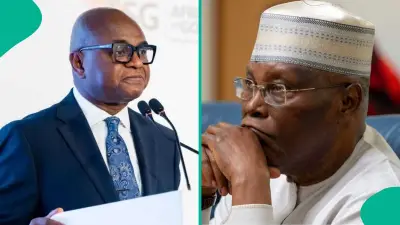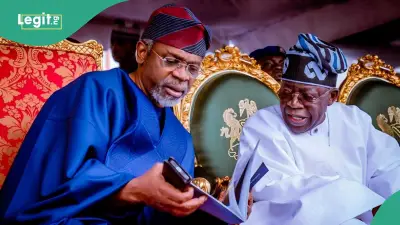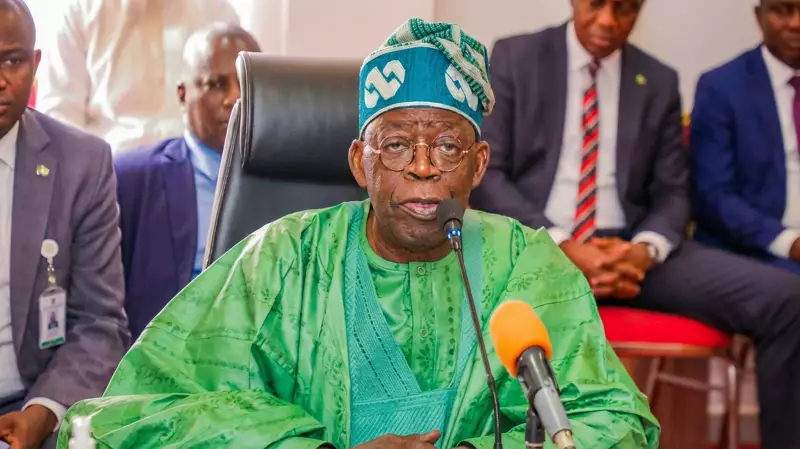
President Bola Ahmed Tinubu presented a landmark ₦58.18 trillion budget proposal to the National Assembly on Thursday, marking the largest financial plan in Nigeria's history. The 2026 Appropriation Bill, laid before a joint session of the Senate and House of Representatives, aims to stabilize the economy and address mounting demands for jobs, relief, and better public services.
A Budget of Historic Scale and Ambition
In his address, President Tinubu outlined a fiscal agenda focused on economic stabilization, growth, and infrastructure renewal. He acknowledged significant hurdles, including persistent inflation, the heavy burden of debt servicing, and ongoing weaknesses in government revenue. The proposed budget represents a bold attempt by the administration to navigate these constraints while setting the country on a path to recovery.
The sheer size of the ₦58.18 trillion proposal underscores the magnitude of Nigeria's economic challenges and the government's stated ambitions. However, the immediate focus in the National Assembly has shifted from the headline figure to the practical implications for citizens.
The Senator's Call for Measurable Outcomes
Reacting to the presentation, Senator Natasha Hadiza Akpoti-Uduaghan, representing Kogi Central, cut to the heart of the public's concern. She highlighted one particular statement from the President's speech: “It’s not the size of the budget but the quanta of impact felt by Nigerians.”
According to the senator, this line captures the essential question facing the nation. “Nigerians want to see results,” Akpoti-Uduaghan asserted. She elaborated that citizens are weary of impressive budget numbers that fail to materialize into tangible improvements. For ordinary people, success means the budget translating into better living conditions, employment opportunities for youth, reliable infrastructure, affordable healthcare, and functional education systems.
Accountability and Civic Oversight Are Key
The senator, who is a member of the Senate Committee on Finance and known for advocating transparency, stressed that promises are not enough. Achieving meaningful impact requires robust mechanisms for accountability and active citizen participation.
“Leaders must do better, and citizens must demand accountability,” she stated, calling for increased civic engagement and public oversight of the budget implementation process. Her comments echo a growing sentiment of frustration with budgets that appear ambitious in documents but deliver little change at the grassroots level.
Analysts note that the budget presentation is just the first step in a detailed legislative journey. Various committees in the National Assembly are now tasked with a rigorous scrutiny of the proposal. Their examination will focus on:
- The realism of revenue assumptions.
- The sustainability of the nation's debt profile.
- The prioritization of sectors.
- The credibility of the government's implementation plans.
As debates on the 2026 Appropriation Bill intensify in the coming weeks, Nigerians from all walks of life will be watching closely. The ultimate test for the Tinubu administration will be its ability to convert this record-breaking budget into measurable, positive impacts in communities across the country. The verdict, as Senator Akpoti-Uduaghan reminds us, will be based on tangible results, not trillions of Naira on paper.