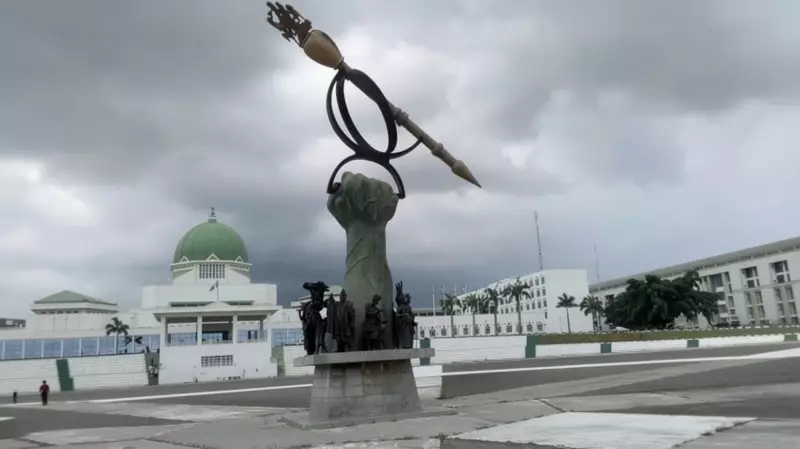
The National Assembly has committed to conducting a rigorous and detailed examination of the 2026 Appropriation Bill, promising to apply hard lessons learned from the implementation difficulties of the current 2025 budget.
Abbas Outlines Fiscal Realism and Single Budget Directive
This firm assurance was delivered by the Speaker of the House of Representatives, Tajudeen Abbas, during a special joint session of the National Assembly in Abuja on Friday, December 19, 2025. The session was convened for President Bola Ahmed Tinubu to formally present the 2026 budget estimates to the lawmakers.
President Tinubu, who arrived at the legislative complex at exactly 2:59 pm, was accompanied by a high-level delegation. This included Vice-President Kashim Shettima, the National Chairman of the All Progressives Congress (APC) Professor Nentawe Goshwe Yilwatda, and the National Security Adviser, Nuhu Ribadu.
The event also saw the presence of several APC governors from across the nation, demonstrating the significance of the budget presentation. The governors in attendance were:
- Babajide Sanwo-Olu (Lagos)
- Bassey Otu (Cross River)
- Sheriff Oborevwori (Delta)
- Siminalayi Fubara (Rivers)
- Dapo Abiodun (Ogun)
- Hope Uzodimma (Imo)
- Umo Eno (Akwa Ibom)
- Hyacinth Alia (Benue)
- AbdulRahman AbdulRazaq (Kwara)
Learning from 2025: The Push for Prudence and Diversification
In his address, Speaker Abbas acknowledged that the Nigerian economy exhibited signs of recovery and greater stability in 2025. However, he pointed out that ongoing volatility in global oil markets and some overly optimistic fiscal assumptions had highlighted the dangers of relying too heavily on crude oil revenue.
"The experience of 2025 reinforced our understanding that credible budgets must be built on realistic assumptions, disciplined execution and resilient fiscal frameworks," Abbas stated.
He explained that unpredictable changes in crude oil prices and foreign exchange rates had tested the projections in the 2025 budget, underscoring the critical need for prudent financial planning and a deliberate shift towards diversified revenue sources for the nation.
Economic Gains and a Unified Fiscal Path Forward
Citing data from the National Bureau of Statistics, the Speaker noted that Nigeria achieved positive economic growth in 2025, with real Gross Domestic Product (GDP) approaching four percent. He added that inflationary pressures had begun to ease following the recent rebasing of the Consumer Price Index.
Abbas also highlighted improvements in external sector indicators, including better foreign exchange reserves, increasing export earnings, and steady inflows of remittances from abroad. These developments, he said, have been recognized by international bodies like the World Bank and the International Monetary Fund as signs of Nigeria's improving macroeconomic credibility.
A key point of commendation from the Speaker was President Tinubu's directive for Nigeria to operate under a single budget and a unified fiscal framework. Abbas described this move as a crucial step towards restoring order, transparency, and discipline in the management of public finances.
"Your insistence that there should be no parallel budgets, no multiple spending windows, and no fragmented fiscal authorities speaks to discipline, clarity, and respect for due process," Abbas said, addressing the President directly.
He assured that the National Assembly fully supports this stance, as it builds confidence that the 2026 budget will be both ambitious and grounded in reality, designed for precise implementation rather than vague approximations.
Focus on Security, Revenue, and Citizen Value
On the critical issue of national security, Abbas stressed that effective funding for security agencies is fundamental to economic development, food production, and boosting investor confidence. He vowed that lawmakers would closely monitor the utilization of funds allocated to the security sector to ensure measurable improvements in safety across the country.
The Speaker also described the new tax laws scheduled to take effect in 2026 as pivotal for strengthening non-oil revenues, reducing financial leakages, and sustainably financing government obligations.
In his concluding remarks, Tajudeen Abbas assured that the National Assembly would approach the 2026 budget proposal with a sense of urgency and deep patriotism. He insisted that every single naira approved by the parliament must deliver tangible value and improve the lives of ordinary Nigerians, translating economic reforms into real-world benefits like job creation, higher incomes, and expanded opportunities for all.