President Tinubu Unveils Ambitious 2026 Budget, Takes Hardline Security Stance
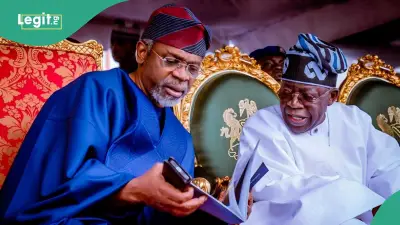
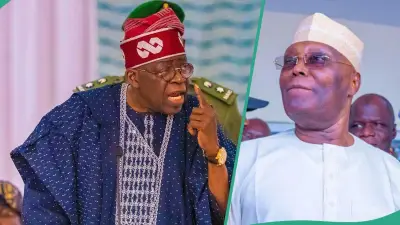
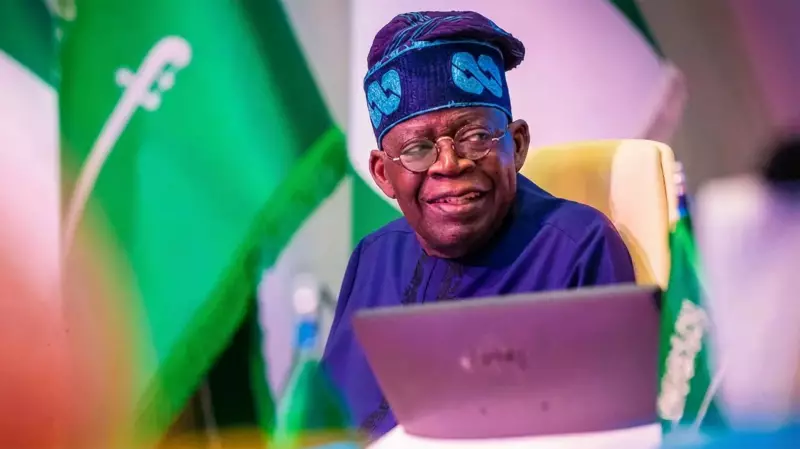
President Bola Ahmed Tinubu on Friday, 19 December 2025, laid out a sweeping vision for Nigeria's future, presenting a historic ₦58.18 trillion Appropriation Bill for 2026 to a joint session of the National Assembly. In a defining moment of his address, the President issued a stern declaration, stating that all armed groups operating outside state authority would now be classified as terrorists.
The proposed budget, christened the "Budget of Consolidation, Renewed Resilience and Shared Prosperity," is positioned as a critical juncture in Tinubu's reform agenda. Its core objectives are to lock in macroeconomic stability, build national resilience, and ensure that economic recovery translates into tangible improvements in the living standards of ordinary Nigerians.
Economic Foundations and Fiscal Framework
President Tinubu opened his presentation by highlighting positive economic indicators, framing them as the result of deliberate, though difficult, policy choices. He reported that Nigeria's economy grew by 3.98 per cent in the third quarter of 2025, an improvement from the 3.86 per cent recorded in the same period of 2024.
On inflation, the President noted a significant decline, with the headline rate falling for eight consecutive months from 24.23 per cent in March 2025 to 14.45 per cent in November 2025. He also revealed a major boost in external reserves, which have risen to a seven-year high of approximately $47 billion, providing more than ten months of import cover for the nation.
The fiscal blueprint projects total revenue of ₦34.33 trillion against the massive ₦58.18 trillion expenditure, indicating continued reliance on deficit financing. The deficit is estimated at ₦23.85 trillion, which is about 4.28 per cent of the nation's Gross Domestic Product (GDP).
Key budget assumptions include an oil price benchmark of $64.85 per barrel, daily oil production of 1.84 million barrels, and an exchange rate of ₦1,400 to the US dollar.
A substantial ₦26.08 trillion is earmarked for capital investment, focusing on infrastructure and development projects to enhance productivity. Recurrent non-debt spending is set at ₦15.25 trillion, while debt servicing will consume ₦15.52 trillion, underscoring the weight of previous borrowings.
The President vowed that new borrowing would be disciplined and strictly tied to projects with measurable public value. He directed the Minister of Finance, the Budget Office, the Accountant-General, and heads of Government-Owned Enterprises (GOEs) to enforce strict fiscal discipline, warning that Nigeria "can no longer afford leakages, inefficiencies, or underperformance."
A New Security Doctrine: Zero Tolerance for Terror
In one of the most forceful segments of his speech, President Tinubu announced a decisive shift in Nigeria's security approach. He declared that any armed individual or group operating without state sanction will be treated as a terrorist.
"The denominator is simple," Tinubu stated. "If you wield lethal weapons and act outside the authority of the Nigerian state, you are a terrorist."
This sweeping designation explicitly includes bandits, militias, kidnappers, armed gangs, cult groups, forest-based armed collectives, and foreign mercenaries. The President further extended the threat, stating that financiers, ransom negotiators, informants, arms suppliers, transporters, and even political protectors, traditional rulers, or religious leaders who facilitate such groups would also be designated as terrorists.
To back this new stance, the administration is establishing a new national counter-terrorism doctrine anchored on unified command, intelligence-led operations, community stability, and judicial reforms. Reflecting this priority, the security sector received one of the largest allocations at ₦5.41 trillion.
Sectoral Allocations and Future Promises
The budget outlines significant investments in other critical sectors. The education sector is allocated ₦3.52 trillion, with Tinubu highlighting the Nigerian Education Loan Fund which has supported over 418,000 students across 229 tertiary institutions.
Health receives ₦2.48 trillion, representing about 6 per cent of the total budget. The President also disclosed that Nigeria secured over $500 million in US grant funding for health interventions.
Infrastructure development is set to get ₦3.56 trillion, with focus on transport, energy, ports, and agriculture. Tinubu described food security as "national security," pledging substantial investment in mechanisation, irrigation, storage, and agro-processing to strengthen value chains.
Acknowledging the hardships caused by ongoing reforms, the President assured Nigerians that their sacrifices were not in vain. He promised that 2026 would be a year of tangible delivery, stating, "The greatest budget is not the one we announce. It is the one we deliver."
He concluded by calling for continued cooperation between the Executive and Legislature, emphasizing that unity of purpose is essential to delivering on the promise of the Renewed Hope Agenda. "With the resilience of the Nigerian people," he affirmed, "we will build a more secure, competitive, and equitable Nigeria."