The people of Ekiti State will head to the polling units on Saturday, June 20, for one of Nigeria's closely monitored off-cycle governorship elections. The election will determine who will lead the southwestern state for the next four years and shape discussions around governance, development, and political direction in one of Nigeria's politically engaged states.
10 Major Political Facts About Ekiti
Governorship elections in Nigeria often attract national attention, but the Ekiti gubernatorial poll has built a reputation as one of the states where elections are fiercely contested and monitored by observers who analyze voter decisions.
Incumbent Governor Seeking Re-election
Biodun Oyebanji is the current governor of Ekiti State. He is seeking re-election in the Saturday exercise as the candidate of the All Progressives Congress (APC). The APC currently controls the State House of Assembly and is the dominant political force in the state.
Highly Competitive Political Space
Ekiti is one of the most politically competitive states in Nigeria. Political control has changed hands between parties since the return of democracy. The state often attracts national attention during elections because the people are politically conscious, and history shows that governorship races are closely contested.
Former Governors
Ekiti has produced five democratically elected governors since its creation. Elections have sometimes been determined through the courts. Those who have governed the state include Adeniyi Adebayo, Ayo Fayose, Olusegun Oni, Kayode Fayemi, and Biodun Oyebanji. Oni took office in May 2007 after a court voided his election.
Local Government Areas
The Saturday governorship election will be conducted across all 16 local government areas: Ado-Ekiti, Efon, Ekiti East, Ekiti South-West, Ekiti West, Emure, Gbonyin, Ido/Osi, Ijero, Ikere, Ikole, Ilejemeje, Irepodun/Ifelodun, Ise/Orun, Moba, and Oye. Ado-Ekiti, the capital, is expected to produce a large number of voters as the most economically vibrant and urbanized LGA.
Registered Voters
According to BBC Pidgin, the Ekiti governorship election is expected to have 1,059,360 registered voters. This represents an increase of 66,000 compared to the number of registered voters in the 2022 governorship election.
Number of Candidates
There are 16 governorship candidates contesting the election, including Governor Biodun Oyebanji.
Youthful State
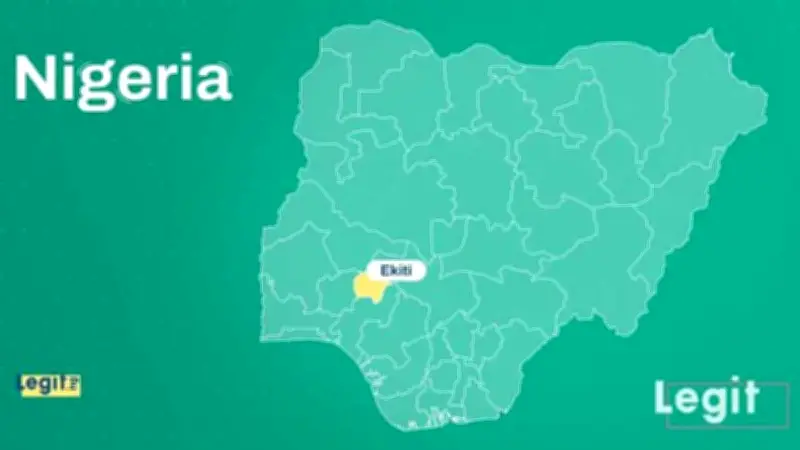
Ekiti is one of Nigeria's youngest states, created in 1996 by the late military head of state General Sani Abacha from the old Ondo State. The first governor was Mohammed Bawa, a military officer. The capital is Ado-Ekiti.
Landmarks and Geography
Ekiti is one of the smallest states in Nigeria by land area, occupying about 5,888 square kilometers in the southwest region. It shares borders with Kwara to the north, Kogi to the northeast, Ondo to the south and east, and Osun to the west.
Population
According to the 2006 National Population Census, Ekiti is home to an estimated 2,384,212 people. Although no national census has been conducted since 2006, population projections suggest an increase over the past two decades.
State Motto: Fountain of Knowledge
Ekiti is often referred to as the Fountain of Knowledge due to its strong association with education. It earned this nickname for its longstanding reputation of producing academics, lawyers, teachers, judges, and other professionals. Many families in the state value and invest in education, suggesting that the election will be contested by intellectuals.