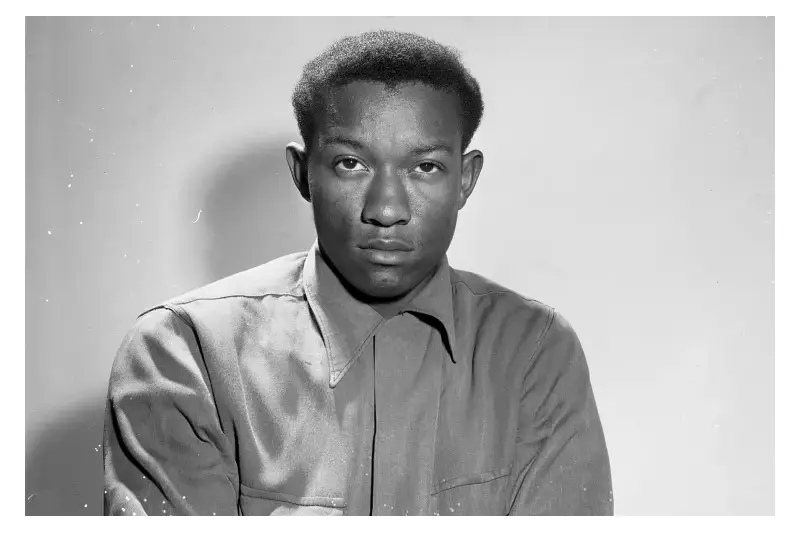
Historic Exoneration for Black Teenager Executed Seven Decades Ago in Texas
In a landmark decision that corrects a grave historical injustice, Tommy Lee Walker has been posthumously exonerated for a murder he did not commit. The Black teenager was executed in 1956 for the killing of white store clerk Venice Parker, but new evidence has conclusively proven his innocence.
A Tragic Case Built on Coercion and Racial Bias
The case dates back to 1953 when Venice Parker, a white store clerk, was sexually assaulted and stabbed while waiting for a bus after her shift at a Dallas toy store. Despite being unable to speak due to her injuries, a police officer claimed she identified her attacker as a Black man before her death.
Four months later, Dallas Police Homicide Bureau Chief Will Fritz arrested Tommy Lee Walker. Research indicates Fritz had alleged ties to the Ku Klux Klan, raising serious questions about racial motivations in the investigation.
Walker maintained his innocence from the beginning and presented a solid alibi supported by ten eyewitnesses. He was attending the birth of his first and only child at the time of the crime, with multiple people confirming his presence.
Coerced Confession and Judicial Misconduct
Despite his strong alibi, Walker faced hours of intense interrogation where investigators threatened him with the electric chair and made false claims about evidence. Under this extreme duress, the exhausted teenager eventually signed two confession statements.
The first statement contained numerous inaccuracies, and Walker recanted the second statement immediately after signing it. Notably, even under pressure, he never confessed to sexually assaulting Parker.
"We now know, through decades of research and wrongful convictions, that the tactics used against Mr. Walker increase a person's stress and mental exhaustion, placing them at significant risk of falsely confessing during police interrogation," explained Lauren Gottesman, one of the lawyers representing Walker's son.
The trial was handled by Dallas District Attorney Henry Wade, who reportedly oversaw the conviction of twenty innocent Black men during his tenure. Wade refused to provide exculpatory evidence to the defense, presented unproven claims as facts, and even testified as his own rebuttal witness to declare Walker's guilt.
Execution Despite Promises and Eventual Exoneration
Despite promises that signing a confession would spare him the death penalty, Walker was convicted and sentenced to death. His appeals were denied, and he was executed in the electric chair in 1956.
Seventy years later, a comprehensive review conducted by the Dallas County District Attorney's Conviction Integrity Unit, the Innocence Project, and Northeastern University School of Law's Civil Rights and Restorative Justice Project revealed the truth.
On January 21, 2026, the Commissioners Court of Dallas approved a resolution officially exonerating Walker and declaring his wrongful conviction and execution.
A Bittersweet Victory for the Family
For Walker's only child, Edward Smith, the exoneration brings mixed emotions. "It was hard growing up without a father," Smith shared. "When I was in school, kids talked about their dads, and I had nothing to say. This won't bring him back, but now the world knows what we always knew that he was an innocent man. And that brings some peace."
The case highlights systemic issues in the American justice system, particularly regarding racial bias, coerced confessions, and prosecutorial misconduct. Walker's exoneration serves as both a correction of historical wrong and a reminder of the ongoing need for judicial reform.