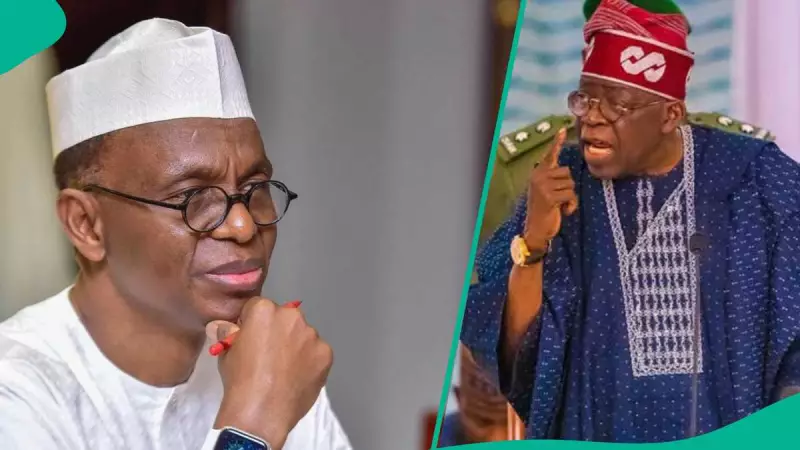
Former Governor El-Rufai Issues Stern Warning Over Unlawful Detentions in Nigeria
Former Governor of Kaduna State, Malam Nasir El-Rufai, has delivered a powerful condemnation of what he describes as the escalating culture of illegal detention across Nigeria. Speaking at the 23rd Annual Daily Trust Dialogue held at the Nigerian Air Force Conference Centre in Kado, Abuja, El-Rufai warned that this practice severely violates fundamental human rights and systematically erodes public confidence in governmental institutions.
Justice System Must Protect Citizens, Not Instill Fear
During his address to an audience comprising leaders, policymakers, and civil society actors gathered to discuss governance and national development, El-Rufai emphasized that the primary role of the justice system should be to safeguard citizens rather than to intimidate them. "The law should protect citizens, not terrify them like what is happening in Nigeria. Detention without due process must end," he stated unequivocally.
The former governor argued that holding individuals without proper legal procedures directly contravenes the principles of the rule of law embedded within the Nigerian Constitution. He highlighted that such actions not only infringe upon basic human rights but also create an environment of fear and uncertainty among the populace.
Security Agencies Operating Outside Legal Boundaries
El-Rufai further elaborated that no society can achieve meaningful progress when security agencies operate beyond established legal frameworks. He pointed out that the misuse of state power to suppress or intimidate citizens significantly weakens democratic institutions and obstructs national advancement. The continued holding of individuals without due process violates fundamental human rights and contradicts the principles of the rule of law enshrined in the Nigerian Constitution, he reiterated.
He called upon the Federal Government to ensure greater transparency within the judiciary and security agencies, stressing that respect for citizens' rights is non-negotiable for a functioning democracy. Failure to address these issues, he cautioned, risks further deterioration of public trust in governance structures.
Olubadan of Ibadanland Echoes Concerns Over Democratic Failures
Adding to the discourse at the same event, the Olubadan of Ibadanland, Oba Rashidi Ladoja, expressed deep concerns about the performance of Nigeria's Fourth Republic. He stated that the current democratic system has failed to deliver essential benefits to citizens, particularly in critical areas such as education, rule of law, and security.
Oba Ladoja questioned why, after 26 years of uninterrupted democratic rule, governments at all levels have been unable to guarantee access to education for Nigerian children. "Government has not made education a guaranteed right. Today, many of our children are out of school. Should that be happening in Nigeria today? Can we not guarantee education for all our children?" he asked poignantly.
He warned that denying large segments of the youth population access to education poses severe threats to Nigeria's future stability and sustainable development, emphasizing that no nation can thrive while neglecting the educational needs of its younger generation.
Contrasting Views on Government Policies
In a related development, it is noteworthy that El-Rufai has recently shown support for certain federal government actions. He commended the administration's firm stance against paying ransoms to kidnappers, as reiterated by the Minister of Defence, General Christopher Musa (retd). This marks a rare instance of alignment between the former governor and current federal policies, given his consistent opposition to ransom payments during his tenure in Kaduna State.
El-Rufai praised the defence minister for publicly affirming the government's position of not negotiating with bandits or financing their activities through ransom payments, highlighting a complex landscape where criticism and commendation coexist in national discourse.