South Korea's Ex-President Yoon Suk-yeol Receives Life Sentence for Insurrection
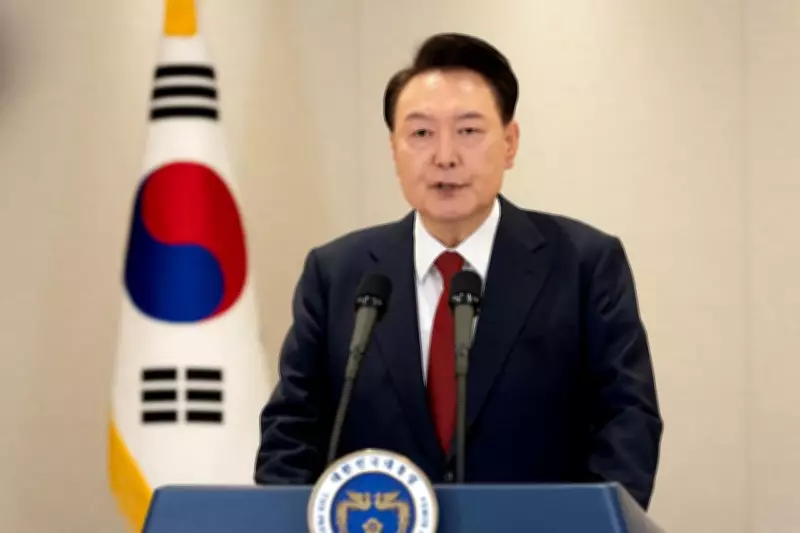
Former South Korean President Yoon Suk-yeol has been sentenced to life imprisonment after being found guilty of leading an insurrection during his declaration of martial law in December 2024. The ruling, delivered by Seoul Central District Court Judge Jee Kui-youn, was broadcast live on South Korea's major television networks and represents a significant moment in the nation's judicial history.
Court Verdict Details the Charges
In the verdict, Judge Jee stated that Yoon led an insurrection and committed acts aimed at subverting the country's constitutional order. The court emphasized that Yoon took the lead in planning the crime and involved a large number of people. It was noted that it is difficult to see any sign of remorse from the defendant, who also refused to appear in court for questioning last year and during the proceedings.
The court further detailed that Yoon had ordered South Korea's military to capture individuals during the martial law declaration, including the current president, Lee Jae Myung. Additionally, Yoon intended to paralyze the country's parliament by deploying troops to blockade the National Assembly and arrest key politicians, according to the judge's statements.
Additional Sentences and Legal Context
Five other individuals were also sentenced in connection with the case. Former defense minister Kim Yong-hyun received a 30-year prison term, while former Prime Minister Han Duck-soo was sentenced to 23 years in prison. Former Interior Minister Lee Sang-min received a seven-year sentence. The defendants have the option to appeal the ruling within a week.
This sentence follows a separate ruling on January 16, when Yoon was given a five-year prison term for attempting to obstruct his arrest after he was impeached and suspended from office. Yoon was the first sitting South Korean president to be arrested, in an operation involving over 3,000 police personnel that led to a standoff with presidential security agents.
Background of the Martial Law Declaration
During the final hearing, special counsel Cho Eun-suk's team argued that Yoon declared martial law with the purpose of remaining in power for a long time by seizing control of the judiciary and legislature, as reported by South Korean media. Yoon reportedly maintained his innocence, asserting that the declaration was within his constitutional authority and intended to safeguard freedom and sovereignty.
He imposed South Korea's first instance of martial law in 44 years during a late-night address on December 3, 2024, claiming that the then-opposition Democratic Party of Korea was engaging in anti-state activities and colluding with North Korean communists. Troops were deployed to the National Assembly, and soldiers and police clashed with protesters outside the compound.
Then-defense minister Kim Yong-hyun also reportedly ordered troops to pull people inside the National Assembly building outside. However, the martial law order was overturned within three hours after 190 of the 300 National Assembly lawmakers gathered in the chamber and unanimously voted to do so. Yoon eventually lifted martial law about six hours after announcing it.
He was impeached 11 days later and removed from office on April 4, 2025. The life sentence marks a dramatic conclusion to a case that has captivated South Korea and highlighted tensions within its political system.