The Imo State government, led by Governor Hope Uzodinma, is attempting to bypass the most senior judge for the position of Chief Judge, a move that threatens judicial independence and mirrors a historic constitutional crisis in India. The state has been without a substantive Chief Judge for nearly 20 months since the National Judicial Council (NJC) sacked the previous holder for age falsification in November 2024. In April 2025, the NJC blocked the governor's attempt to appoint the fourth most senior judge as Acting Chief Judge, instead compelling him to appoint the most senior judge, Ijeoma Ogugua, who has served for 33 years. However, the Imo State Judicial Service Commission (JSC) has now published a short-list for a permanent Chief Judge that omits Ogugua, raising serious concerns about political interference.
The Kesavananda Bharati Precedent
The situation in Imo State echoes the 1973 Indian case of Kesavananda Bharati v. State of Kerala. Swami Kesavananda Bharati, a Hindu monk, challenged the Kerala Land Reforms (Amendment) Act of 1969, which restricted his monastery's land management. The Supreme Court of India ruled 7-6 in his favor, striking down the law. The government of Prime Minister Indira Gandhi retaliated by appointing Justice Ajit Nath Ray as Chief Justice of India, superseding three senior judges who were forced to resign. Justice Ray had been in the minority in the Kesavananda case. The Delhi High Court later noted that the appointment violated the established practice of seniority and was made by the Political Affairs Committee of the Cabinet, which had no legal standing. The government openly admitted it wanted a Chief Justice who would end confrontation between the judiciary and Parliament.
Why Seniority Matters
Judicial seniority is a crucial convention for three reasons. First, it prevents the appointment process from being opaque or subjective. Second, it stops politicians from hijacking the process for partisan ends. Third, it protects judges from being denied preferment based on unsubstantiated smears. In Nigeria, seniority became a dispositive factor only in 1979 with the appointment of Atanda Fatayi Williams as Chief Justice. At the state level, politics has progressively diminished the office of the Chief Judge. At independence, state Chief Justices sat on the Federal Supreme Court and were second only to the Chief Justice. Justices of the Supreme Court sometimes stepped down to serve as state Chief Justices, as seen with John Idowu Conrad Taylor in 1964 and Mohammadu Buba Ardo in 1976.
Historical Erosion of Judicial Independence
The erosion of judicial independence accelerated under the regime of Muhammadu Buhari in 1984, which sought to advance loyalists to senior judicial positions. In Anambra State, Military Governor Alison Madueke summarily fired Chief Judge Emmanuel Araka after he declined summons. Since 1999, civilian governors have continued this trend. For example, former Rivers State Governor Rotimi Amaechi kept the office of Chief Judge vacant from 2013 to 2015 when he could not secure his preferred candidate.
The Imo State Crisis Unfolds
In Imo State, the JSC's short-list of two judges excludes Acting Chief Judge Ijeoma Ogugua, who has been passed over at least twice. The next most senior judge is 11 years her junior. The JSC claims to act under the 2023 amendment of the NJC Procedural Rules, but those rules apply only to new judges, not to the appointment of a Chief Judge. The Constitution limits the JSC to advising the NJC on suitable persons; only the NJC can create a short-list. The JSC's action is therefore ultra vires. Governor Uzodinma earlier argued that the three most senior judges were not appointable, levying specious allegations against Ogugua, but he has refused to allow the NJC to investigate these claims. The Acting Chief Judge has no adverse disciplinary record with the NJC.
The Role of the Chief Justice
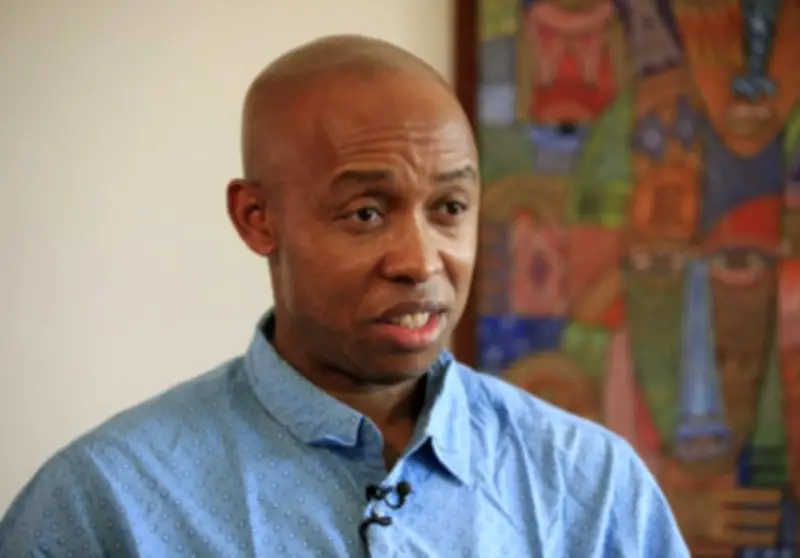
The current Chief Justice of Nigeria, Justice Kudirat Kekere-Ekun, has an opportunity to define the applicable conventions and defend judicial independence. As Chidi Anselm Odinkalu, a lawyer and professor at the Fletcher School of Law and Diplomacy, writes: "It is not her job to grant the governor a Chief Judge whom he can own." The NJC must resist political pressure and uphold the seniority convention to prevent a repeat of India's 1973 crisis, which took nearly a quarter of a century to resolve.