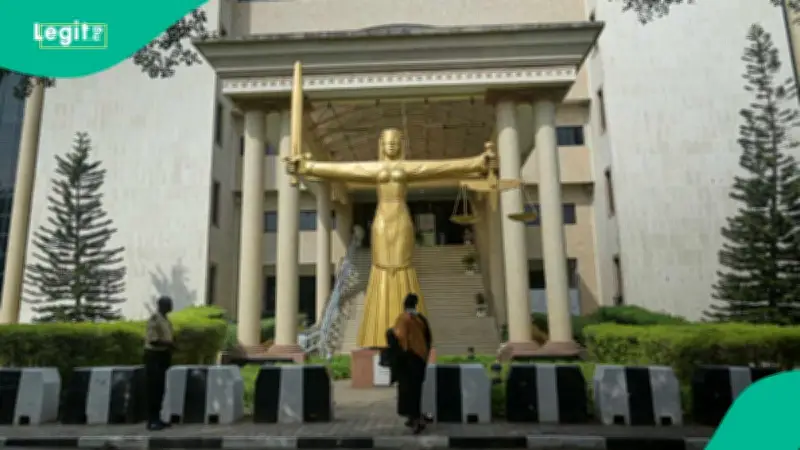
The Federal High Court in Lokoja set aside its December 2025 judgment that directed the Independent National Electoral Commission (INEC) to register the Nigeria Democratic Congress (NDC), reigniting debate over the intersection of law and politics in Nigeria. Communications strategist and governance advocate Kalu Okoronkwo argues that the ruling, while procedurally grounded, raises critical questions about proportionality, public trust, and the future of multiparty democracy ahead of the 2027 elections.
Court Ruling and Procedural Grounds
Justice Isah Dashen vacated the earlier judgment on the basis that the Peace Movement Party (PMP), which claims an interest in the disputed logo, was not joined as an interested party. The court ordered the case to restart with all relevant parties included. Okoronkwo notes that the principle of fair hearing, or audi alteram partem, is a cornerstone of justice, but he questions whether nullifying the entire registration was proportionate to the procedural defect.
The timing of the judgment is particularly consequential, as political parties are finalizing candidate lists for the 2027 elections. Okoronkwo suggests that the ruling may reinforce perceptions that the ruling All Progressives Congress (APC) seeks to stifle opposition, especially given ongoing efforts to emasculate opposition parties.
Proportionality and Legal Remedies
Okoronkwo argues that justice demands proportionality. If the core issue is a logo dispute, intellectual property law typically offers remedies such as injunctions, damages, or design modifications, rather than reversing an entire party registration. He cites the Trademarks Act, the Electoral Act 2022, and common law doctrines as governing such matters, noting that the Constitution does not specifically address trademark infringement in political party logos.
The Electoral Act 2022 requires each party to have a unique name and logo and prohibits INEC from registering parties with identical or insufficiently distinct identities. Okoronkwo states that while logos deserve protection, the remedy adopted in this case—nullifying registration—is far more intrusive than necessary.
Standing and Broader Implications
Okoronkwo raises questions about the Peace Movement Party's standing. If its own legal status has been contested, does it have the right to seek orders that nullify another party's registration? He emphasizes that these questions require careful judicial examination, not assertion alone.
Across democratic jurisdictions, party logos function as constitutional brands, but trademark disputes rarely result in the dissolution of the accused entity. Okoronkwo warns that reversing a party's registration affects members, candidates, and citizens' constitutional freedoms of association and political participation.
Comparative Constitutional Practice
Okoronkwo points to comparative examples: in India, symbol disputes are resolved by reallocating or freezing symbols while preserving political competition; Kenyan courts favor remedies that protect participation; South African jurisprudence insists on legality, rationality, and proportionality; and the UK and US resolve such disputes through regulators or intellectual property proceedings rather than judicial orders excluding political organizations.
The underlying philosophy, he argues, is to protect electoral integrity, procedural fairness, and political pluralism—principles Nigeria should uphold.
Broader Significance for Democracy
The verdict extends beyond the NDC. If procedural defects become grounds to cancel registration after it is granted, every emerging party could face prolonged litigation before fielding candidates. Okoronkwo stresses that democracy thrives on competition, and the Constitution guarantees freedom of association to prevent political uniformity.
Courts occupy a delicate position: their legitimacy rests on public confidence that decisions are guided by legal principle, not political expediency. Okoronkwo calls for appeals as legitimate constitutional mechanisms and urges the National Judicial Council to discharge its disciplinary mandate if evidence of misconduct arises.
Preserving Confidence in the Ballot and Bench
Okoronkwo concludes that the case raises fundamental questions about Nigeria's constitutional and electoral architecture. Electoral disputes should be resolved without constricting democratic space. He warns against weakening constitutional guarantees of political participation or sacrificing proportionality for procedural perfection.
He states: "Nigeria's democracy deserves courts that inspire confidence, electoral institutions that command public trust, and political competition that offers citizens genuine choice and hope." The judiciary, he argues, should not become a tool for corrupt politicians or the ruling party to stifle opposition ahead of 2027.
This article reflects the views of Kalu Okoronkwo, a communications strategist and governance advocate, and does not represent the official policy of Legit.ng.