NBC's Media Gag Rules Spark Outcry from Editors, Obi, and Civil Society Groups
In a significant development, the Nigerian Guild of Editors (NGE) has voiced grave concerns over the National Broadcasting Commission's (NBC) reported threat to sanction broadcast presenters for allegedly presenting personal opinions as facts or bullying guests on air. This move has ignited a fierce debate on press freedom and democratic accountability in Nigeria.
Nigerian Guild of Editors Condemns Vague Regulations
The NGE's concern was articulated in a statement signed by its President, Eze Anaba, and General Secretary, Onuoha Ukeh. They described the NBC's action as dangerous and injurious to journalism, framing it as a direct assault on the principles of press freedom and editorial independence. While acknowledging the NBC's potential motivation to promote professionalism and uphold ethical standards, the guild criticized the commission's vague and broadly worded statement, which they argue is open to multiple interpretations.
This ambiguity, according to the NGE, creates room for misuse, potentially leading to selective application or misinterpretation that unfairly targets journalists and media organizations performing their legitimate duties. The guild reiterated the essential role of broadcast presenters and journalists, particularly during interviews, in asking probing questions, challenging inconsistencies, and demanding clarity in the public interest. Journalism is not designed to place public officials or interviewees in a comfort zone, but to hold power accountable, the statement emphasized.
Peter Obi Warns of Nigeria's Dangerous Drift
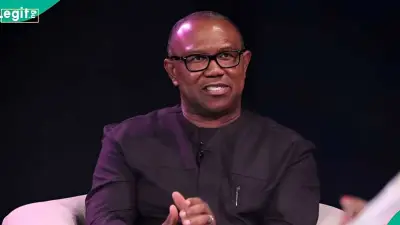
Similarly, Peter Obi, a presidential aspirant on the platform of the opposition African Democratic Congress (ADC), has expressed alarm over Nigeria's direction. His remarks followed the NBC's directives warning broadcasters against bullying guests, misuse of platforms, and other code breaches ahead of the 2027 General Elections.
In a post on his X handle, the former Governor of Anambra State described the NBC's recent notice as very troubling, especially given the critical timing of the upcoming general elections. Obi, who was the presidential candidate of the Labour Party in the 2023 General Elections, argued that a free and responsible media should not be an enemy to any administration, particularly one that claims to have fought for democracy. He stressed that Nigeria does not need stronger control but stronger institutions to safeguard democratic values.
Civil Society Groups Highlight Cybercrimes Act Abuse
Meanwhile, civil society organizations, including the Socio-Economic Rights and Accountability Project (SERAP), Human Rights Journalists Network Nigeria, and Access Now, have raised fresh concerns over the persistent misuse of Nigeria's Cybercrimes Act, particularly Section 24, despite recent amendments to the law. This issue was discussed at a webinar titled Advancing Rights-Centred Reporting on Nigeria's Cybercrimes Act.
Oluwadare Kolawole, SERAP's Deputy Director, disclosed that the organization has reviewed the Cybercrimes Act since 2015, documenting patterns of abuse that have informed multiple legal actions, including cases before the Economic Community of West African States (ECOWAS) Court of Justice. Findings from SERAP's CB Space Monitor reports, published biannually since 2021, reveal that the Cybercrimes Act has been increasingly deployed at federal, state, and local levels to target citizens, journalists, and critics.
Kolawole noted that beyond government actors, celebrities, social media influencers, and private individuals with influence or financial capacity have also begun to weaponize the law, often in collaboration with law enforcement agencies. Speaking on the implications, he highlighted that the provision's vagueness makes it difficult for individuals to clearly understand what constitutes an offence, thereby undermining a key principle of international law.
The collective outcry from editors, political figures, and civil society underscores a growing tension between regulatory measures and fundamental freedoms in Nigeria, with significant implications for the media landscape and democratic processes as the country approaches the 2027 elections.