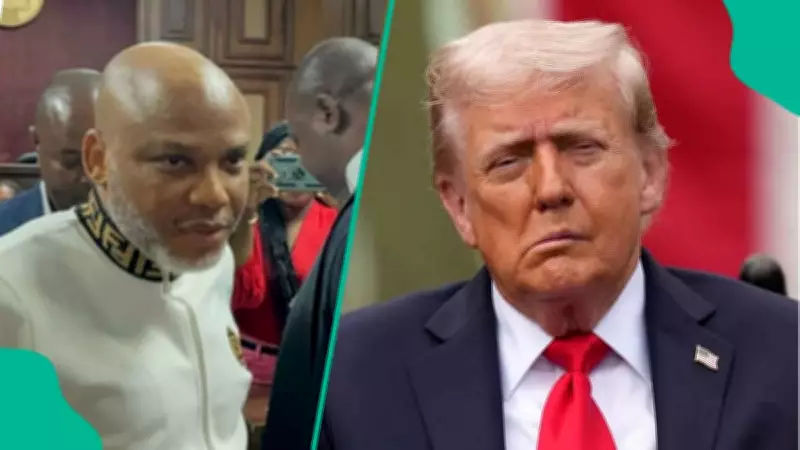
Fact Check: Does Nnamdi Kanu's US Honorary Citizenship Grant Legal Power Over His Case?
Georgia, USA - On Friday, January 23, 2026, Nnamdi Kanu, the detained leader of the proscribed Indigenous People of Biafra (IPOB), received a significant ceremonial distinction. The United States state of Georgia awarded him honorary citizenship, a rare honor reserved for non-US citizens who demonstrate extraordinary merit or global impact.
Understanding Honorary Citizenship in the United States
In the United States, honorary citizenship represents a purely ceremonial gesture of respect and admiration. It acknowledges outstanding contributions to humanity or international relations but does not establish any legal ties or rights typically associated with citizenship. The proclamation for Kanu, signed by Georgia Secretary of State Brad Raffensperger, names him an "Honorary Georgia Citizen" and a Goodwill Ambassador for the state.
The document was presented at a ceremony in Milledgeville, Georgia, and was received by former Nigerian Consul General to South Africa, Ambassador Uche Ajulu-Okeke, on Kanu's behalf. This honor follows Kanu's conviction on November 20, 2025, by the Federal High Court in Abuja, presided over by Justice James Omotosho.
Legal Context of Nnamdi Kanu's Conviction
Kanu was found guilty on seven counts of terrorism, treason, and inciting violence related to his campaigns for the independence of Nigeria's South-east and neighboring states as Biafra. The court sentenced him to life imprisonment, ordering that he be held in any secure prison in Nigeria except Abuja, due to recent jailbreak incidents. Consequently, prison authorities transferred him to the Sokoto correctional facility.
Kanu, a dual citizen of Nigeria and the United Kingdom, has faced a terrorism trial spanning over a decade, marked by repeated court appearances, adjournments, and legal challenges. In a recent motion struck out by the court, Kanu unsuccessfully sought transfer from Sokoto to the Abuja facility.
Social Media Claims and Factual Analysis
Following the announcement of Kanu's honorary citizenship, some social media users on X (formerly Twitter) made claims suggesting legal implications for his imprisonment in Nigeria. For instance:
- User @iw42445 referenced international incidents, stating, "If Americans can come for Nicolas Maduro, who is Nigeria to hold America if they come for Kanu."
- User @kenny-kenzeen argued, "The US Government is rubbing it on Nigeria…….Killing him translates to killing an American citizen, and that'll earn Big a lot."
- User @engrICO2015 wrote, "The implication is this: Nigeria automatically is holding a US citizen wrongly, and this offers the USA legal legitimacy to ask questions about his case!!"
However, these claims are factually incorrect. Honorary citizenship does not confer the legal status of citizenship or establish the ties required for state protection or intervention. Regardless of such honors, individuals remain subject to the laws and judicial processes of their country of nationality.
Conclusion: No Legal Grounds for US Intervention
The assertion that Nnamdi Kanu's honorary citizenship makes him a US citizen and grants the United States legal authority to intervene in his Nigerian imprisonment is false. This distinction is symbolic and does not alter his legal standing or the jurisdiction of Nigerian courts over his case. The facts confirm that honorary citizenship serves as a gesture of respect without impacting legal proceedings in other nations.