Rivers Impeachment Legal Battle Paused Indefinitely as Court Awaits Appeal Decision
A significant development has unfolded in the ongoing political crisis in Rivers State, where the legal challenge against the impeachment process targeting Governor Siminalayi Fubara and his deputy, Ngozi Odu, has been placed on hold. The Oyigbo High Court of Rivers State, sitting in Port Harcourt, has adjourned the lawsuit indefinitely, marking a pivotal moment in this constitutional standoff.
Court Proceedings and Adjournment Rationale
Justice Florence Fiberesima presided over the case and made the decision to adjourn sine die after being informed that two separate appeals had been filed concerning the matter. This adjournment is intended to allow the Court of Appeal to first determine the issues arising from these appeals, ensuring that higher judicial authority guides the proceedings.
During the resumed hearing, counsel to the Speaker of the Rivers State House of Assembly, Martin Amaewhule, and 27 lawmakers, S.I. Amen (SAN), informed the court of the pending appeals. They applied orally for a stay of proceedings, a move that was not opposed by the claimants' counsel, Paul Orikoro (SAN), or by Lawrence Oko-Jaja (SAN), who represents other defendants in the suit, including Victor Oko-Jumbo, Orubienimigha Timothy, and Sokari Goodboy.
Background of Interim Injunctions
This adjournment follows an earlier interim injunction granted by the same court, which had restrained key figures from advancing the impeachment process. Specifically, the injunction barred:
- The Speaker and several lawmakers
- The Clerk of the House
- The Chief Judge of Rivers State
from taking further steps toward impeachment. It prohibited the forwarding or consideration of impeachment notices or related documents aimed at constituting an investigative panel to probe allegations of gross misconduct against the governor and his deputy.
Chief Judge's Position and Legal Constraints
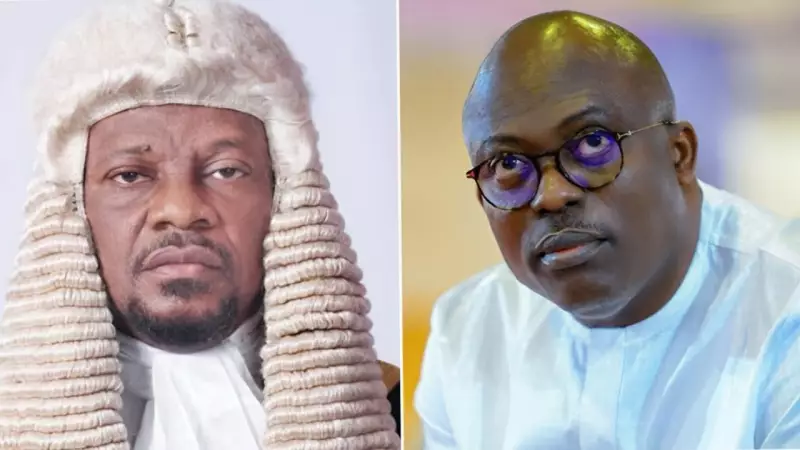
In a related development, the Chief Judge of Rivers State, Justice Simeon C. Amadi, has declined a request from the House of Assembly to constitute a seven-man investigative panel. This decision was based on subsisting court orders and a pending appeal, as outlined in a letter addressed to Speaker Amaewhule.
The letter acknowledged receipt of two separate requests dated January 16, 2026, made under Sections 188(4) and 188(5) of the 1999 Constitution (as amended), which followed House resolutions to commence impeachment proceedings. Justice Amadi stated, "By the doctrine of 'lis pendens', parties and the court have to await the outcome of the appeal." He further explained that his hands are fettered due to interim injunctions and appeals, legally disabling him from exercising his duties under the Constitution at this time.
Documentation and Court Orders
The Assembly's requests were accompanied by extensive documentation, including:
- Copies of the notice of allegations of gross misconduct
- The Rivers State Impeachment Panel (Conduct of Investigations) Procedure, 2025
- Relevant newspaper publications
However, the Chief Judge noted that his office had been served with two interim injunctions issued by the High Court on January 16, 2026. These suits, OYHC/6/CS/2026 filed by the Deputy Governor and OYHC/7/CS/2026 filed by Governor Fubara, list the Speaker and 32 others as defendants, with the Chief Judge named as the 32nd defendant. The orders explicitly restrain him from receiving, forwarding, considering, or acting on any impeachment-related communications from the Assembly for seven days, pending further proceedings.
This legal stalemate underscores the complex interplay between judicial oversight and political processes in Nigeria, highlighting how court interventions can significantly impact impeachment proceedings at the state level. The indefinite adjournment and the Chief Judge's refusal to act reflect a cautious judicial approach aimed at upholding legal precedents and ensuring due process amidst heightened political tensions.