SAN and Client Petition Lagos Chief Judge Over Sudden Case Withdrawal
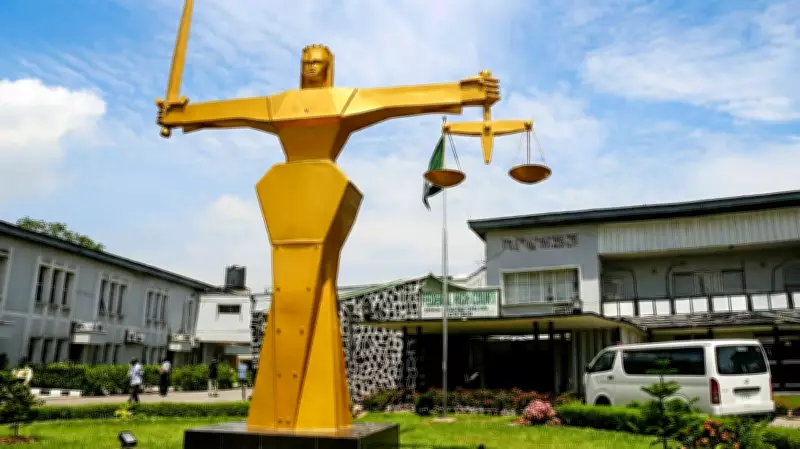
Chief Anthony George-Ikoli, a Senior Advocate of Nigeria (SAN) and former Attorney General of Bayelsa State, has formally petitioned the Chief Judge of Lagos State, Justice Kazeem Ologba, demanding an explanation for the abrupt withdrawal of a land matter case file from the Lagos State High Court in Ikeja. The petition, delivered through his chambers and signed by Ms Ayotunde Shabi, highlights that neither George-Ikoli nor his client, Nasco Town Limited, were notified prior to the withdrawal, sparking significant concerns about procedural fairness and judicial integrity.
Details of the Case and Withdrawal
The case, originally filed in 2020, involves a land dispute between Nasco Town Limited as the claimant and Mr Abiodun Ariori, the family of the late Chief Michael Mojisola Cole, and others as defendants. According to the petition, the matter had seen minimal progress beyond the pre-trial stage, with repeated adjournments and procedural delays largely attributed to the defendants' actions. During a hearing on April 15, 2026, Justice Akin Savage informed George-Ikoli in open court that the Chief Judge had withdrawn the case file without providing any reason for this decision.
This lack of explanation has heightened anxiety for the claimant, Nasco Town Limited, and raised serious questions about the transparency and impartiality of the judicial process. George-Ikoli emphasized in his letter that clarity on the withdrawal's purpose is essential to properly advise and reassure his client, especially given the indefinite adjournment that has followed. He stressed that such actions, if left unexplained, could undermine public confidence in the judiciary.
Claimant's Concerns and Historical Context
In a separate letter to the Chief Judge, Nasco Town Limited, represented by its Executive Coordinator Dr Mustapha Sulaiman, expressed alarm over the situation, warning that it might suggest external interference in the judicial process. The company noted that while the defendants appeared to have prior knowledge of the file's withdrawal, Nasco was neither informed nor given an opportunity to respond to any complaints or petitions that might have prompted the action.
Nasco outlined its long-standing connection to the disputed land, stating it has been in peaceful and uninterrupted possession since 1978 under a lease granted by the Federal Government. The company detailed extensive development efforts on the property, including land reclamation, construction, and a sublease to Michelin Tyres Limited in 1981. Following an application, the land was designated a Free Trade Zone, with development of its industrial section underway before the dispute arose in 2018.
The conflict began when the defendants allegedly invaded the land forcefully, claiming to enforce a 1997 Consent Judgment in favor of the late Chief Cole, to which Nasco was not a party. Investigations by Nasco revealed that this Consent Judgment had already been executed on a different parcel of land, and the late Chief Cole never claimed or visited the disputed land during his lifetime. The company's initial legal action in 2018 was handled by Justice Olaide Olayinka but faced delays due to difficulties in serving the defendants until the judge's retirement.
Procedural Challenges and Call for Transparency
In the current suit filed in 2020, Nasco reported that the defendants continued to evade service, necessitating a court order for substituted service. The matter has been plagued by repeated adjournments and procedural delays, which Nasco attributes to the defendants' tactics. Against this backdrop, the sudden withdrawal of the case file without explanation has been described as deeply troubling, particularly given the perceived unequal access to information between the parties.
Both George-Ikoli and Nasco Town Limited have urged the Chief Judge to provide immediate clarification on the reasons for withdrawing the case file. They argue that transparency in this matter is crucial to upholding the principles of justice and ensuring that all parties are treated fairly under the law. The petitions underscore the need for judicial accountability to maintain public trust in Nigeria's legal system.