
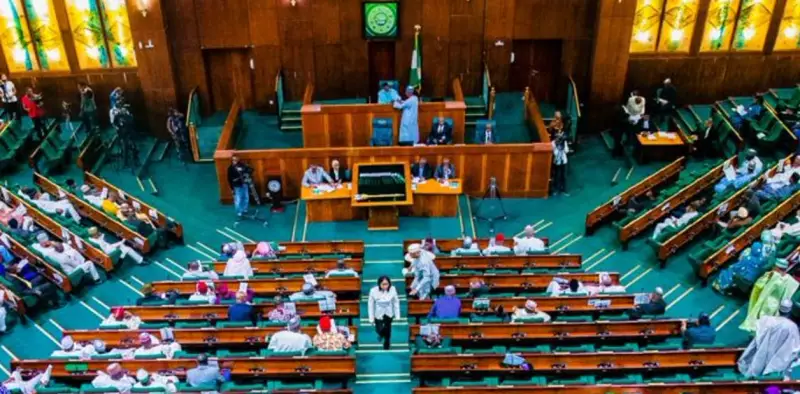
The House of Representatives has announced significant plans to restructure Nigeria's approach to combating major infectious diseases by transforming the National Agency for the Control of AIDS (NACA) into a comprehensive multi-disease coordinating institution.
Parliamentary Investigation into Health Grants
This revelation came during an investigative hearing into the utilization of substantial health grants received by Nigeria between 2021 and 2025. Rt. Hon. Amobi Godwin Ogah, Chairman of the House Committee on Infectious Diseases, disclosed that Nigeria received over $1.8 billion from the Global Fund and $2.8 billion from USAID during this period.
The funds were specifically intended to support Nigeria's national response against HIV/AIDS, Tuberculosis, and Malaria (ATM), while also enhancing resilient and sustainable health systems across the country.
New Agency Structure and Oversight
The proposed new entity, to be known as the National Agency for the Control of AIDS, Tuberculosis and Malaria (NACATAM), represents a strategic shift in Nigeria's health governance. According to Ogah, this transformation aims to reduce duplication, improve efficiency, and strengthen accountability in the country's response to infectious diseases.
Ogah emphasized that parliament is determined to establish exactly what funds were received, how they were expended, and whether these substantial interventions have translated into measurable improvements in the lives of Nigerians, who continue to bear one of the heaviest global burdens of HIV, TB, and malaria.
Strengthened Financial Oversight
The lawmaker issued a strong warning regarding future grant management, stating that "any grant being given to us without us managing such a grant is unacceptable." He added that if donors would not provide grants on Nigeria's terms, then they should keep their funds.
In a significant move toward enhanced accountability, Ogah disclosed that the Committee will collaborate with the Economic and Financial Crimes Commission (EFCC) and the Independent Corrupt Practices Commission (ICPC) to trace every kobo from every grant. Additionally, principal recipients and implementing partners will now be required to submit implementation plans before funds are released.
Ogah stressed that the inquiry is not a witch-hunt but rather a value-for-money exercise aimed at ensuring that no Nigerian child dies before age five from preventable infectious diseases by 2030.
The hearing took place in Abuja on November 10, 2025, marking a pivotal moment in Nigeria's ongoing efforts to optimize its health response systems and ensure that international health investments deliver tangible results for the Nigerian people.




