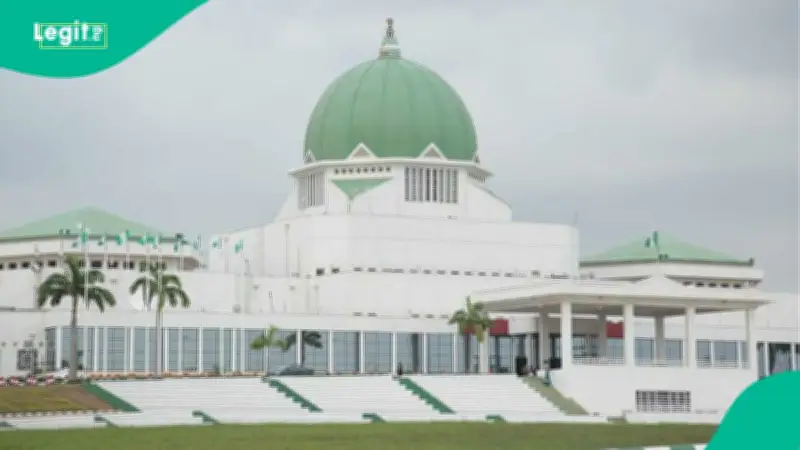
The Deputy Spokesman of the House of Representatives, Philip Agbese, has rejected the perception that the 10th National Assembly merely rubber-stamps proposals from the presidency, insisting that lawmakers have been driving key legislative initiatives ahead of the executive. Speaking on Tuesday, Agbese pointed to the state police bill as a clear example of parliamentary leadership, noting that the National Assembly had been working on the proposal long before the executive introduced its own version.
State Police Bill: A Parliamentary Initiative
Agbese, who represents a Labour Party constituency, said, "We have been on the state police bills for sometimes now. The initiative remains solely that of the Parliament." He addressed concerns about the executive's separate bill on state police, describing it as an opportunity for both arms of government to produce a cleaner, unified document before the proposal moves to state Houses of Assembly. He added that the process was intended to prevent wasteful back-and-forth at the expense of taxpayers.
According to Agbese, the National Assembly's proactive role in initiating the state police bill demonstrates that the legislature is not merely a passive endorser of executive actions. He emphasized that the parliament's leadership on this issue predates the executive's involvement, countering narratives that the 10th Assembly lacks independent initiative.
Recess Suspension Calls Raise Suspicion
Agbese also responded to demands from a bipartisan group of House members, known as the Save Democracy Group, who called on the National Assembly to cut short its recess to address urgent national concerns. The group, comprising lawmakers from different political parties, issued a statement in Abuja on August 5, 2026, raising alarms over insecurity, poor budget implementation, and economic hardship.
While Agbese acknowledged the legitimacy of some of those concerns, he questioned why the push was coming at this particular moment. "One cannot say the highly respected lawmakers are wrong but the timing is suspicious," he said, warning that parliament must not be used as a tool for political actors with interests tied to the 2027 general elections. He suggested that the timing of the recess suspension calls could be politically motivated, potentially aimed at advancing certain agendas ahead of the electoral cycle.
Unpaid Contractors and Executive-Legislature Relations
On the separate issue of unpaid contractors who executed constituency projects, Agbese was direct in his criticism of the executive. He said the failure to settle contractors who had committed their own resources was wrong and should not be dressed up in diplomatic language. He added that National Assembly leadership was engaging the presidency through formal parliamentary channels to get the matter resolved.
Agbese also noted that President Bola Tinubu, as a former parliamentarian himself, should appreciate the importance of implementing approved budgets and keeping the relationship between the legislature and the executive in good shape. He stressed that the executive's failure to pay contractors undermines the credibility of constituency projects and hampers development at the grassroots level.
Security Gains and Internal Discipline
On the security situation across the country, Agbese said there were early signs of improvement, citing the recent rescue of kidnapped citizens in Oriire in Oyo State and parts of Kwara State. He commended the Chief of Defence Staff, Lt. General Olufemi Oluyede, and other service chiefs for their handling of military operations.
He also dismissed claims that the House leadership regularly conducted business without the required quorum, insisting that the chamber operates a transparent and internationally standard legislative process. He urged any lawmakers with grievances to use established parliamentary procedures to resolve them.
Agbese's remarks come amid broader debates about the effectiveness of the 10th Assembly and its relationship with the executive. His defense of the parliament's record, particularly on the state police bill, underscores the ongoing tension between legislative independence and executive influence in Nigeria's political landscape.