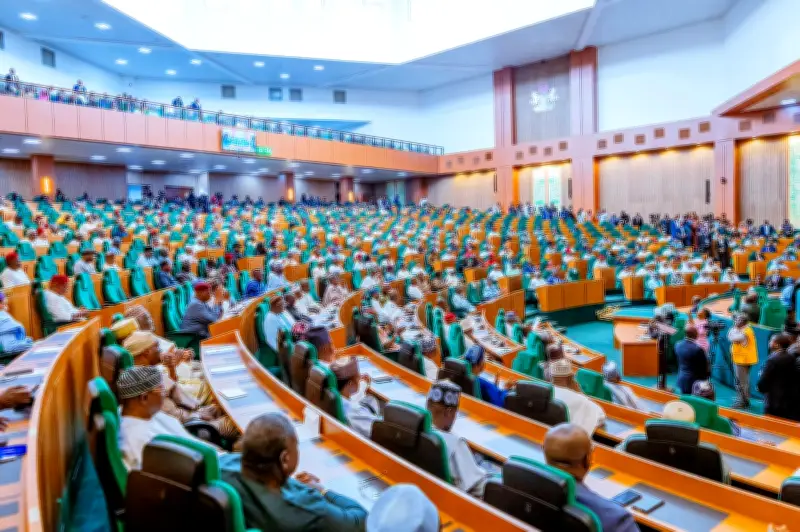
The National Assembly had a busy week, reopening deliberations on state police following President Bola Tinubu's request, intensifying oversight of public finances, and using the House of Representatives Open Week to push reforms on governance, gender inclusion, youth participation, and the business environment.
Tinubu Revives State Police Push
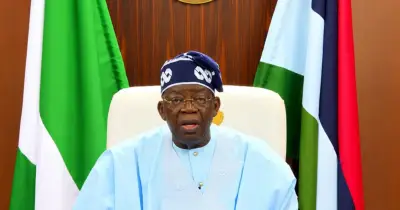
Security reform dominated legislative activities after President Bola Tinubu formally asked the House of Representatives to begin consideration of the Constitution of the Federal Republic of Nigeria (Alteration) (State Police) Bill, 2026. In a letter dated 15 June and addressed to Speaker Abbas Tajudeen, the president urged lawmakers to fast-track the constitutional amendment, describing state police as a key component of his administration's efforts to strengthen Nigeria's security architecture. The proposal seeks to amend the 1999 Constitution to establish state police services alongside the Nigeria Police Force.
Following the request, the House withdrew its earlier approval of a separate state police proposal to allow the executive bill to undergo the full constitutional amendment process, including nationwide public hearings. The House had previously considered similar constitutional amendment proposals through its Constitution Review Committee, but none progressed to completion.
Reps Probe Unremitted Revenues, Demand Accountability
The House Committee on Public Accounts intensified its scrutiny of public finances by directing the Office of the Accountant-General of the Federation (OAGF) to submit detailed records of outstanding revenues allegedly owed to the federal government by the Central Bank of Nigeria (CBN), the Nigerian National Petroleum Company Limited (NNPCL), and other revenue-generating agencies. During the hearing, lawmakers expressed concern over the continued failure of several government-owned enterprises to remit statutory operating surpluses.
Officials from the OAGF disclosed that the CBN allegedly owes about N5.3 trillion in unremitted operating surplus despite repeated recovery efforts. The committee also questioned the Accountant-General's Office over allegations that billions of naira were withdrawn from the accounts of agencies, including the Universal Basic Education Commission (UBEC), without timely refunds. Unsatisfied with the explanations presented, the committee directed the OAGF to provide comprehensive records of all outstanding remittances, withdrawals, refunds, and balances involving statutory funds belonging to ministries, departments, and agencies currently under investigation.
Open Week Spotlights Transparency, Inclusion, and Reforms
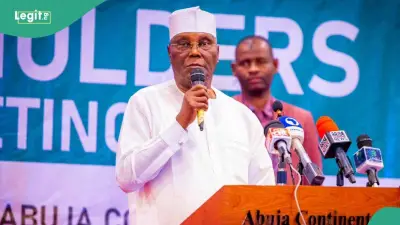
The House of Representatives hosted its annual Open Week in Abuja, a three-day engagement bringing together lawmakers, civil society organisations, development partners, the media, and citizens to strengthen transparency, accountability, and public participation in the legislative process. The event featured discussions on legislative oversight, democratic governance, women's political representation, youth participation, and economic reforms.
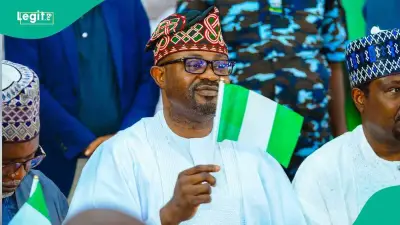
Former Speaker Yakubu Dogara called for stronger collaboration between the National Assembly and civil society organisations, arguing that effective partnerships would improve legislative oversight and ensure public funds translate into tangible benefits for Nigerians. At another session, the Speaker's wife, Fatima Abbas, urged lawmakers to pass the Constitution Alteration Bill seeking special reserved seats for women in the National Assembly. She described the proposal as essential to strengthening inclusive governance and deepening democracy.
Low Female Representation Highlighted
Chairperson of the House Committee on Women Affairs and Social Development, Kafilat Ogbara, noted that women currently occupy only about four per cent of seats in the National Assembly, describing it as one of the lowest levels of female representation in Africa. She argued that recent party primaries exposed persistent structural barriers preventing women from winning elective offices and expressed optimism that lawmakers would match their public commitment to gender inclusion with legislative action.
The Open Week also featured a Youth Town Hall where the House encouraged young Nigerians to play a more active role in shaping the country's democratic future through greater participation in the 2027 general elections. Representing the Speaker, Majority Leader Julius Ihonvbere said youth engagement had become a legislative priority, adding that recommendations from previous town halls had informed constitutional amendment proposals and other policy reforms.
Speaker Pledges Business Reforms
Addressing business leaders during the event, Speaker Abbas Tajudeen pledged that the National Assembly would repeal obsolete laws that discourage investment while introducing reforms to improve Nigeria's business environment. He assured investors that future business-related legislation would be transparent, predictable, and developed through stakeholder consultations.
Finance Committee Demands Details of N34 Trillion Import Duty Waivers
The House Committee on Finance directed the Nigeria Customs Service (NCS) to submit a comprehensive breakdown of nearly N34 trillion worth of import duty waivers granted in 2025. Committee Chairman James Faleke said lawmakers were not opposed to the policy of granting waivers but insisted that the concessions must be transparent and deliver measurable economic benefits. He instructed the Customs Service to provide details of all beneficiaries, the legal basis for each waiver, and the objectives the concessions were intended to achieve. The directive forms part of the committee's broader efforts to strengthen fiscal oversight and ensure that tax incentives are implemented in line with national economic priorities.