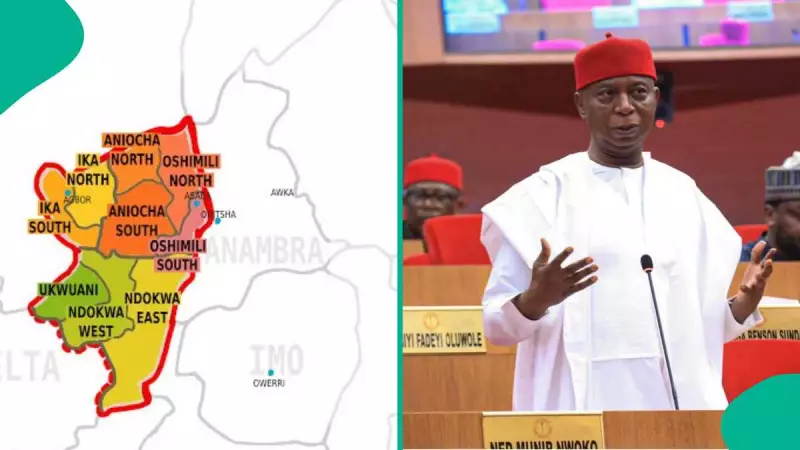
In a landmark development that could reshape Nigeria's political landscape, the National Assembly has taken a decisive step toward creating Anioma State, with Senator Ned Nwoko proudly sharing the proposed map of what would become Nigeria's newest state.
Historic Legislative Breakthrough
The long-awaited move toward establishing Anioma State has gained significant momentum as both chambers of the National Assembly approved the necessary constitutional amendments. This represents a major victory for advocates who have campaigned for decades to see the Anioma region attain statehood status.
Senator Nwoko's Revelatory Post
Senator Ned Nwoko, representing Delta North Senatorial District, generated substantial excitement across social media platforms by sharing the official map of the proposed Anioma State. His post came shortly after the legislative breakthrough, showcasing the geographical boundaries and potential capital of the new state.
What Anioma State Would Mean for Nigeria
The creation of Anioma State would bring several significant changes to Nigeria's political structure:
- Increase Nigeria's total number of states to 37
- Provide greater political representation for the Anioma people
- Potentially boost economic development in the Southeast region
- Address long-standing demands for regional equity
The Path Forward for State Creation
While the National Assembly's approval marks a crucial milestone, the process of state creation in Nigeria requires several additional steps. The proposal must now secure endorsement from state houses of assembly across the country before final implementation can occur.
Regional Implications and Reactions
The move has generated mixed reactions across political circles, with supporters celebrating the potential for improved resource allocation and development, while others question the timing and financial implications of creating a new state apparatus.
This development represents one of the most significant constitutional changes in recent Nigerian history, potentially altering the balance of power and representation in the National Assembly while addressing long-standing regional aspirations for self-determination.