Nigeria's most significant constitutional review process since 1999 reaches a critical juncture today, as the House of Representatives prepares to vote on a series of transformative amendments. The proposed changes, which include the creation of state police, reserved legislative seats for women, and electoral reforms, promise to reshape the nation's democratic landscape but have exposed profound political and regional divisions.
Electronic Vote on Landmark Amendments
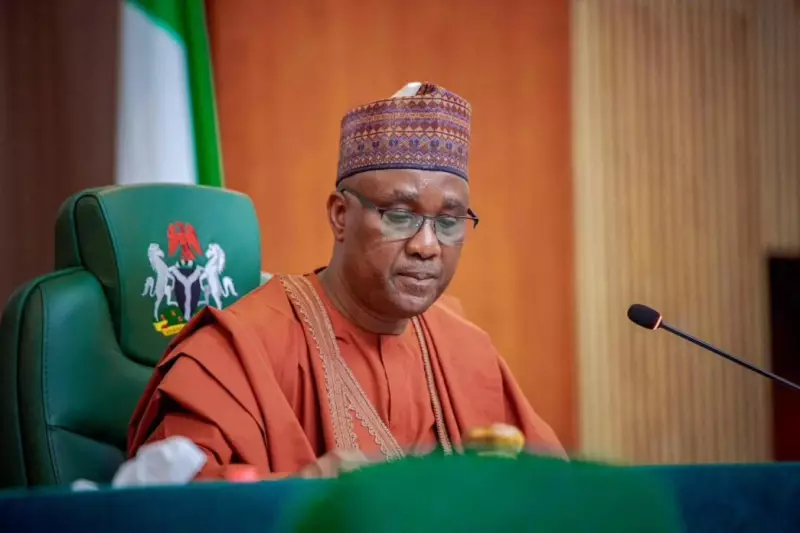
The Speaker of the House, Rt. Hon. Abbas Tajudeen Abbas, confirmed during plenary on Wednesday that the voting on the proposed constitutional alterations will take place on Thursday, December 18, 2025. The process will utilize an electronic voting system, marking a modern approach to this historic legislative exercise.
The constitutional amendment process was initiated by the lower chamber in line with Sections 4, 8, and 9 of the 1999 Constitution, as well as Order 20, Rule 11 of the House's Standing Orders. To incorporate public opinion, the House Committee on Constitutional Amendment conducted zonal public hearings across the country's six geopolitical zones, presenting the items proposed for review.
Key Proposals and Contentious Debates
The compendium of proposals covers a wide range of thematic areas, including electoral and judicial reforms, legislative strengthening, inclusive governance, security and policing, and the devolution of powers. Other critical areas are fiscal reforms, citizenship issues, fundamental human rights, local government reform, and state creation.
In a move setting the stage for today's vote, the House on Wednesday approved crucial amendments to the Electoral Act 2022. These amendments formally mandate the use of the Bimodal Voter Accreditation System (BVAS) and the real-time electronic transmission of election results from polling units. The amended act introduces a minimum five-year jail term for presiding officers convicted of declaring false results.
The approved Clause 47 designates BVAS as the primary tool for voter accreditation, replacing the smart card reader. Clause 60 mandates that presiding officers transmit results directly to the INEC Result Viewing (IREV) portal in real-time, alongside physical collation. Furthermore, Clause 62 stipulates strict penalties, including a 10-year jail term without an option of fine for officers who fail to stamp and sign result sheets without lawful reason.
Gender Inclusion Bill Faces Uphill Battle
One of the most ambitious proposals, the bill to create 182 reserved legislative seats for women, faces significant obstacles. Sponsored by Deputy Speaker Benjamin Kalu and 12 other lawmakers, the bill aims to address Nigeria's severe gender imbalance in elective offices, where women hold less than five per cent of positions nationally.
The bill proposes expanding the Senate, the House of Representatives, and state assemblies. It seeks to add 37 new female-only Senate seats (one per state and the FCT), 37 new seats in the House, and 108 seats across state assemblies, totalling 182 new reserved seats for four election cycles (16 years) before a review.
However, a major rift has emerged between the two chambers. While the House supports the creation of 182 seats, the Senate is reportedly pushing a counter-proposal to slash the number of women-only seats in the upper chamber to just six, one per geopolitical zone. Dr. Chidozie Ajah, Special Adviser on Legislative Matters to the Deputy Speaker, described the discussions as fluid, with consensus yet to be reached.
Even if reconciled, the bill faces formidable constitutional hurdles. It must secure a two-thirds majority in both chambers of the National Assembly and then be ratified by at least 24 of Nigeria's 36 state assemblies before presidential assent. The legislation would also require amendments to seven sections of the constitution and may need to modify Section 42, the anti-discrimination clause.
State Police Push Gains Momentum Amid Insecurity
The push for state policing has taken centre stage, driven by Nigeria's escalating security challenges, including insurgency, banditry, and kidnapping. Proponents argue that a decentralised policing structure would allow states to recruit officers familiar with local terrain and improve response times to crime.
Critics, however, warn of potential abuse by state governors who could use controlled police forces to harass political opponents or manipulate elections. In response, the bills before the House propose safeguards, including federal oversight standards and constitutional limits on state authority.
Regional Demands and State Creation Agitations
The zonal public hearings revealed strong regional demands. The South-East zone insisted on the creation of an additional state, such as Anim, Anioma, or Adada, to achieve parity with other zones that have six states. The region argued this should be a priority before any further state creation elsewhere.
In the South-South, stakeholders like the Ijaw National Congress (INC) and the South-South Elders Forum demanded resource control and fiscal federalism as primary issues. They advocated for states to manage their natural resources and remit taxes to the federal government. Bayelsa State Governor, Douye Diri, called for an upward review of the 13% derivation fund to at least 25% or 50% to address environmental degradation.
There was a strong consensus across zones in favour of state police to tackle grassroots insecurity. Stakeholders also demanded that states be empowered to create and manage their own local government areas, criticising the current imbalance in LGA distribution nationwide.
A Nation Awaits the Outcome
Today's vote in the House of Representatives is a decisive moment for Nigeria's constitutional future. The proposals on state police, gender inclusion, and electoral reform represent a direct response to long-standing national challenges. However, the deep fault lines exposed during the process—between chambers, across regions, and among political blocs—highlight the difficulty of achieving consensus on restructuring the federation.
If passed by the National Assembly, the amendments will still face the rigorous test of ratification by two-thirds of state legislatures. The outcome will not only determine the legal framework for governance and security but also serve as a barometer for Nigeria's ability to forge a common path toward a more inclusive, secure, and truly federal union.