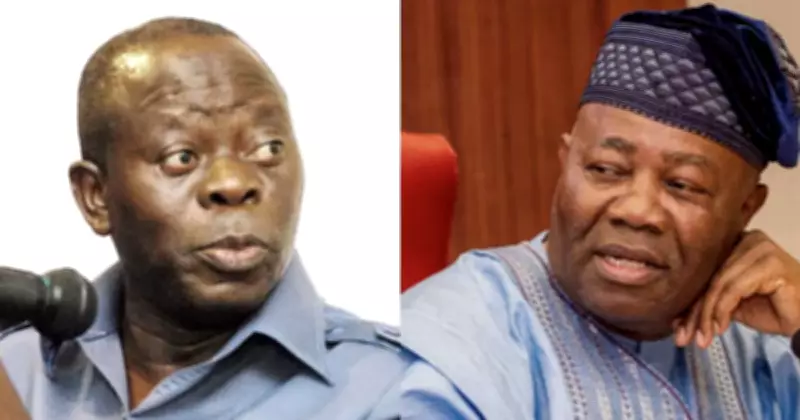
Senator Adams Oshiomhole has demanded the resignation of Senate President Godswill Akpabio over controversial amendments to Senate rules, deepening tensions within the upper chamber. Speaking with journalists in Abuja, Oshiomhole accused the Senate leadership of attempting to alter the rules governing eligibility for principal offices in a manner he described as unfair and morally questionable.
Oshiomhole's argument
The former Edo State governor argued that if the proposed rules were to be strictly applied, Akpabio himself would not qualify to remain Senate President. 'This rule has serious moral crisis,' Oshiomhole said. 'So if we pass the rule that we must do eight consecutive years before you can become Senate President, it means he has to leave by example by vacating because he is presiding without acquiring necessary qualification.'
Background of the controversy
The controversy began after the Senate amended portions of its Standing Orders to introduce stricter requirements for senators seeking top leadership positions in the National Assembly. Under the revised rules, only lawmakers who have served at least two consecutive and uninterrupted terms would qualify to contest for offices such as Senate President and other principal positions. The amendment immediately sparked tension within the chamber, with critics alleging that the changes were targeted at limiting competition and consolidating political control ahead of future leadership battles in the Senate.
Heated confrontation
During plenary earlier in the week, Oshiomhole and Akpabio engaged in a heated confrontation after the Edo North senator repeatedly attempted to raise a point of order while Akpabio presided over proceedings. Akpabio refused to recognise him and warned that unruly conduct would not be tolerated in the chamber. 'Senator Oshiomhole, for the last time, if you become unruly in the Senate, we will use the same rules to remove you,' Akpabio said.
The Senate President also cautioned lawmakers against speaking on sensitive matters without fully understanding parliamentary rules, a remark many interpreted as directed at Oshiomhole. Oshiomhole, however, insisted that the process through which the rules were amended was rushed and lacked adequate debate. 'The way we rushed the rules because certain people wanted certain things concluded is one flaw to this process,' he said.
Historical context
Oshiomhole further referenced former Senate President David Mark, arguing that past Senate leaders emerged under broader and more competitive rules rather than restrictive conditions designed to favour a few individuals. Following mounting backlash and constitutional concerns, the Senate later reversed parts of the amendments relating to oath-taking procedures, although the eligibility provisions reportedly remained in place.
Political implications
The clash has intensified speculation over growing divisions within the Senate and wider political realignments ahead of the 2027 elections. This development marks a significant rift in the upper chamber, highlighting the ongoing power struggles and the battle for control over the Senate's leadership structure.