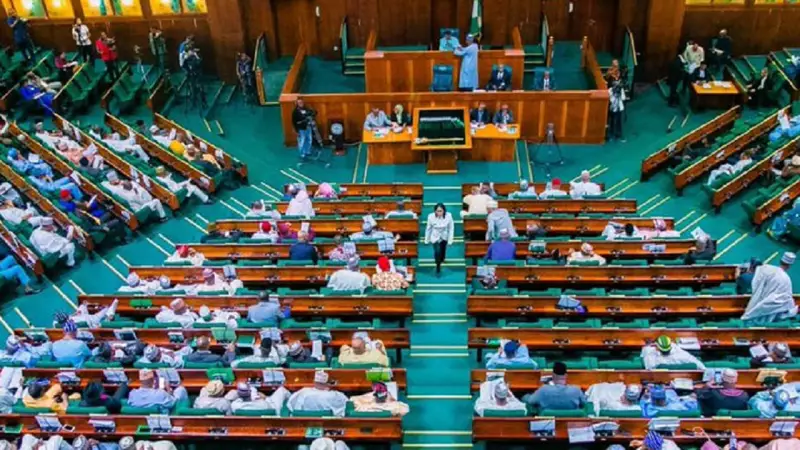
The Nigerian House of Representatives is set to commence a landmark debate on a comprehensive set of bills aimed at altering the nation's constitution. This critical legislative exercise forms a core part of the ongoing review of the 1999 Constitution.
Constitutional Reform Takes Centre Stage
Deputy Speaker Benjamin Okezie Kalu, who chairs the House Committee on Constitution Review, announced the schedule during Tuesday's plenary session. Lawmakers will dedicate Wednesday and Thursday to deliberating the various proposals. Following the debates, voting on the bills is scheduled for December 10 and 11, 2025.
Kalu emphasized that this debate represents a pivotal phase in the National Assembly's mission to modernize the country's governance framework. A total of 87 bills are currently tabled for consideration, proposing sweeping reforms across multiple sectors of national life.
The wide-ranging proposals include several high-profile items that have been subjects of national discourse:
- The creation of additional legislative seats specifically for women to boost female representation in parliament.
- The establishment of state police forces to decentralize security architecture.
- The creation of new states and local government areas.
- Granting full financial and administrative autonomy to local government councils.
Other significant areas covered by the amendment bills include the electoral system, judiciary reforms, and aspects of fiscal federalism.
Lawmakers Probe Missing ₦30 Billion Recovered from NSIPA
In a separate but equally pressing development, the House of Representatives has launched an investigation into the whereabouts of over ₦30 billion recovered by the Federal Government. These funds were identified during the 2024–2025 probe into alleged financial misconduct at the National Social Investment Programme Agency (NSIPA).
During the plenary presided over by Deputy Speaker Kalu, lawmakers issued a stern warning. They stated that the continued withholding of these massive funds is severely crippling poverty-alleviation initiatives nationwide, affecting millions of vulnerable citizens.
The action followed the adoption of a motion sponsored by Rt. Hon. Saidu Musa Abdullahi, representing Bida/Gbako/Katcha Federal Constituency in Niger State. Abdullahi raised serious concerns about the fate of funds recovered from Deposit Money Banks and Payment Service Providers. The recovered allocations were meant for key social programs including:
- TraderMoni
- MarketMoni
- FarmerMoni
- Grants for Vulnerable Groups
Funds Frozen Despite Lifted Suspension
The lawmaker reminded the House that President Bola Ahmed Tinubu had initially suspended NSIPA's operations on January 8, 2024 to allow for a thorough investigation. This investigation reportedly uncovered and froze billions of naira belonging to the agency.
Although President Tinubu lifted the suspension on January 21, 2025, NSIPA has been unable to resume full operations. The primary reason cited is that the recovered funds have allegedly not been returned to the agency's Treasury Single Account (TSA).
Abdullahi warned that this delay directly threatens the core pillars of the administration's Renewed Hope Agenda. The consequences are multifaceted:
It is slowing down critical poverty-reduction programs, crippling small-scale enterprises that depend on such interventions, worsening economic hardship in both rural and urban areas, and eroding public trust in government-led social protection efforts.
"Millions of vulnerable Nigerians who depend on these interventions are being exposed to prolonged socioeconomic distress," Abdullahi stated. He further stressed that the uncertainty surrounding the custodial status of the funds poses "serious fiscal and institutional risks" to the nation.
The House's move underscores the legislature's focus on both foundational governance reform through constitutional amendment and urgent oversight to ensure the recovery and proper use of public funds intended for the welfare of citizens.