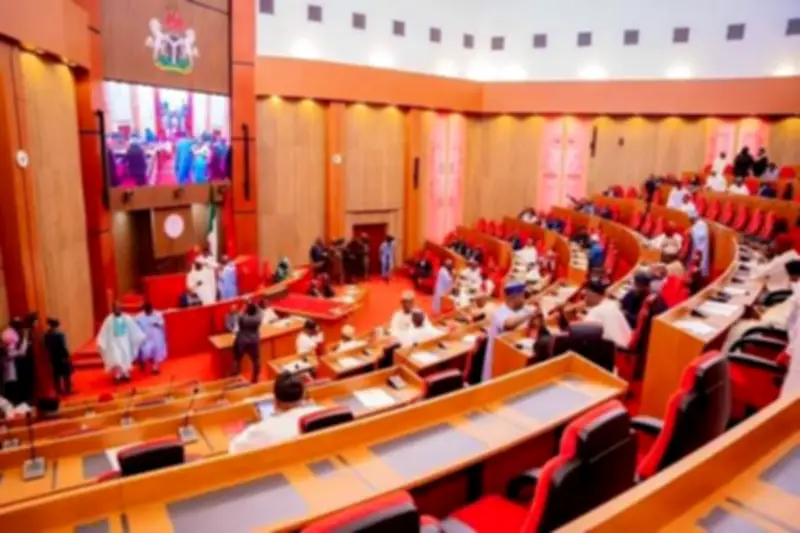
The Senate has addressed public concerns regarding the proposed amendment to the Federal Road Safety Commission (FRSC) Act, clarifying that the bill does not introduce a new prohibition on preaching or hawking in commercial vehicles. Instead, it restates provisions already enshrined in existing legislation.
Senate Clarifies Misconceptions
In a statement issued on Monday, July 27, by the Directorate of Media and Public Affairs, Office of the Leader of the Senate, the chamber acknowledged the outcry over the purported ban. The statement emphasized that Section 10(4) of the FRSC (Establishment) Act, 2007, and Regulation 220 of the National Road Traffic Regulations, 2012, already criminalize preaching and hawking in commercial vehicles—a measure in place for nearly two decades.
“It is about the safety of commuters and other road users and is not intended to undermine any religious activity in the public space,” the statement read, noting that the provision was originally listed as Item 36 in the Second Schedule to the 2007 Act. Under the current amendment, it is now listed as Item 49 in the Second Schedule, reflecting a mere renumbering rather than a new restriction.
Existing Regulations Already in Place
The Senate stressed that the bill does not outlaw street preaching, as some critics have claimed. The existing rules target activities inside moving commercial vehicles, where distractions can lead to accidents. The FRSC has long enforced these regulations to mitigate risks such as driver distraction, overcrowding, and unsafe conduct that endanger passengers and other road users.
According to the Senate statement, the amendment process is merely a concurrence mechanism: the House of Representatives first amended the Act, and the Senate must now consider it before the bill can become law. Senator Opeyemi Bamidele, the Senate Leader, is not the sponsor of the bill; it is a legislative initiative originating from the lower chamber.
Bill Not a New Initiative
“The bill is not an initiative of the Leader of the Senate, Senator Opeyemi Bamidele,” the statement clarified. “It is a concurrence bill first amended by the House of Representatives and requiring Senate concurrence before it can become law.” This distinction is important to dispel the notion that the Senate is imposing new restrictions on religious expression or street vending.
The Senate added that the amendment remains ongoing and urged stakeholders—including transport unions, religious organizations, and hawkers—to submit their concerns to the appropriate committees. Public input will be considered before the bill is finalized, ensuring that all perspectives are heard.
Ongoing Amendment Process
The chamber assured Nigerians that the Senate is committed to transparency and will not rush the legislative process. Stakeholders have been invited to provide memoranda or appear before the relevant committee to voice their objections or suggestions. The Senate emphasized that the goal is to enhance road safety without infringing on legitimate rights.
In a country where commercial vehicles often serve as mobile venues for religious sermons and petty trade, the issue has sparked heated debate. However, the Senate insists that the provision has always been part of the FRSC Act, and its inclusion in the amendment is not a departure from established road safety norms.
Stakeholder Engagement Encouraged
The Senate’s statement comes amid widespread misinterpretation on social media and in some news outlets. By clarifying that the ban is not new, the Senate hopes to calm tensions and redirect the conversation toward constructive engagement. The chamber reiterated that the safety of all road users remains paramount and that the existing law has been enforced for over 17 years without curtailing public preaching or hawking outside vehicles.
Transport experts have noted that distractions inside commercial buses—such as loud preaching or hawking—can divert drivers’ attention, leading to accidents. The FRSC’s enforcement of Regulation 220 has led to a reduction in such incidents, though data on the number of prosecutions is not immediately available.
As the bill progresses, the Senate will hold a public hearing where stakeholders can present their views. The outcome will determine whether the provision remains as is or is modified to address the concerns raised.