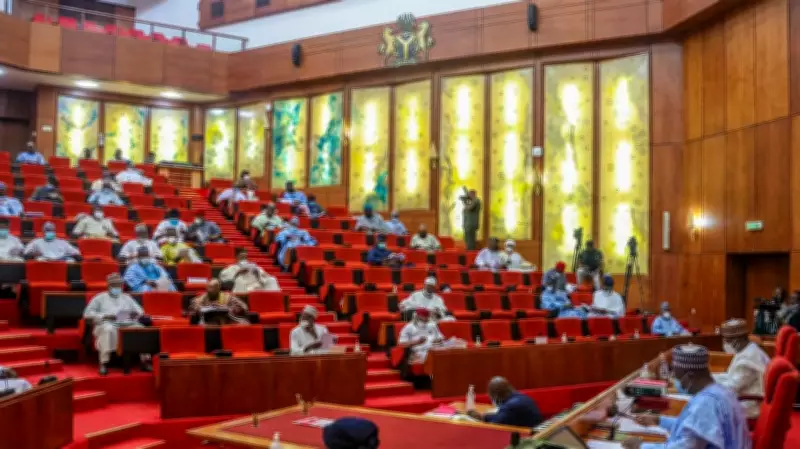
The Senate has rescinded controversial amendments to its Standing Orders concerning the election of presiding officers, following concerns over constitutional inconsistencies. The reversal occurred during plenary in the absence of Senate President Godswill Akpabio, who arrived after the motion was adopted.
Reversal of Amendments
The Senate had previously amended its rules to require that senators seeking the offices of Senate President and Deputy Senate President must have served at least one four-year term. Another amendment stipulated that senators could only participate in the election of presiding officers after being sworn in. However, these provisions were deleted after lawmakers argued they conflicted with the 1999 Constitution. The motion for rescission was sponsored by Senate Leader Opeyemi Bamidele and seconded by Senator Enyinnaya Abaribe.
Bamidele cited Section 1(3) of the Constitution, stating that any law inconsistent with the Constitution is void. He also referenced Section 52(1), which allows lawmakers-elect to participate in elections before taking the oath. Deputy Senate President Barau Jibrin, who presided, put the motion to a voice vote without debate, drawing a point of order from Senator Adams Oshiomhole, who argued for debate. Bamidele defended the decision, noting that recent disagreements had caused unnecessary drama.
Electoral Dispute Reform Bill
The Senate also passed for second reading a bill to amend the Electoral Act, 2026, aimed at redefining court jurisdiction in pre-election disputes. Sponsored by Senator Simon Bako Lalong, the bill seeks to establish a clearer legal framework, reduce conflicting judgments, forum shopping, and delays. Under the bill, pre-election matters for National Assembly, governorship, and state assembly elections would originate at the Federal High Court, with appeals to the Court of Appeal. Presidential and vice-presidential election disputes would commence at the Court of Appeal, with final appeals to the Supreme Court.
Lalong emphasized that democracy requires credible and predictable legal processes. The bill also aims to curb multiple suits across jurisdictions and proposes that no court entertain pre-election matters outside the new Section 29A of the Electoral Act. Senators supported the bill as timely for strengthening democratic and judicial systems.
FCT Budget Approval
In a separate development, the Senate approved the N2.285 trillion 2026 Statutory Appropriation Bill for the Federal Capital Territory (FCT). The budget includes N1.741 trillion for capital projects to accelerate infrastructure development in Abuja and satellite communities. The approval followed the adoption of the harmonized report of the Senate and House Committees on the FCT. Vice Chairman of the Senate Committee on the FCT, Austin Akobundu, presented the report, noting a projected revenue of N2.385 trillion. Allocations include N165.7 billion for personnel costs and N378.2 billion for overheads.