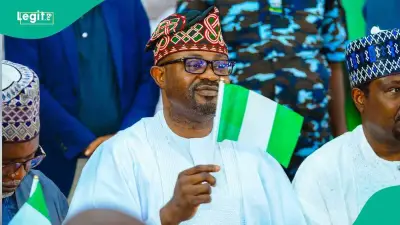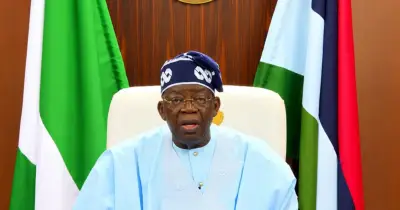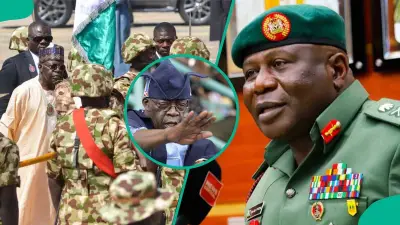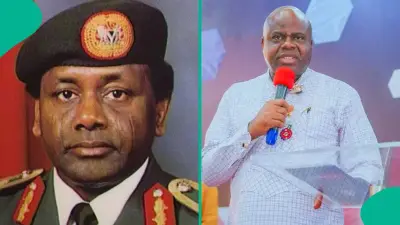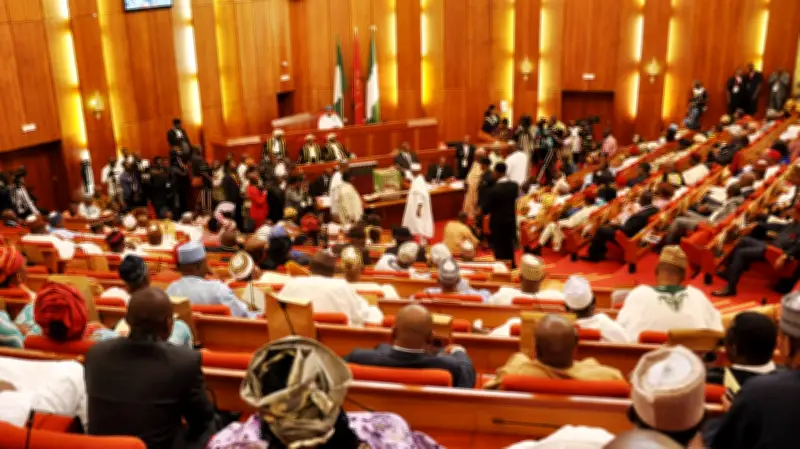
Senate Leader Opeyemi Bamidele disclosed on the floor of the Senate, yesterday, that the 11th Senate would consider a single term for the President and state governors. He also defended the National Assembly's decision to reject a proposal seeking a fresh probe of military spending in the fight against terrorism, while unveiling plans for major constitutional and governance reforms, including the establishment of state police.
Also, the Aare Ona Kakanfo of Yorubaland, Iba Gani Adams, called on President Bola Tinubu and the National Assembly to urgently legislate a framework for the establishment of state police as part of efforts to strengthen the nation's security architecture.
Meanwhile, Open Alliance, a coalition of civil society organisations, has called for greater attention to accountability, transparency, human rights protections and citizen participation in ongoing conversations around the proposed devolution of policing in Nigeria.
Bamidele on Single Term
Bamidele said the essence of proposing a six-year single term for the President and governors is to enable them to put in their best from the moment they are voted in. He said: "I now see why one of the first sets of bills that I look forward to moving by God's grace when we come back for the 11th Senate is for a bill that will only make it possible for anyone who wants to be President of this country or governor in any state of this country to spend only one tenure of six years. With this, you don't even have to worry about wasting almost one and a half years of your first term thinking and struggling and looking forward to how you'll be re-elected. If you know you are there for six years, only one tenure, you put in your best from day one. You know this is the only chance that you have."
Defence of 10th Senate
The Senate Leader also strongly defended the 10th Senate against allegations that it functioned as a rubber-stamp legislature, insisting that the upper chamber deliberately adopted a strategy of constructive engagement with the executive to address Nigeria's economic and governance challenges rather than pursuing public confrontations. Speaking to journalists during an interactive session ahead of the 3rd anniversary of the 10th Senate, in Abuja, Bamidele said many of the disagreements between the National Assembly and President Bola Tinubu's administration were resolved behind closed doors in the national interest, arguing that genuine legislative independence should not be measured by public disputes.
According to him, the Senate's collaborative approach enabled critical reforms, including the passage of tax reform legislation and interventions on appointments and policy proposals before they reached the chamber floor. "We have worked collaboratively with the executive arm of government over the past three years. Some of our colleagues were labelled rubber stamps for doing so. But let me be clear: we knew we were not a rubber-stamp Senate," he said.
Military Spending Probe
The Senate Leader argued that subjecting the military to a public probe in the midst of an ongoing war against terrorism would undermine national security efforts. "Our military men are giving their best under extraordinarily difficult circumstances," he said, stressing that existing legislative oversight mechanisms already provide accountability for military expenditures without jeopardising sensitive security operations. Bamidele maintained that Senate committees responsible for defence, the army, navy and air force regularly scrutinise budgets, inspect military procurements and monitor spending.
Despite rising concerns over insecurity across parts of the country, he expressed confidence that security agencies were recording significant successes against terrorists and criminal groups.
Adams Advocates State Police
Adams renewed his advocacy for the creation of state and local council police forces to tackle the worsening insecurity across Nigeria during a virtual international conference titled 'Changing Face of Insecurity in Yorubaland', organised by Yoruba One Voice (YOV). He argued that the present centralised policing system was inadequate to address localised and mounting security threats. According to him, decentralised policing would empower states to better protect their citizens, improve intelligence gathering, and build trust between law enforcement agencies and local communities.
The generalissimo of Yorubaland expressed deep concern over the recent surge in violent crimes in the South-West region, particularly the unprecedented mass kidnapping of 39 students and seven teachers from three schools in Oyo State on May 15, 2026. He also emphasised the need for greater collaboration between government authorities and private security stakeholders.
Williams on Security Challenges
The keynote speaker at the conference, Maj-Gen. Ishola Williams (rtd), said Nigeria's major challenge stems from the lack of public safety rather than the absence of security structures. He observed that there were already multiple layers of security outfits, such as the Amotekun Corps in the South-West and the Neighbourhood Watch in Lagos State, which should complement the efforts of the Nigeria Police Force (NPF). However, he noted that the groups were poorly equipped to effectively gather and share intelligence, as well as confront terrorists who possess superior weapons.
Williams also stressed the importance of citizens holding state governors accountable for the utilisation of security votes allocated to their states. He called for unity in Yorubaland, especially among traditional rulers, and advocated a greater role for royal fathers at the grassroots level in tackling the prevailing insecurity.
Open Alliance Dialogue
The call by the coalition followed a stakeholder dialogue on 'Devolution of Policing in Nigeria: Pathways to Effective and Accountable State Policing', it convened in Abuja on May 13, 2026, bringing together civil society organisations, governance institutions, development partners, legal practitioners, security experts, media professionals, and policy actors to examine the opportunities and challenges associated with state policing.
The dialogue comes at a time Nigeria continues to face growing security challenges, declining public trust in law enforcement institutions, concerns over police accountability, and increasing calls for reforms to the country's security architecture. While state policing has emerged as a key proposal in national discussions, stakeholders noted that unresolved issues include governance, funding, accountability, and institutional capacity.
Participants stressed that the effectiveness of any policing system depends not only on its structure but also on strong oversight institutions and safeguards for citizens' rights. They emphasised that state police should not be seen as a standalone solution but part of broader reforms aimed at improving trust, service delivery, and legitimacy in policing.
As discussions on constitutional amendments and security reforms continue, Open Alliance reiterates the need for evidence-based policymaking, inclusive dialogue, and robust accountability frameworks to ensure a policing system that is effective, transparent, and responsive to Nigerians' needs.