
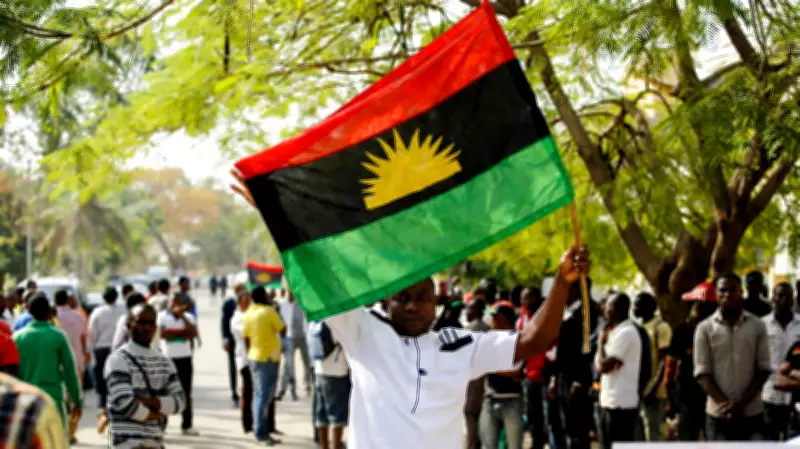
Biafra's Enduring Legacy and the Peril of Bad Samaritans in Nigeria
The concept of Biafra, whether written in capital letters or whispered in hushed tones, remains an indelible force in Nigeria's socio-political landscape. As an idea, an identity, a cry for justice, a fortress of refuge, and even a religion, Biafra has attracted myriad interpretations and interests over time. It consistently proves to be a comma rather than a period, resisting all efforts at obliteration and remaining elliptical in nature. Indeed, Biafra never truly closes; it is a dynamic metaphor that signifies different things to different people.
The Multifaceted Nature of Biafra
For some, Biafra is a historical chapter, while for others, it embodies the resilient determination of the human will to achieve freedom. It serves as a code name for human dignity and a stark metaphor for poverty-stricken, disease-infested children. In reality, Biafra represents both the best of Nigeria's promise and the worst of its poverty, showcasing a tale of will, guts, and an incredible tenacious survival spirit that hints at renaissance. Over the decades, Biafra has evolved into an ideology that generates chronic resonances, attracting many Samaritans—both the good and the bad alike.
The Role of Bad Samaritans
Missing the profound ramifications of Biafra's unabating resonances, bad Samaritans address the Biafran question with inadequate and destructive instruments. These actors deny the possibility of self-determination, thereby stripping away freedom, which is one of humanity's most cherished possessions. In contrast, others create an emotive band of crusaders driven by populism, often at odds with reason. The common denominator among bad Samaritans is the denial, suspension, rejection, or misapplication of rational thought. No matter the depth of anger, reason must always guide processes; emotions can fuel drive but should not control situations requiring collective intelligence, wisdom, and tact.
The Dangers of Populism and Earthly Messiahs
One subtle wave of bad Samaritanism involves succumbing to populism and embracing earthly messiah figures. Populism, with its narcotic grip, possesses a hypnotic spell that suspends hardcore reason. Under this influence, many negotiate away true freedom, leading to imprisonment within a spell-binding milieu. Typically, populists end up as despots, transforming emancipation into victimization, with freedom, truth, and peace becoming the fundamental casualties. Engaging those under this effect is challenging, as history shows that many promising solutions with romantic appeal have turned out worse than the situations they aimed to address, serving as a caveat against blind followership.
Populist solutions often fail due to over-reliance on earthly messiah figures, reminding us that humans cannot be saviors. A multifaceted approach to problem-solving proves more effective. The fallacy of populism lies in the heresy of anointing a socio-political messiah, as human imperfection precludes another Savior. Accepting messianism without checks and balances often leads to the destruction of structures, exacerbating conflicts rather than resolving them.
Identifying Bad Samaritans in the Biafran Context
Bad Samaritans are not limited to perpetrators of reconciliation deceit who, through policies, actions, and inactions, continue the Nigerian-Biafran war by other means, such as marginalization and exclusion. They also include federal security forces who molest and kill innocent agitators, perpetrators of human rights abuses, misguided agitators who become nuisances to the very people they claim to fight for, those who attack cultural values and faith in the name of political liberation, and those who refuse to apply reason to the struggle. Elders who ignore atrocities against dissatisfied youths, governments that irresponsibly waste young lives, and elites aloof to their people's plight are all part of this group. In essence, bad Samaritans are all unhelpful agents relative to Biafra, a reality that has become a powerful metaphor.
Biafra as a Dynamic Metaphor and Solution
Metaphors are inherently dynamic, and Biafra exemplifies this claim. The evolving narrative around Biafra allows for developing meanings suitable to each age. While many Nigerians once viewed Biafra as a problem, the current situation has convinced most that Biafra is an answer. Within a proper framework of appreciation, Biafra serves as a caveat to oppressors, echoing the loud and silent cries of Nigerians for justice, freedom, and fairness in national identity. Thus, the Biafran question is a clarion call for the nation to seek solutions, with Biafra itself potentially being that solution—a matter best sorted through dialogue rather than prescribed in any single piece.
The Path Forward: Dialogue Over Conflict
Political negotiations and agitations will determine the type of Biafra that best suits today's circumstances. In this process, reason must drive progress, mindful of populism's dangers. Reflecting on history, the late Dim Emeka Ojukwu fought for a territorial Biafra and later proposed an ideological Biafra. Moving forward, all hands must be on deck to propose solutions for the true good of all Biafrans, meaning all suffering and deprived Nigerians. Whether it is a Biafra of the mind, involving restructuring Nigeria for inclusivity, or a territorial Biafra, the need for dialogue is paramount. Now is the time to talk, as it is better to jaw-jaw than to war-war—if only we wish to avoid becoming bad Samaritans ourselves.




