
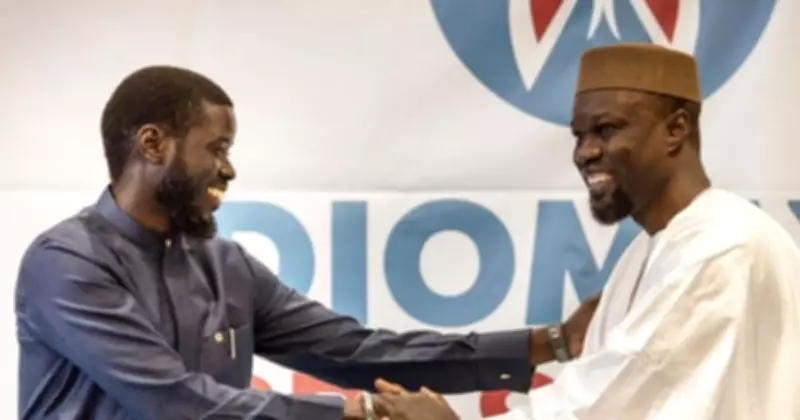
Once inseparable allies who campaigned under the slogan “Diomaye mooy Sonko,” President Bassirou Diomaye Faye and Ousmane Sonko are now locked in an unprecedented power struggle at the heart of Senegal’s government. The political crisis deepened after Faye sacked Sonko as Prime Minister, ending a powerful alliance over growing tensions tied to debt, governance, and political control.
The Fallout
Senegal’s President Bassirou Diomaye Faye fired Prime Minister Ousmane Sonko after months of political disagreements and rising tensions. The two leaders once campaigned together and won power in 2024 under the ruling Pastef party. Their fallout is linked to economic disagreements, internal power struggles, and Sonko’s growing influence in parliament. A bitter political fallout unfolded after Faye sacked Sonko and dissolved the government, throwing the West African country into fresh political uncertainty at a time when it is already battling a heavy debt crisis and economic pressure.
Sonko’s removal was announced on national television on Friday, just hours after he publicly disagreed with Faye over the handling of political funds during a parliamentary session. The disagreement appears to have been the final trigger in a relationship that had been deteriorating behind the scenes for months. In a short reaction shared on social media after his dismissal, Sonko wrote: “Alhamdoulillah. Tonight I will sleep with a light heart at Keur Gorgui.”
Just days after his dismissal, Ousmane Sonko secured 132 out of 133 votes to become Speaker of the National Assembly, positioning him to lead the legislative branch against the executive. The outgoing administration is expected to continue handling routine affairs until a new government is formed.
How Faye and Sonko Rose Together
The political stories of Faye and Sonko have long been deeply connected through the ruling Pastef party. Sonko, a fiery opposition figure known for his anti-establishment rhetoric and huge youth following, was originally expected to contest the 2024 presidential election. But a defamation conviction blocked him from running, forcing him to nominate Faye, a close ally and senior party figure, as his replacement candidate. The pair campaigned together under the slogan “Diomaye mooy Sonko,” meaning “Diomaye is Sonko,” presenting themselves as one political force determined to reform Senegal, fight corruption, and revive the struggling economy. Their campaign struck a chord with frustrated young voters and helped Pastef secure victory in the first round of the 2024 election. Many analysts believe Faye’s rise to the presidency would not have happened without Sonko’s backing and popularity.
Debt Crisis Deepened Cracks in Government
After taking office, both leaders accused former President Macky Sall’s administration of concealing part of Senegal’s debt burden. The country’s debt has since ballooned to around 132 percent of GDP, creating major economic concerns and complicating negotiations with international lenders. The revelations also contributed to the suspension of a $1.8 billion aid programme previously agreed with the International Monetary Fund in 2023. But disagreements soon emerged over how the country should respond to the crisis. Faye reportedly favoured reopening talks with the IMF for a fresh aid programme, while Sonko pushed for a more nationalist and sovereign economic approach focused less on foreign-backed reforms. Those differences slowly widened the divide between both men.
Early Signs of Division Inside Pastef
The first visible cracks reportedly appeared in late 2025 after President Faye restructured the “Diomaye Président” coalition and removed Aïssatou Mbodj from its leadership. He replaced her with former prime minister Aminata Touré, a move that reportedly angered parts of Pastef loyal to Sonko. In response, Sonko’s allies began building a parallel political structure known as the Alliance patriotique pour le travail et l’éthique (APTE), creating competing centres of influence within the ruling camp. Over time, the government increasingly appeared split into two blocs, one loyal to President Faye and the other rallying around Sonko.
Sonko’s Return to Parliament Changed the Balance
Sonko’s growing influence inside parliament also raised tensions. After being elected as a lawmaker in the November 2024 legislative elections, he later requested the suspension of his parliamentary mandate after being appointed prime minister by Faye. But political dynamics shifted again after Speaker El Malick Ndiaye, a close Sonko ally, resigned, opening the door for Sonko to emerge as parliament speaker. Pastef currently controls 130 out of 165 seats in parliament, giving Sonko significant political leverage from the legislature even after his dismissal as prime minister. That possibility alarmed sections of the opposition. Aissata Tall Sall, leader of the main opposition coalition, accused the ruling bloc of preparing an “institutional coup” under “pressure that the majority wants to impose.”
What Happens Next?
While the youth were the engine behind the Faye-Sonko victory in 2024, the current rift between the “friends turned rivals” has left many supporters torn between loyalty to the president and the firebrand populist. President Faye has already appointed senior economist Ahmadou Al Aminou Lo, a former regional central bank official, as the country’s new prime minister. But the political crisis is far from over. Despite being removed from government, Sonko remains one of the most influential political figures in Senegal and still commands strong grassroots support, especially among young voters. His possible rise as speaker of parliament could create an unusual power struggle between the presidency and legislature, potentially reshaping Senegal’s political landscape in the months ahead. For now, what started as one of Africa’s strongest political alliances has turned into a high-stakes battle for control at the top of Senegal’s government.




