
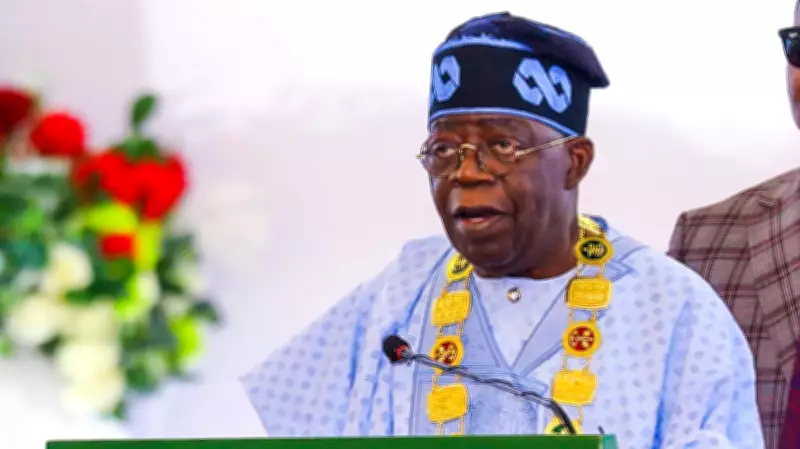
It is indisputable that President Bola Ahmed Tinubu inherited a battered economy from the late President Muhammadu Buhari's administration, which for eight years was rudderless, creating a state of anomie characterized by scorching insecurity and an asphyxiating debt burden. The debt service-to-revenue ratio reached up to 90 percent in the first half of 2023, and there was an abuse of Ways and Means advances from the Central Bank of Nigeria, amounting to nearly N30 trillion. President Tinubu tacitly acknowledged that government is a continuum, hoping to correct the errors of his predecessor and move forward. He could make such a cavalier statement, almost dismissive of the rot, because it is the same party, the All Progressives Congress (APC), that was in government over that period.
The Economic Reset and Its Impact
He is attempting to reset the Nigerian economy with bold policies that are generally hurting ordinary citizens, with a promise that all will be well in due course. However, the macroeconomic indicators arising from these policies are not comforting. These include a GDP growth of 3.87 percent in 2025, a debt service-to-revenue ratio of 90 percent as of Q1 2026, an inflation rate of 15.38 percent in 2026, an exchange rate of N1,371 per dollar in 2026, external reserves of $49.44 billion in Q1 2026, and crude oil production of 1.84 million barrels per day in 2026. While the government and some notable economists consider these figures satisfactory, they admit that conditions at the microeconomic levels are challenging, with about 140 million Nigerians multi-dimensionally poor amid rising cost of living and high food inflation of 10.84 percent in 2025.
Historical Context: PDP Years
It is instructive to recall that the Peoples Democratic Party (PDP) was in government for sixteen years, from 1999 to 2015. By April 2007, at the twilight of President Obasanjo's administration, the real GDP growth rate was 6.59 percent, external reserves stood at $43.53 billion, and the exchange rate was N127.98 per dollar, against the backdrop of $18 billion in debt cancellation by the Paris Club after Nigeria paid about $12 billion to clear the debt overhang. In 2014, again at the twilight of President Jonathan's administration, the real GDP growth rate was over 6 percent in the first three quarters, and inflation was stable at 8.3 percent. External reserves were $42.85 billion in January, dropping to $34.24 billion in December 2014 due to a global drop in crude oil prices. Clearly, the economy was on a good footing for most of the PDP's time in government, albeit afflicted with and tolerant of corruption. Party supremacy was diminished, with chairmen answerable to the President or Governor at the federal or state level, respectively, as leaders. The party boasted arrogantly that it would rule for sixty years, in flagrant disregard of the immutable fact that God rules in the affairs of nations and unmindful of the lessons from the Titanic, which sank irretrievably in the North Atlantic Ocean on April 15, 1912, after hitting an iceberg, when before the maiden voyage it was believed to be unsinkable, even by God.
The Decline of PDP
Now, the PDP does not qualify to be described as a viable and credible opposition party, as it battles existential threats on many fronts. The lessons of history are there freely for the wise, and in this instance, for any political party now exercising the instrument of power.
The APC Era: Promises and Disappointments
Coming into power in 2015 on the heels of pervasive disenchantment with the administration of President Goodluck Jonathan of the PDP, the APC's manifesto held a lot of promise for many Nigerians, especially having the persona of Muhammadu Buhari as the flag bearer, a man known at the time, rightly or wrongly, as an anti-corruption czar with zero tolerance for indiscipline. Their expectation was a turnaround of Nigeria's political economy under his watch and a demonstration of fiscal discipline in matters of progressive governance. These expectations were reinforced when, on inauguration, he declared: “I belong to everybody and I belong to nobody,” suggesting transparency in government anchored on meritocracy. On corruption, he declared: “If we don’t kill corruption, corruption will kill Nigeria,” again leaving no one in doubt of his plans to deal ruthlessly with corruption cases. Further, he pledged to subdue Boko Haram, whose activities had ravaged large swathes of the northeast.
Unfulfilled Manifesto
Key aspects of the APC's manifesto include security and anti-corruption, reforming the justice system, increasing power generation to up to 40,000 megawatts in four to eight years and improving distribution, devolution of power (to initiate action to amend the Constitution to entrench federalism and the federal spirit), food security, affordable health care, and free and qualitative primary and secondary education for all, but tertiary for women. Summarized as a Five-Point Agenda, President Buhari did not implement the key elements of the APC's manifesto for eight years, leaving a parlous economy challenged on multiple fronts by insecurity on a wide scale and free-for-all corruption for his successor. Under his watch, corruption mushroomed, now evident in the prosecution of some of his principal personae for alleged varied offenses in this regard. Indeed, President Buhari was nepotistic, an invidious form of corruption glaring in the many appointments into federal agencies. Yet, lest we forget, he made failed attempts three times to become President, succeeding under the umbrella of the APC in 2015 only to disappoint many who had high expectations of him.
The Desperation for Power
The compelling question is: why is there such desperation for the office of President of the Federal Republic of Nigeria by all manner of persons? The answer lies in faulty governance structure and faulty leadership recruitment processes. The tragedy in all this is that the manifesto, a key instrument and roadmap of the party, is meaningless.
Tinubu's Renewed Hope Agenda
President Tinubu's government appears to have clearly defined policies, both fiscal and monetary, deploying persons, some of whom are technocrats, to steer the affairs of state. His Renewed Hope agenda is an attempt to redress the loss of confidence in the APC-led government by the citizens. However, the dividends of his policies are percolating too slowly to ordinary Nigerians who are distressed, a matter that could inform voters' choices in a free and fair election. But the unprecedented defections by notable members of other parties to the APC—legislators and governors, some of whom have impressive records of performance in their states—are, against this backdrop, enigmatic and incomprehensible. Are these defections to stave off possible prosecution for malfeasance in office at the end of their tenure, or due to impressive performance by the APC-led government at all levels? The travesty of defections is that it involves serial defectors, some up to four times. Defections have become so fluid ostensibly because the Nigerian Constitution (1999) is mute on the subject as pertaining to governors, and nebulous in its provisions for legislators, both of which are unhelpful for the development of political party structures.
The Opposition's Predicament
To speak of an opposition party in these circumstances is anomalous because, by all measures, the so-called political parties are indistinguishable. They are special purpose vehicles bereft of ideological identities. Now, the APC is formidable from the rank and file of membership across the country, while the other parties are becoming atrophied, fueling the perception of an emerging one-party state. Regrettably, the other parties have so far not offered credible alternative action plans to challenge the policies of the APC-led government and to instill confidence in Nigerians. They are unable to do so, steeped in existential crises arising from lack of internal party democracy, failure to abide by party rules, and alleged interference by external forces. The APC is confident that victory is assured in the 2027 general elections, particularly for the presidential election, in light of its formidable membership profile and the absence of strong platforms for probable challengers for the office of President, many of whom are now, figuratively, Internally Displaced Persons (IDPs), a situation that could breed arrogance within the party. The palpable disarray of the other parties, ensconced in varied litigations, is unhelpful to the Nigerian state and the electoral process. The citizens are circumscribed in the choices available to them, breeding social discontent and desperation among some members of the political class. Judicial pronouncements and counter pronouncements by courts have been less than salutary, in many cases very ambivalent, casting aspersions on Nigeria's jurisprudence and administration of justice system as pertaining to political cases.
Commendable Initiatives
One commendable initiative of Tinubu's government is the clearance of the backlog of arrears to federal employees and retirees, for which it sought funds from the bond market to the tune of N758 billion. This was a bold initiative for which the Finance and Coordinating Minister of the economy at the time, Mr. Wale Edun, a technocrat, deserves commendation. Before then, retirees on the Contributory Pension Scheme (CPS) waited for up to eighteen months to have the component of Defined Benefit in arrears added to accruals from CPS before disbursement by PENCOM to retirees through their respective Pension Fund Administrators (PFAs). It is hoped that the current Finance and Coordinating Minister of the economy, Mr. Taiwo Oyedele, will continue the good work of Wale Edun in this regard. Another initiative is the Electricity Act signed into law in June 2023 by President Tinubu shortly after assumption of office, to decentralize the operational chains of the sector—generation, transmission, and distribution. It is instructive that about fifteen states have established regulatory frameworks in this regard.
The Need for Structural Reform
Nigeria has been in a state of flux and chaos since the return to democratic governance in 1979, thanks to the Constitutions of 1979 and 1999 and series of military interregna, all of which set the framework for disorderliness in the body politic, reminiscent of the Biblical Tower of Babel and the resultant Sisyphean national development paradigms in the social, political, and economic spheres. Nigeria is not making progress, and the political class, living large on the state, is insensitive. The struggle for political offices is clearly not for service but for prebendalism on the Nigerian state. It is more so for control of an over-centralized governance structure that has been inimical to progress. This structure must be decentralized in power, resources, and responsibilities to the states as federating units, anchored on the principle of subsidiarity, so that Nigeria may make progress. Now that President Tinubu is in the saddle, there are expectations based on certain perceptions of him—as a democrat and a federalist. Is the perception as a federalist correct to justify the expectation that he will embark on political reform to entrench true federalism and the federal spirit in accord with the APC's manifesto, or would he demystify it, in a manner of speaking, signaling a déjà vu? The answer remains to be seen.
Professor Eromosele is a former deputy vice-chancellor of FUNAAB, Abeokuta.




