
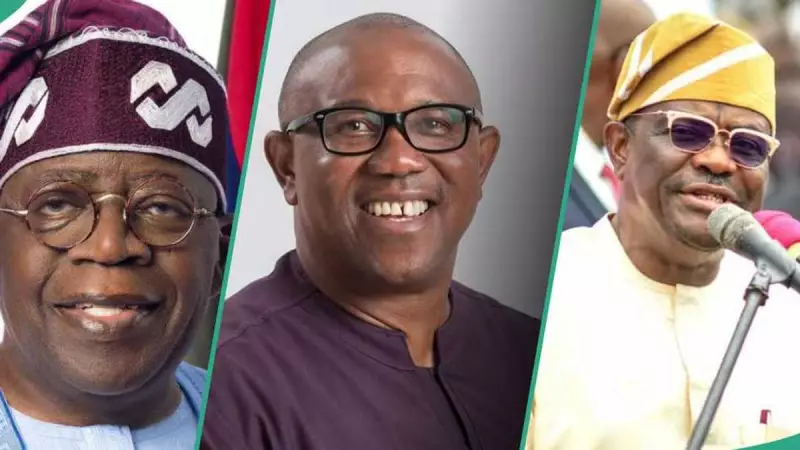
As the year 2025 draws to a close, a definitive list highlighting the nation's most powerful political figures has been published. The analysis, focusing on the last twelve months, identifies the key individuals who have significantly moved and shaped Nigeria's complex political sphere.
The Power Players Defining Nigeria's Political Future
The political landscape in Nigeria has been exceptionally active throughout 2025, with realignments and strategic maneuvers defining the period. Amidst this flurry of activity, a select group of politicians have managed to distinguish themselves, consolidating influence and positioning themselves as central figures ahead of the next general elections.
1. President Bola Ahmed Tinubu
President Bola Tinubu's political stature has grown considerably since assuming office. His most notable achievement has been the successful wooing of numerous opposition figures to the ruling All Progressives Congress (APC). This has resulted in the APC now controlling an impressive 28 out of 36 state governorships. With major opposition parties like the PDP and Labour Party appearing fragmented, analysts suggest the path to the 2027 presidential election is increasingly favorable for Tinubu, whose camp continues to expand.
2. Nyesom Wike, Minister of the Federal Capital Territory
The FCT Minister remains a formidable force in Nigerian politics. His close relationship with President Tinubu, combined with his enduring influence in Rivers State and the broader South-South region, cements his status. Wike has maintained political relevance despite ongoing tensions with Rivers State Governor Sim Fubara and internal factions within the Peoples Democratic Party (PDP).
3. Peter Obi
Two years after the 2023 presidential election, Peter Obi's influence, particularly among the nation's youth, remains robust and intact. He has continued to champion a message of national unity and possibility, engaging Nigerians across religious, tribal, and generational divides. His recent meeting with former Head of State, General Ibrahim Babangida, where they discussed national issues, underscores his ongoing strategic engagements.
4. Governor Seyi Makinde of Oyo State
Governor Seyi Makinde is strategically building a political structure that extends beyond Oyo State as he prepares for a potential presidential run in 2027. With the PDP zoning its presidential ticket to the south, Makinde emerges as a likely flagbearer for the main opposition party. He stands as a crucial pillar in the PDP following a wave of defections to the APC, and is notably the only PDP governor left in the South-West region.
5. Rabiu Musa Kwankwaso
The 2023 NNPP presidential candidate is widely regarded as the most influential politician in Kano State and a leading northern political figure. His Kwankwasiya political movement draws parallels with the Obidient movement in its grassroots appeal. A former governor and minister, Kwankwaso is often described as the current godfather of Kano politics, wielding significant control over the political direction of the state.
Strategic Moves and Regrets Shape the Narrative
The political year was also marked by notable revelations and strategic meetings. Peter Obi's discussion with General Babangida focused on national development, exemplified by the gifting of a book comparing Nigeria's trajectory with Indonesia's.
In a surprising admission, Governor Seyi Makinde expressed regret over his decision to support Bola Tinubu in the 2023 presidential election, a sentiment that adds a layer of introspection to the current political calculations within the opposition.
As Nigeria looks toward the 2027 elections, the influence and strategies of these five politicians will undoubtedly play a pivotal role in determining the nation's political future.




