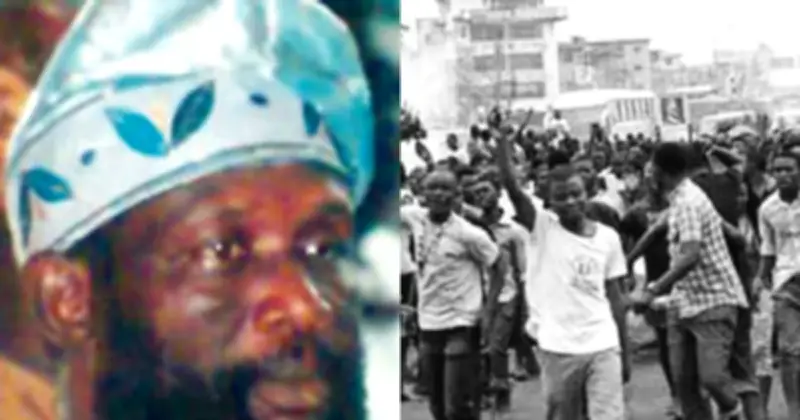
The 1978 "Ali Must Go" protests, led by Segun Okeowo, began over a 50-kobo increase in hostel and meal fees, escalating into a nationwide uprising that left students dead and resulted in Okeowo's detention.
The 50-Kobo Fee Hike and the Call for Boycott
In April 1978, Segun Okeowo, a 29-year-old student at the University of Lagos, was serving as president of the National Union of Nigerian Students (NUNS). The Nigerian Universities Commission had raised hostel and meal fees for students. Although the increase was small in naira terms, students across the country saw it as another sign of a government disconnected from their reality.
Under Okeowo's leadership, NUNS called for a nationwide boycott of lectures beginning Monday, 17 April 1978. Students at the University of Lagos, University of Ibadan, University of Ife, University of Benin, University of Calabar, Ahmadu Bello University Zaria, University of Nigeria Nsukka, Bayero University Kano, and others joined the boycott. The first day passed without incident.
Clashes at UNILAG and Nationwide Unrest
On Tuesday, 18 April, University of Lagos students planned a peaceful march to deliver a protest letter to General Olusegun Obasanjo at Dodan Barracks. However, they found the main gate blocked by armed police officers. A clash ensued between unarmed students and police, first at the gate, then in the surrounding streets, and later in Yaba. People outside the university were also caught up in the violence. State broadcasters did not report the incident.
By Wednesday, 19 April, newspapers had reported the UNILAG events, prompting students on other campuses to turn the boycott into open unrest nationwide. Okeowo, still coordinating from Lagos, was leading a movement that had grown far beyond a fee complaint.
Deadly Shootings in Zaria and the 'Ali Must Go' Chant
On Thursday, 20 April, soldiers moved onto the campus of Ahmadu Bello University in Zaria. Witnesses at the time said the soldiers were trying to prevent an uprising before it started. When the shooting stopped, five ABU students were dead. Two attacks in two cities within 48 hours transformed the protest into a nationwide uprising, spreading beyond students to the wider public in university towns.
Protesters began chanting "Ali Must Go," directed at the Federal Commissioner for Education, Colonel Ahmadu Ali. Ali denied responsibility for the fee increase, saying the decision came from the Supreme Military Council, not his ministry. Years earlier, before becoming a soldier and minister, Ali had been a NUNS leader himself.
Government Crackdown and Lasting Legacy
The military government shut down universities across the country and imposed curfews. NUNS was banned, and Okeowo was expelled from the University of Lagos. He was later arrested and held in detention over his role in the protests. The fee increase was never reversed.
Okeowo eventually returned to a quiet life as an educationist, away from public attention, until his death in January 2014. The "Ali Must Go" protests demonstrated that Nigerian students could organise across the entire country at once and force a military government to pay attention, even if they didn't get everything they demanded. Historians studying Nigeria's protest movements have pointed to it as an early example of coordinated, nationwide youth action that resurfaced decades later during the #EndSARS protests in 2020.