
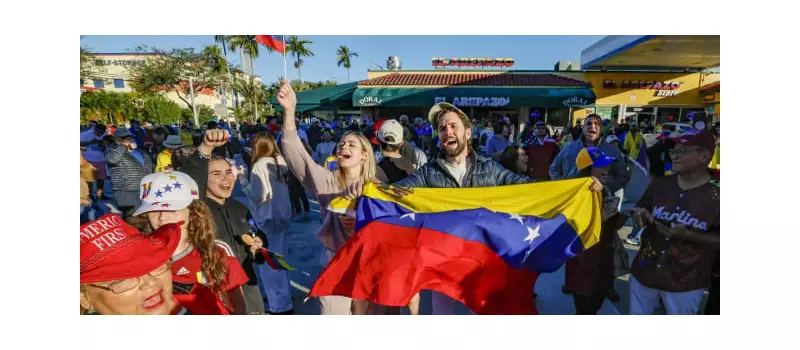
The fundamental question for every generation remains: will those in power answer to the people, or will the people be forced to submit to power? In our current digital era, where information spreads instantly and citizens can mobilise across continents in hours, this question carries unprecedented weight. The future belongs to democracies that ensure free and fair elections, foster genuine internal party competition, and manage national wealth for the public good. Nations that suppress accountability and manipulate electoral outcomes face a grim future of isolation, economic ruin, and a complete loss of legitimacy.
Venezuela: From Oil Riches to Authoritarian Collapse
The recent trajectory of Venezuela under Nicolás Maduro serves as a powerful global warning. Despite sitting on the world's largest proven oil reserves, Maduro's rule systematically hollowed out the country's institutions. A combination of heavy crude, chronic underinvestment, the politicisation of the state oil company PDVSA, and deep-seated corruption crippled production. International sanctions, layered on top of these failures, worsened a devastating humanitarian crisis characterised by hyperinflation, mass migration, and profound suffering.
By 2024–2025, Venezuela had experienced severe economic contraction and the exodus of millions of its citizens. Political freedoms vanished amid arrests, intimidation, and enforced disappearances. The pivotal moment came with the 2024 presidential election. Independent observers and opposition counts indicated a decisive victory for candidate Edmundo González. However, the regime claimed victory without releasing transparent, precinct-level results. The election was marred by pre-election manipulation—including disqualifying candidates and restricting observers—followed by brutal post-election repression.
The 2026 Shock and Global Repercussions
The crisis reached a new peak in January 2026, when the United States launched military strikes, captured Maduro, and announced its intention to oversee Venezuela's transition. This dramatic intervention sparked global condemnation and legal disputes, creating profound uncertainty. Regardless of one's view on the action, it sent a clear strategic message to governments worldwide: persistently defying the popular will and constitutional norms invites unpredictable and severe shocks that no sovereign state should risk.
Three Pillars for Building Democratic Resilience
To ensure the people's voice prevails in the digital age, nations must urgently focus on three imperatives: fortifying electoral integrity, democratising political parties from within, and governing natural resources as a public trust.
1. Fortifying Electoral Integrity: Modern elections face novel threats like disinformation, deepfakes, and cyberattacks. States must act decisively to protect information integrity, empower independent electoral bodies, mandate transparency in political advertising, and secure digital infrastructure. This requires real-time collaboration between electoral commissions, media, civil society, and tech platforms. Crucially, election results must be published promptly in open, auditable formats. Any government resisting such transparency signals an intent to manipulate, not to ensure fairness.
2. Strengthening Internal Party Democracy: Political parties are the engines of democracy. When they become closed networks, democracy decays. Digital tools, if responsibly governed, can enhance internal democracy by promoting transparency in primaries and internal votes. However, they must be subject to independent audits and oversight. Leaders who fear internal competition reveal weakness; strong movements welcome scrutiny because they trust their ideas.
3. Governing Resources as a Public Trust: National resources, especially oil and gas, must serve citizens' long-term welfare, not regime survival. Venezuela is the classic resource curse example. Resource-rich nations must insulate state companies from political interference, professionalise their management, and adopt transparent rules. This includes publishing all contracts, establishing sovereign wealth funds with independent oversight, and protecting watchdog media. Leaders who reject these disciplines are denying citizens their rightful inheritance.
The Path Forward: A Call for Assertive Leadership
The choice before political elites is clear: courage or convenience. The shortcut—silencing opponents, starving electoral commissions, and trading national assets for power—creates a brittle stability that eventually collapses, as seen in Venezuela. The better path requires public commitments to publish precinct-level results within 24 hours, invite independent observers, guarantee opposition access, and criminalise the misuse of state resources.
The digital age offers tools for renewal if used wisely. Nations can build platforms for citizens to track budgets and projects in real-time, use analytics to detect inequities, and ensure algorithmic systems are fair and auditable. Democracy is a continuous practice of accountability, not a periodic ritual.
The message is urgent: let the people's voice stand. Nations that act decisively will become more resilient, prosperous, and respected. Those that fail will face the fate of brittle regimes—isolation, instability, and the eventual loss of control. The conscience of nations must choose now.




