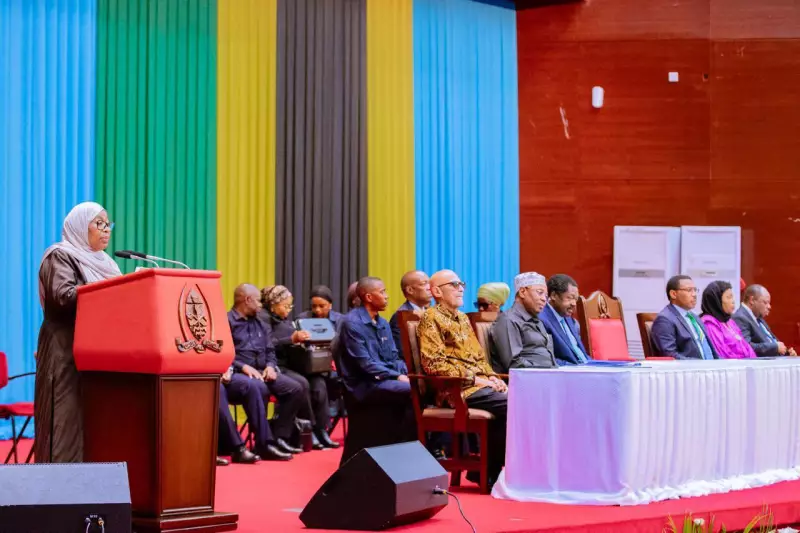
In a powerful display of national unity, Tanzania observed a peaceful and quiet Independence Day on December 9, 2025, decisively rejecting calls for widespread protests. This collective action served as a direct rebuttal to international media narratives that had painted the country as unstable following its October 29, 2025, general elections.
A Conscious Choice for Calm Over Confrontation
Organizers had billed the date as a "Mega protest," promising a pivotal moment for the nation. Instead, streets across Tanzania remained largely empty. Some foreign observers quickly labelled this as a sign of fear or state repression. However, a deeper look reveals a different truth: a conscious, widespread decision by Tanzanian citizens to avoid confrontation.
This was not an act of submission but one of restraint and sober calculation. Having witnessed episodes of violence and destruction after the October polls, the public collectively withdrew. They refused to be pawns in a political gamble that threatened their livelihoods and social peace. The choice to stay home was, in essence, a national rejection of anarchy.
Government Actions: Inquiry and Reconstruction, Not Escalation
Concurrently, the state under President Samia Suluhu Hassan took measured steps aimed at healing rather than escalating tensions. A significant signal was the decision to redirect funds originally earmarked for Independence Day celebrations toward repairing public infrastructure damaged in the post-election unrest.
More substantively, the government had earlier established an Independent Commission of Inquiry on November 18, 2025, under the Commission of Inquiry Act. This move acknowledged that serious events had occurred and demonstrated a willingness to investigate their causes. The commission's mandate is to recommend measures to safeguard peace, stability, and the rule of law in future electoral cycles.
Authorities also took conciliatory steps, such as dropping charges against hundreds of youths. These actions complicate the simplistic international narrative of a purely repressive state, showing a government navigating a complex situation with a stated priority on long-term stability.
The Shadow of External Influence and a Unified National Response
Understanding the full context requires looking beyond Tanzania's borders. Evidence suggests the earlier unrest was not entirely spontaneous. Reports indicate coordination involving foreign-backed non-governmental organizations and digital influence networks operating from outside the country.
A sudden influx of inflammatory online content from overseas activists created a perception of an "imported revolution." Historically wary of foreign interference, many Tanzanians recognized this dynamic. The lack of enthusiasm for the December 9 demonstrations reflected a growing awareness that the driving slogans were not genuinely homegrown but part of an externally engineered script.
On December 9, 2025, Tanzanians made their position clear. They chose peace not because they were silenced, but because they refused to perform in a drama written by outsiders. Their quiet resolve affirmed a profound national commitment: the choice of stability over subversion, and the firm belief that the nation is not for sale.