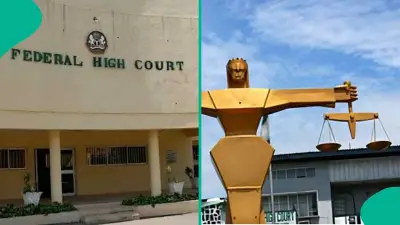
At least six major pre-election cases involving the Independent National Electoral Commission (INEC) are pending before the Federal High Court and the Court of Appeal, challenging the commission's revised 2027 election timetable and its authority over party registration. Two Federal High Court judgments have nullified portions of INEC's timetable for overriding Electoral Act timelines, and INEC has appealed both rulings to the Court of Appeal. Additionally, five political parties, including the African Democratic Congress (ADC) and Accord, are fighting a Federal High Court order directing INEC to deregister them, with their appeals adjourned to July 14, 2026.
Background of the Lawsuits
The lawsuits emerged barely four months after INEC published its revised timetable on February 26, 2026. The timetable set deadlines for membership register submissions, party primaries, candidate nominations, campaigns, and the eventual polls, with the presidential election fixed for January 16, 2027, and governorship elections for February 6, 2027. The cases place Nigeria's 2027 general election preparations under serious judicial scrutiny, as several courts are being asked to rule on the reach of INEC's constitutional powers and the continued registration of several political parties.
Youth Party Challenges INEC's Timetable
In Suit No. FHC/ABJ/CS/517/2026, the Youth Party took INEC to the Federal High Court in Abuja, arguing that the commission's revised timetable illegally compressed timelines already guaranteed under the Electoral Act. The court agreed, ruling that INEC's constitutional authority to organise elections does not extend to overriding or shortening statutory deadlines. The judgment nullified the disputed portions of the timetable and restrained INEC from enforcing them.
SDP Contests Nomination Deadlines
A parallel challenge by the Social Democratic Party (SDP), filed as Suit No. FHC/ABJ/CS/720/2026, produced a similar outcome. While that court upheld INEC's general authority to issue election timetables, it invalidated provisions touching on candidate nomination, withdrawal, and substitution that conflicted with the Electoral Act.
Appeal Court to Settle INEC Timetable Dispute
INEC has appealed both judgments to the Court of Appeal, arguing that electoral activities form an interconnected sequence and that isolating individual timelines would introduce uncertainty into preparations already underway. The Court of Appeal has heard arguments in both appeals and reserved judgment, with no date yet announced for its decision.
Five Parties Fight Deregistration Order
The second major strand of litigation centres on party registration. In Suit No. FHC/ABJ/CS/2637/2026, the Incorporated Trustees of the National Forum of Former Legislators obtained a Federal High Court order compelling INEC to deregister five parties: the African Democratic Congress (ADC), Accord, Action Alliance, Action People's Party, and Zenith Labour Party. The affected parties promptly filed separate notices of appeal, and the Court of Appeal granted a stay of execution pending the determination of those appeals, preserving their legal status in the interim. When the matter came before a three-member panel of the Court of Appeal, Abuja Division, on July 7, 2026, proceedings were adjourned to July 14, 2026, to allow parties to regularise and exchange court processes. The final outcome will determine whether all five parties remain eligible to field candidates before INEC publishes the final list of presidential and National Assembly candidates on September 12.
Registration of NDC Questioned
A further challenge, Suit No. FHC/ABJ/CS/1115/2026, filed by Ahidjo Ibrahim Karlahi against INEC and the Nigeria Democratic Congress (NDC), is also before the Federal High Court. The suit questions whether the NDC's registration met constitutional and statutory requirements, and its outcome could affect the party's standing ahead of the September candidate list deadline.
Impact on 2027 Elections
Legal observers say the appellate courts' decisions across all six cases will define the legal framework within which political parties contest power in 2027. The cases highlight ongoing tensions between INEC's administrative authority and the statutory provisions of the Electoral Act, as well as the legal status of political parties. With the presidential election scheduled for January 16, 2027, and governorship elections for February 6, 2027, the resolution of these lawsuits is critical to ensuring a smooth electoral process.