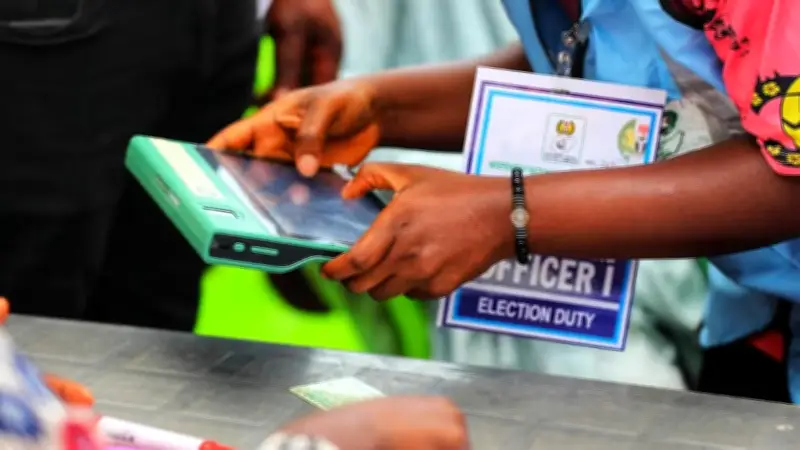
The Electoral Act 2026, which is meant to provide the legal framework for Nigeria's 2027 general elections, contains several provisions that could sabotage the credibility of the polls, according to former Independent National Electoral Commission (INEC) Chairman Attahiru Jega and former Akwa Ibom State Resident Electoral Commissioner Mike Igini. Both electoral experts have pointed out lingering booby-traps in the Act that require urgent amendments.
Ambiguous electronic transmission of results
Mr Jega expressed deep concern over Section 63(3) of the Electoral Act, which allows for reliance on manual Form EC8A whenever electronic transmission of results fails. He warned that this vagueness could be exploited to truncate electronic transmission in favour of manual results, which are easier to manipulate. "Given what we know about the Nigerian environment and the desperation for do-or-die position, there shouldn't be such a vague provision, which would be used to truncate the electoral transmission in favour of manual transmission of results, which is easier to fraudulently manipulate and exploit," he said.
Certificate forgery no longer an offence
Mr Jega also criticised Section 138 of the Act, which removes certificate forgery as an offence for pre-election petitions. This contradicts Section 131(3) of the 1999 Constitution, which disqualifies candidates who present forged certificates. Forgery is a criminal offence in Nigeria and has historically been grounds for election annulments. For instance, in 1999, Speaker of the House of Representatives Salisu Buhari resigned after 49 days over a forged University of Toronto degree. In 2019, the Supreme Court annulled the election of Bayelsa State Governor David Lyon due to his deputy's certificate forgery. "Legitimising certificate forgery for elections offends public sensibilities," the article notes.
Contradictory provisions on ballot papers
Sections 63(1) and 63(2) of the Act are contradictory. Subsection 1 states that ballot papers without the official mark shall not be counted, but subsection 2 allows counting if the returning officer is satisfied the ballot came from a legitimate book. This confusion was evident in the 2023 election of Kano State Governor Abba Yusuf, where 165,616 unstamped ballot papers were initially rejected by the tribunal and Court of Appeal but later accepted by the Supreme Court under Section 63(2).
INEC as sole defendant shields field officers
Mr Igini described Section 137 as "one of the rigging provisions." It makes INEC the sole defendant in election petitions, shielding presiding and electoral officers who manipulate results from accountability. He warned that this could allow unscrupulous INEC officials to give security features of ballot papers to politicians for ballot-box stuffing, as happened in Bayelsa and Imo states in 2019.
Section 138(2) undermines electoral integrity
Section 138(2) states that an act or omission contrary to INEC's instructions shall not in itself be grounds to question a result. This provision is highly disturbing and could allow widespread violations without legal consequences.
Calls for repeal
The article urges the National Assembly to repeal these provisions to avoid embarrassment and uphold electoral integrity. It concludes that going into the 2027 elections with a flawed framework will lead to another cycle of governance that builds castles in the air.