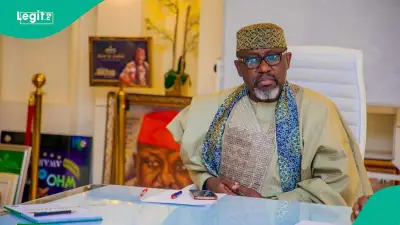
Nigeria stands at a critical juncture where reinventing its history and restructuring its governance have become imperative. This perspective is shared by Banji Alabi, a lawyer, business consultant, and leader of the Ondo State Eminent Persons Group, who emphasizes the need for honest self-assessment. Since the tragic end of the First Republic, Nigeria has experienced motion without meaningful transformation. The adage that using the same tools and methods repeatedly cannot yield different results applies profoundly to Nigeria today. To avoid self-deception and the pitfalls of clinging to archaic and ineffective systems, a decisive shift is necessary.
The Moment of Decision
As the hymn goes, “Once to every man and nation comes the moment to decide in the strife between truth and falsehood.” Now is the time for all who genuinely desire a functional Nigeria, where the lives, security, and welfare of citizens are prioritized. This moment calls for taking a stand against the failed structure that has held Nigeria captive. It is time to reinvent the productive history that once served the nation effectively, a standard adopted by many advanced countries that were Nigeria’s contemporaries seven decades ago. The progress seen in Malaysia, Singapore, Indonesia, South Korea, and India prompts the question: What is their magic? Similarly, what transformed the defunct Western Region of Nigeria? The refusal to ask these questions harms the majority, while the few who profit from the current structure lack peace and a conducive environment to enjoy their gains.
Diversity and the Need for Restructuring
Nigeria comprises diverse nations with distinct histories, governance cultures, traditions, and faiths. The current structure forces these disparate groups together, often leading to conflict. As Scripture asks, “Can two walk together unless they agree?” (Amos 3:3). True peace will only come when each region can coexist on its own terms. Drawing from this, leaders are urged to revisit the principles of the Aburi Agreement, prioritizing regional autonomy, resource management, and mutual coexistence. Restructuring Nigeria to reflect the aspirations of its diverse people is essential. The status quo is failing, and adopting dignified autonomy can help build a Nigeria where things work for all.
Proposal for Six Autonomous Zones
The call is for six autonomous zones as the path to lasting peace. Concerned citizens assert that the current system is failing and that diversity is a strength to be harnessed through true federalism and resource control. The proposed restructuring includes six regional structures with the following features: regional governments with substantial autonomy, a weak center focusing on national interests, regional police forces for local security, centralized armed forces for national defense, and a ceremonial president rotated among regions to symbolize unity.
Geopolitical Regions
The division into six geopolitical regions would restore balance and allow each area to manage its resources while remaining part of a united Nigeria:
- North-Central: Plateau, Nasarawa, Benue, Kogi, Kwara, and the Federal Capital Territory
- North-East: Adamawa, Bauchi, Borno, Gombe, Taraba, and Yobe
- North-West: Kano, Katsina, Jigawa, Kebbi, Sokoto, and Zamfara
- South-East: Abia, Anambra, Ebonyi, Enugu, and Imo
- South-South: Akwa Ibom, Bayelsa, Cross River, Delta, and Rivers
- South-West: Ekiti, Lagos, Ogun, Ondo, Osun, Edo, and Oyo
Benefits of the Proposed Structure
Under this arrangement, each region decides how to develop and benefit from its natural wealth, ending exploitation while contributing an agreed percentage to the central government. Local accountability and transparency would improve, as governors and legislators answer directly to their people. Rapid economic growth would follow, with regions tailoring policies to their strengths—agriculture in the North-East, oil in the South-South, tech in the South-West—creating a more resilient national economy.
Path to Peace and Development
When every zone walks together by agreement, the friction fueling conflict diminishes. Diversity becomes a source of strength, fostering constructive competition rather than division. Any zone should be free to leave the union as an independent country. The goal is peace and development in a united Nigeria where kidnapping, banditry, and terrorism are effectively tamed. Together, the dream of peace through partnership can become a reality, birthing six autonomous regions within a “United Nigeria.” All concerned Nigerians yearning for a reinvention of history are urged not to retreat. To retreat is to lose faith; to surrender is to deny destiny. But to persevere even when everything seems lost is to declare victory before it arrives. We shall overcome. We will succeed.