Obasanjo Rejects Osoba's Account of 2003 Political Events
Former President Olusegun Obasanjo has fired back at former Ogun State Governor Segun Osoba over his account of the political events before the 2003 general elections. In a lengthy response titled "Reply to Your Inaccurate Posture: 'How Obasanjo Deceived Us in 2003'," Obasanjo rejected Osoba's claims as inaccurate, incomplete, and "far-fetched." The response directly addresses an article Osoba published in The Legal Observer on July 20, in which the former governor accused Obasanjo of deceiving the Yoruba political leadership before the 2003 polls.
Obasanjo took "strong and serious objection" to Osoba's allegation, arguing that Osoba was not present at several sensitive political meetings he held with the leadership of Afenifere and the Alliance for Democracy (AD). He insisted that many of those engagements were handled directly by Yoruba political elders.
Obasanjo Defends 2003 Governorship Elections in South-West
On the 2003 governorship elections in the South-West, which saw the Peoples Democratic Party (PDP) seize five of the six states previously held by the AD, Obasanjo maintained that the results reflected how voters genuinely felt at the time. He also claimed that Osoba barely campaigned before the election and later apologized to Ogun State residents during a television appearance, acknowledging what he described as his own arrogant disposition.
Obasanjo Alleges Atiku Orchestrated Impeachment Plot
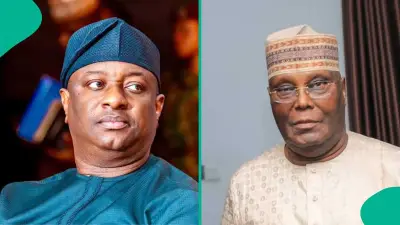
Beyond the dispute with Osoba, Obasanjo made explosive allegations against his former Vice President Atiku Abubakar, who is now the 2027 presidential candidate of the African Democratic Congress (ADC). Obasanjo accused Atiku of orchestrating an impeachment plot during the first term of his presidency. According to Obasanjo, the plot was set in motion on a Friday while he was away from office. He alleged that Atiku invited the then Speaker of the House of Representatives, the late Ghali Na'Abba, to his office and handed him N5 million to begin impeachment proceedings against him.
Obasanjo further alleged that after the impeachment bid collapsed, Atiku pursued a separate political arrangement with the six AD governors as part of a continued effort to undermine his administration and block his re-election bid in 2003. The former President said he was sharing these details to correct what he described as a distorted account of the political intrigues that shaped Nigeria's Fourth Republic.
Context: Obasanjo's Presidency and Atiku's Role
Obasanjo served as President of Nigeria from 1999 to 2007, with Atiku as his Vice President from 1999 to 2007. The relationship between the two soured during Obasanjo's first term, culminating in Atiku's defection to the opposition and his unsuccessful bid for the presidency in 2007. The allegations of an impeachment plot add a new dimension to the long-standing political feud between the two leaders.
The former President's response also touched on his relationship with other political figures. In a separate incident, Obasanjo teased former Lagos State Governor Babatunde Fashola at a public event, recalling an encounter during Fashola's tenure as governor of Lagos State from 2007 to 2015. Fashola later served as a minister from 2015 to 2023.
Reactions and Implications
The allegations have sparked fresh debate about the political dynamics of Nigeria's Fourth Republic. Atiku's camp has not yet responded to Obasanjo's claims. The revelations could impact Atiku's 2027 presidential campaign under the ADC, as the party seeks to position itself as a credible alternative to the ruling All Progressives Congress (APC) and the main opposition PDP. Political analysts note that the accusations may further strain relations between Obasanjo and Atiku, who have been at odds for over two decades.
Obasanjo's detailed rebuttal of Osoba's account also underscores the enduring tensions within the Yoruba political establishment, particularly regarding the 2003 elections that saw the AD lose its stronghold in the South-West to the PDP. The former President's insistence that the election results were a genuine reflection of voters' will contrasts with Osoba's narrative of deception.