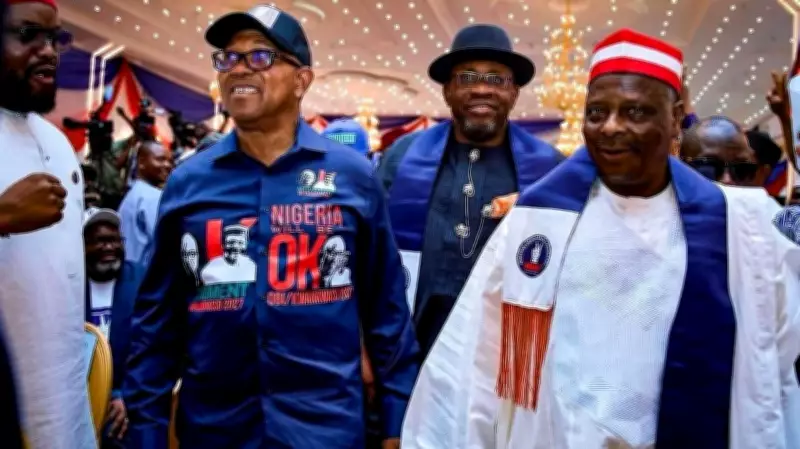
Supporters of Peter Obi and Rabiu Musa Kwankwaso have initiated early negotiations to forge a significant opposition alliance ahead of Nigeria's 2027 presidential election. Both camps are pushing for a consensus ticket under the Nigeria Democratic Congress (NDC) platform.
Background of the alliance
Obi and Kwankwaso, leaders of the Obidient and Kwankwasiyya movements respectively, were presidential candidates in the 2023 elections on the Labour Party (LP) and New Nigerian Peoples Party (NNPP) platforms. The move, unveiled at the NDC Aspirants' Summit in Abuja, signals a growing realization among opposition figures that fragmented ambitions could weaken attempts to unseat the ruling party.
Fundraising drive
National Coordinator of the Obidient Movement Worldwide, Dr. Yunusa Tanko, announced that supporters are mobilizing funds to purchase a joint presidential nomination form for Obi and Kwankwaso. The target is to raise ₦60 million as a demonstration of grassroots commitment to the coalition project.
Tanko described the proposed alliance as a response to calls from Nigerians seeking a stronger opposition platform to address economic and governance challenges. Although neither Obi nor Kwankwaso has formally declared a 2027 run, the collaboration is generating discussions about power-sharing and regional calculations.
Political reactions
Speaking at the summit, former Inter-Party Advisory Council Chairman Chief Peter Ameh urged politicians to focus on credibility and national interest. He criticized the trend of defections after elections, warning that coalitions without clear principles would struggle to inspire public confidence.
Coordinator of the Kwankwaso National Network, Moshood Shittu, argued that Nigeria's crisis stems from leadership failure. He emphasized that ordinary Nigerians have shown resilience and that the political class must prioritize honesty and competence.
Party assurances
NDC National Secretary Ikenna Enekweizu assured aspirants of transparent primaries, denying allegations of a secret preferred candidate list. He announced discounts on nomination fees for women, youths, and persons with disabilities: women and aspirants aged 18-35 pay half, while persons with disabilities pay 25 percent.
Veteran politician Buba Galadima warned that poorly managed primaries could destroy opposition unity. Recalling violent direct primaries in Kano in 2011, he argued that consensus arrangements could help avoid division if properly negotiated.
Political analysts note that the coming months will determine whether the Obi-Kwankwaso talks evolve into a genuine coalition or become another failed opposition experiment.