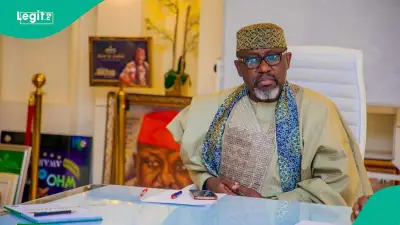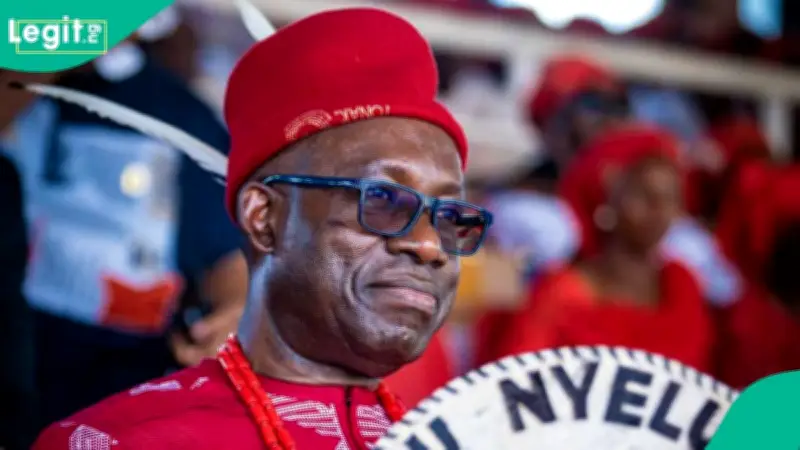
Governor Charles Soludo of Anambra State has ignited controversy with his "cow-tail" metaphor, urging Ndigbo to accept political reality and settle for the "tail" rather than miss the entire "cow." The remark, delivered during a Democracy Day gathering in Abakaliki, has been widely interpreted as an invitation to lower political aspirations, particularly regarding the pursuit of the presidency.
Soludo's Intellectual Pedigree and Political Contradiction
Soludo, a former Central Bank governor and renowned economist, entered politics in 2022 with a reputation for competence. However, critics argue his recent comments reveal a troubling shift from reformer to political contrarian. The metaphor suggests that Ndigbo should recalibrate their ambitions downward, abandoning the quest for the presidency in favor of whatever fragments the existing political arrangement concedes.
The Meaning Behind the Cow-Tail Metaphor
The metaphor has drawn sharp criticism for normalizing political marginalization. "If the tail is the objective, who then owns the cow?" observers ask. For decades, the Southeast has complained about exclusion from strategic decision-making. Instead of challenging these realities, Soludo's proposition appears to accommodate them. History shows that no group has achieved relevance by embracing second-class aspirations—the Southwest and North pursued the entire cow, not fragments.
Soludo vs. Peter Obi: A Battle of Political Visions
Soludo's public disagreements with Peter Obi, the Labour Party presidential candidate, have further fueled controversy. Critics accuse Soludo of diminishing Obi's appeal, which transcends ethnic lines. Obi's movement attracts millions based on values of prudence, accountability, and fiscal discipline. Reducing it to an ethnic project, they argue, misunderstands its national character. The conversation Nigeria is having is about competence, credibility, and trust—not metaphors about tails.
Governance Disconnect: Policy vs. Public Sentiment
Soludo's urban renewal and demolition exercises in Anambra, including the Onitsha Main Market demolitions, have exposed a gap between policy objectives and public sentiment. While the government cites urban renewal, traders warn of severe economic consequences. Critics contend that policies technically sound on paper often fail to account for human realities. "A technocrat asks, 'Is this policy correct?' A political leader must ask, 'Can the people live with it?'"
The Danger of Intellectual Arrogance
Observers worry that Soludo's exceptional intelligence has bred excessive confidence, blurring the line between statesmanship and showmanship. Governance demands wisdom, humility, and empathy—qualities that cannot be replaced by economic models. The tragedy, as one commentator notes, is watching a respected technocrat risk his legacy in a dance with hubris.
Conclusion: The Test of Wisdom
Soludo's accomplishments in Anambra—infrastructure, security, urban development—are undeniable. But intellectual brilliance alone does not guarantee political wisdom. The question remains: will wisdom prove equal to his intellect? For in politics, the brightest minds do not always leave the greatest legacies. Those who understand people as deeply as they understand ideas often do.